


Hawaiʻi County mayors could give up some power to proposed county manager position
The Hawaiʻi County Council voted 5-4 on Tuesday to pass in committee Bill 158, which would take away some traditional power from the mayor and give it to a new county manager position that is merit-based and does not automatically change with each new administration.
This would be a major reorganization of the county government structure.

“First, I want to say that this is not a referendum on the current administration,” said Councilmember Heather Kimball, who introduced the bill in the Governmental Operations and External Affairs Committee. “I have been contemplating this idea since before I was elected and was unsure if it was time to bring it forward for discussion.”
But after conversations during the budget, she said she decided the timing was right.
“Many folks up here have experienced transitions between mayors and have seen how disruptive it is fiscally,” Kimball said. “There are many solutions to this problem. This is just one of them, and one I wanted to put forward.”
The county manager position would replace the current managing director role, which is chosen by the mayor.
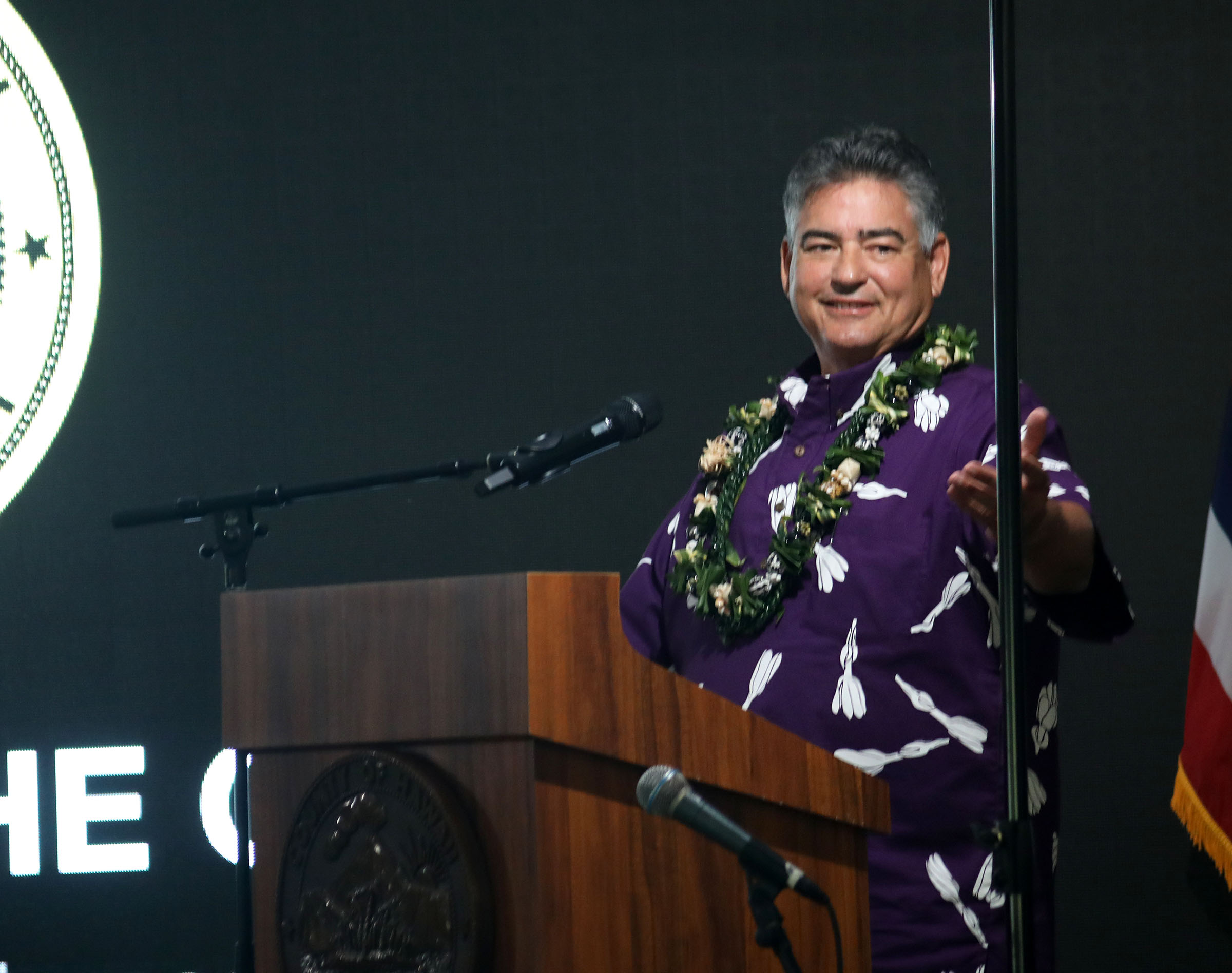
The bill outlines that a county manager would be selected by the mayor and the County Council. The person would be responsible for administering operations, overseeing departmental leadership and preparing the county’s budgets. This position would not be tied to an administration and would be a longer tenure, with an emphasis on professional continuity, organizational stability and merit-based administration.
The bill maintains that the elected mayor would remain as the chief elected official, whose role would primarily focus on guiding policy rather than operations and spending. The mayor would retain the authority to veto bills, appoint certain department heads, and lead intergovernmental relations.
But the county manager would take over some of the mayorʻs current duties, including overseeing the appointment and removal of department heads and necessary staff within the Office of Management. The county manager also would direct and supervise the administration of all executive agencies.
Under the bill, the county manager must follow hiring guidelines and choose professionals with years of expertise in their respective departments, whether it is the Department of Public Works, the Office of Corporation Counsel, the Department of Environmental Management or the Finance Department.
One of Kimball’s main goals in proposing the bill is to start a conversation on improving the County of Hawaiʻi and completing long-term goals. While council and mayoral positions would remain at two-year and four-year terms respectively, a county manager would be appointed by the current mayor and County Council members to serve for six years.
“The county is facing a huge multiyear project of cesspool conversion,” community member Debbie Hecht said. “We also need multiple road projects to increase traffic flow in several corridors across the island. These projects will require hiring engineers, obtaining bond funding, federal and state grants, and someone to administer this process.”
Hecht testified that County Council members and the mayor have shorter term limits, which results in a focus on short-term goals to aid in electability.
Bill 158 specifies that the county manager would be an at-will employee hired for his or her education and expertise. The person must possess a master’s degree in public administration or a related field, or have equivalent experience and must have served at least five years in an executive administrative position, preferably in the public sector and in a jurisdiction of similar size to the county.
“This position will help not only with mayoral transitions but also improve the management of contracting and depoliticizing capital improvement projects,” Kimball said. “The advantage of this position is fiscal. They can focus on these long-term projects that have plagued the county. They won’t have certain political motivations when it comes to spending.”
While most County Council members appreciated Kimball bringing this bill forward, they had questions and expressed concerns about the overall power of the county manager.
“In the worst-case scenario, one group of council members and the mayor could appoint power to a person based on their own interests,” Councilmember Matt Kanealiʻi-Kleinfelder said. “This is a powerful piece of the county that is not elected, so there would need to be more written checks and balances.”
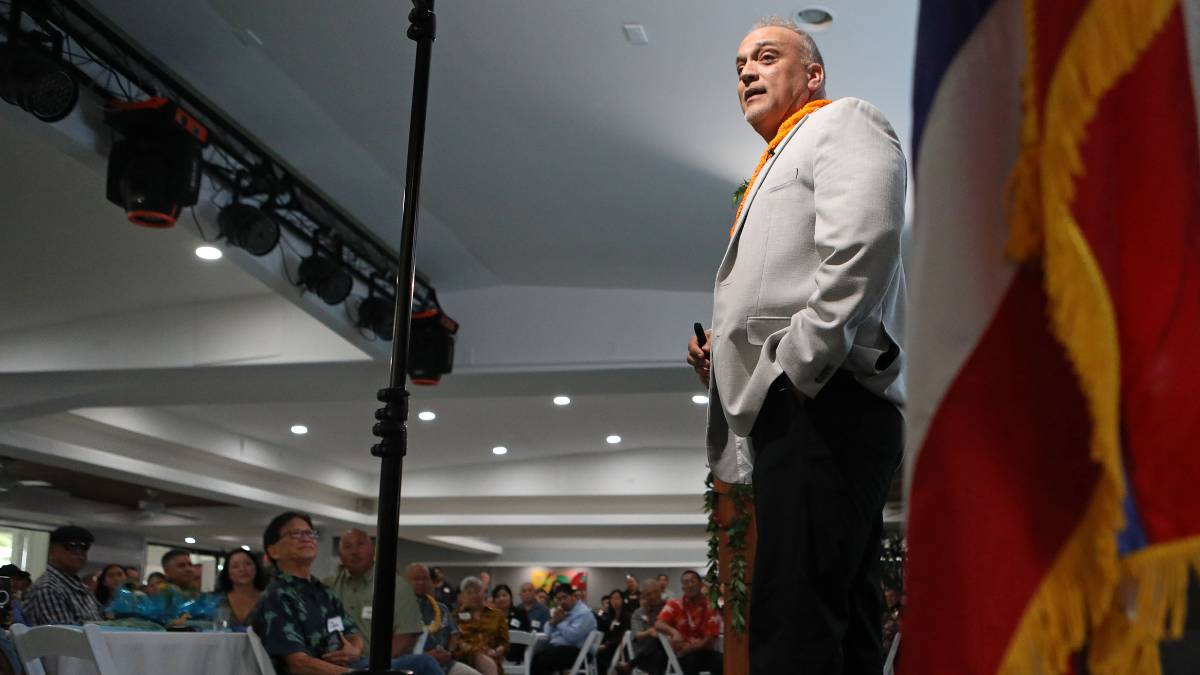
Mayor Kimo Alameda also shared his concerns about placing executive power in the hands of an unelected person, as it could make the government less democratic and responsive to people’s needs.
“Local government is most effective when you have strong leadership in the executive (mayor) and legislative (County Council) branches,” he said in a statement. “However, this bill would almost eliminate the role of the mayor as well as important checks and balances that are the foundation of good governance. I am also concerned that this system could allow one group of council members to control the county through the county manager.”
Alameda said that as a result, certain districts could be favored over others, “and we would lose the important focus on building geographic equity and uplifting our entire island.”
He added: “It’s not clear how this proposal would move our county forward, and I believe the negative consequences for the public would be significant.”
Councilmember Rebecca Villegas said she likes the idea of having a professional in the field strategically placed in a higher position in the county to help guide projects and spending.
“I have struggled with many projects due to the turnover of mayors as well as the natural way civil servants lose stamina to move forward with long-term, difficult projects,” she said.
According to Kimball, 45% of counties of a similar size to Hawaiʻi County operate with a county manager, many of which have been successful in utilizing spending effectively.
“I lived in Pima County, Arizona, for 33 years before moving to Kona in 2003,” Hecht said in her written testimony. “Pima had the same county manager for 31 years. The county grew from 351,667 to 843,746 in that time, and infrastructure kept up with growth.
“I believe that was due to the professional guidance of the county manager, Chuck Huckleberry, who was able to provide long-term continuity and find the funding needed to complete complex infrastructure projects.”
The committee vote was 5-4, with dissenting votes from councilmembers Holeka Inaba, Dennis Onishi, James Hustace and Ashley Kierkiewicz. The bill will be read next at the County Council meeting in two weeks.
Written public testimony must be submitted before noon on the business day before the County Council meeting, which has not been set yet. Written testimony is accepted by email to counciltestimony@hawaiicounty.gov, or by facsimile to 808-961-8912, or by mail to the Office of the County Clerk, 25 Aupuni Street, Hilo, HI 96720.
Oral testimony is heard at the beginning of each Committee or Council meeting or immediately preceding the agenda item. The County Council also offers the ability to provide oral public testimony remotely over Zoom. To testify over Zoom, call 808-961-8255, or email councilremotetestimony@hawaiicounty.gov before noon on the business day before the meeting.