

Briefs for May 20: Food options expand for schools, state employee earns national award, advocates celebrate the Green Fee
State agencies formalize partnership to expand locally sourced school meals in Hawaiʻi
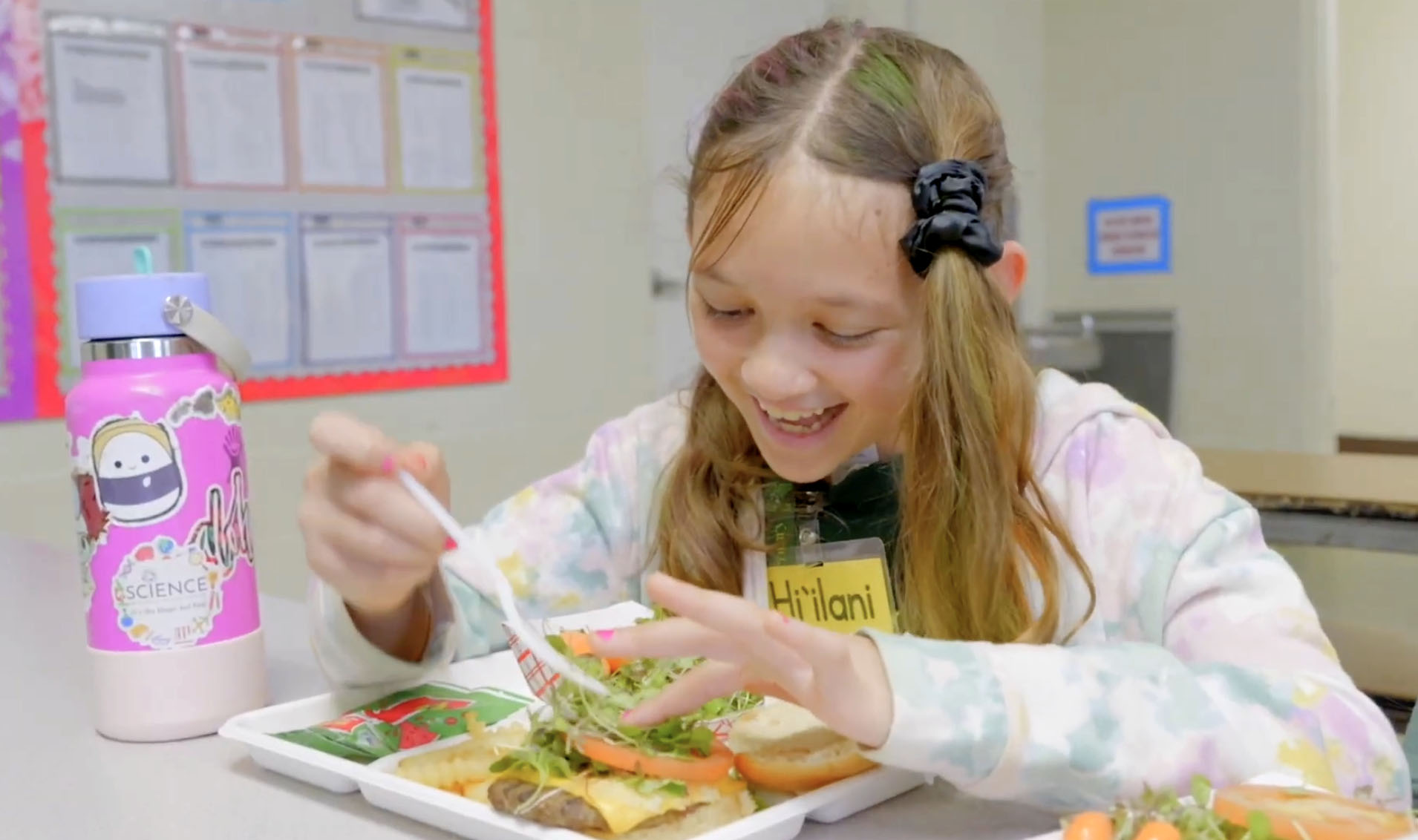
State leaders signed a memorandum of agreement to formalize a statewide partnership to expand the use of locally sourced foods in Hawaiʻi public school meals and strengthen Hawaiʻi’s agricultural and food systems.
The agreement supports the implementation of Act 137 and advances the Hawaiʻi State Department of Education’s ongoing efforts to increase local food procurement, including its goal of sourcing 30% of school meal ingredients locally by 2030.
“Today reflects our shared commitment to feeding our keiki locally sourced, nutritious school meals, investing in our agricultural community, and strengthening the resilience of our food systems,” First Lady Jaime Kanani Green said. “This is what shared kuleana looks like. Healthy meals are an investment in Hawaiʻi’s children, their ability to learn, and their long-term well-being.”
The agreement establishes a framework for state departments and agencies to coordinate expertise, infrastructure planning, workforce development, and agricultural scaling efforts needed to strengthen Hawaiʻi’s local food supply chain.
“We are grateful to our fellow state agencies and our legislators for partnering with us in this work,” Superintendent Keith Hayashi said. “The Department has made steady progress in expanding the use of locally sourced foods in our school meals, and today’s agreement strengthens that momentum through coordinated statewide support for our schools, local farmers, and food producers.”
As part of the effort, the Department of Education will continue developing a statewide regional kitchen network to support public schools. The network is designed to increase scratch cooking capacity, improve operational efficiency, and create larger, more predictable markets for local agricultural producers.
The first regional kitchen facility, currently under construction in Whitmore Village, is expected to begin operations in fall 2027.
Other participating agencies and partners will support the effort through initiatives such as agricultural mapping, crop research, workforce development, economic analysis, transportation planning, and technical assistance to help local producers scale operations to meet school meal demand.
As an example, the state Department of Agriculture and Biosecurity will coordinate statewide GIS mapping of key agricultural commodities needed for the regional kitchen network in collaboration with the University of Hawaiʻi College of Tropical Agriculture and Human Resilience and the Agribusiness Development Corporation.
The Department of Business, Economic Development, and Tourism will conduct economic studies on scaling agricultural commodities and identify funding opportunities and technical assistance for local farmers. The College of Tropical Agriculture and Human Resilience will create crop suitability maps to identify optimal growing regions and conduct research aimed at improving crop yields.
The full agreement can be found online.
Director of Communications earns national honor
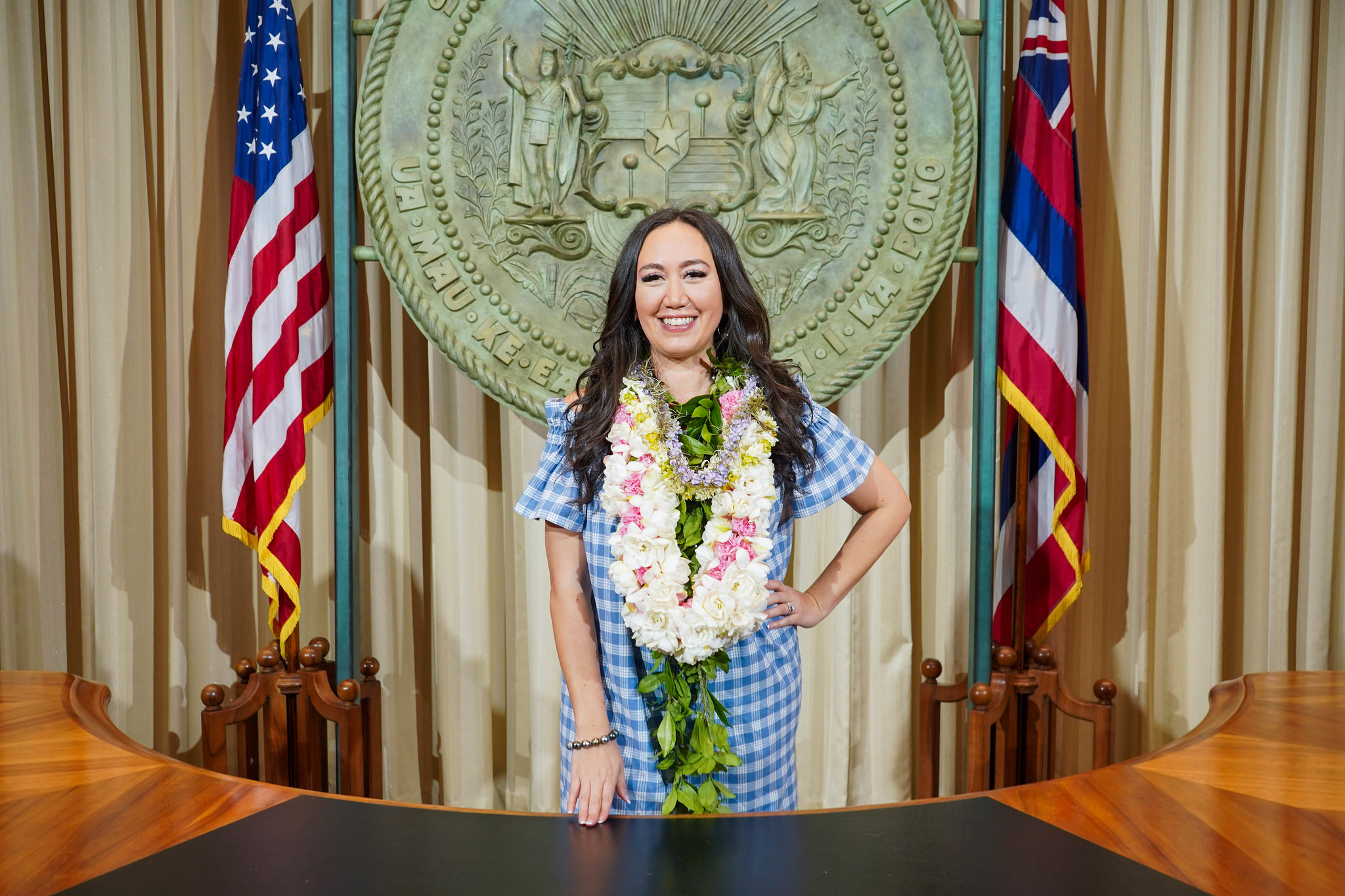
Gov. Josh Green congratulated his Director of Communications, Makana McClellan, on being named the 2026 Communicator of the Year by the National Association of Government Communicators.
National Association of Government Communicators is dedicated to advancing excellence in government communications across federal, state, county, local, military and tribal governments.
The Communicator of the Year Award honors individuals who inspire excellence while serving the public good and McClellan is the first person from Hawaiʻi to receive the national honor.
“Makana has transformed how Hawaiʻi communicates during both emergencies and everyday governance,” Green said. “She helped build a communications operation rooted in urgency, transparency, collaboration and aloha. During some of the most difficult moments our state has faced — from the 2023 Maui wildfires to recent flooding events and tsunami warnings — Makana led with calm, compassion and professionalism, ensuring our communities received accurate information they could trust.”
As Director of Communications, McClellan leads external communications for the Office of the Governor and coordinates with public information officers across every department in the executive branch. Under her leadership, state communicators were brought together into a more unified statewide communications network, improving coordination and consistency across agencies.
McClellan also established mandatory crisis communications training for state public information officers, ensuring agencies were prepared before emergencies occurred. That effort strengthened Hawaiʻi’s ability to communicate during major disasters and fast-moving events requiring real-time public information.
“This recognition belongs to the incredible communications professionals and public servants across Hawaiʻi who show up every day to serve our communities with integrity, compassion and aloha,” McClellan said. “In Hawaiʻi, communication is not just about delivering information — it is about our shared kuleana to care for people, especially during moments of uncertainty, fear and loss. We’ve worked tirelessly to build a culture across government rooted in collaboration instead of silos, because our communities deserve timely, clear and honest communication they can trust.”
“I’m deeply proud to represent Hawaiʻi, our values and our people on the national stage. It matters so much to me that Hawai‘i has finally been recognized with this award — and as a Native Hawaiian woman, I hope this inspires the next generation to continue to teach the world how aloha is the solution to many of our challenges,” McClellan continued.
The award was presented during the National Association of Government Communicators 2026 Communications School in Greater Palm Springs, California.
Care for ʻĀina Now Coalition celebrates Green Fee momentum
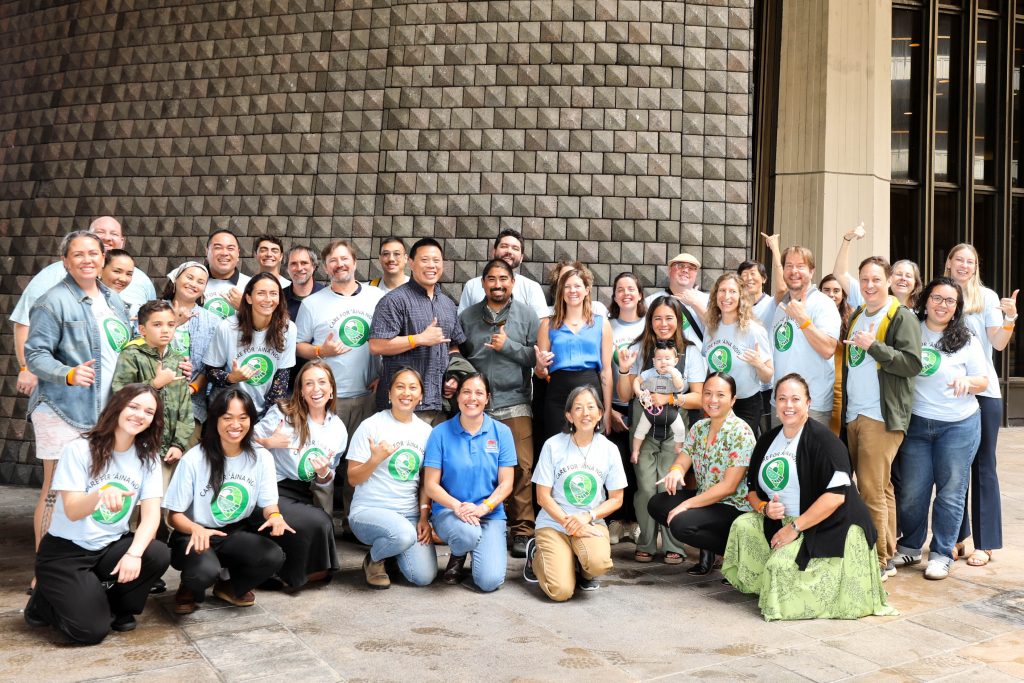
State leaders made meaningful progress through the first major round of Green Fee-related investments aimed at strengthening Hawaiʻi’s environmental resilience and long-term stewardship efforts, according to the Care for ʻĀina Now Coalition.
The historic Green Fee began collection on Jan. 1 and is expected to generate more than $100 million annually. The Hawaiʻi State Legislature has also made significant investments throughout the legislative session, reflected in the state’s supplemental budget.
Among the investments included in the final package are more than $15.7 million for wildfire risk reduction and Firewise initiatives, $6.64 million for community-based ahupuaʻa restoration, $5.75 million for nearshore marine stewardship, $3 million for climate resilience crews, and $1.5 million for community-supported coral restoration projects statewide.
Additional funding is allocated to support watershed restoration, drought planning, invasive species control, reef resilience, flood mitigation, and climate adaptation planning statewide.
“This legislative session demonstrated that Hawaiʻi is beginning to recognize that protecting our natural resources is directly tied to protecting our people, economy, infrastructure, and future,” said Care for ʻĀina Now Coalition member Carmela Resuma. “The Green Fee represents a historic opportunity to invest in resilience and stewardship at a scale Hawaiʻi has never seen before. While there is still much more work ahead, this funding package represents meaningful progress.”
A major priority for the Coalition throughout the legislative session was ensuring transparency and accountability surrounding Green Fee funding implementation. The Care for ʻĀina Now Coalition advocated for House Bill 1949, which sought to create a public-facing system that allows residents to track how much Green Fee revenue is collected, where funding is allocated, what projects are being supported, and what outcomes are being achieved statewide.
While the full dashboard proposal was not enacted this year, Coalition leaders noted the inclusion of dedicated funding for Green Fee project tracking and status monitoring through the Department of Budget and Finance as a meaningful and important step forward.
“For this model to be successful, communities need to know where Green Fee dollars are going, understand how decisions are being made, and feel how these investments are producing measurable impacts across the state,” said Care for ʻĀina Now Coalition member Keone Nakoa. “Transparency builds public trust, and that trust is essential to the long-term success of Hawaiʻi’s resilience and stewardship efforts. Hawaiʻi needs to be able to tell our story, to be the example of what’s still possible.”
As projects advance, there is an opportunity to strengthen community engagement, improve access for grassroots organizations, refine how projects are evaluated and prioritized, and ensure communities remain central partners in shaping future investments.
Coalition leaders stated that this year’s investments represent important progress but acknowledge the need for continued work to address the scale of environmental and climate-related challenges facing the state. They emphasized that accountability must continue beyond the legislative session and into implementation.
As projects continue, the Care for ʻĀina Now Coalition is working collaboratively to help ensure funding produces meaningful and measurable impact.
“The work of caring for Hawaiʻi will take a collective effort beyond one agency, organization, or administration,” Resuma said. “It will take collaboration, transparency, and long-term partnership, and we are committed to helping build those bridges so that we continue to center our community and ʻāina in the work ahead.”