

Business Monday: Aloha Grown supports families, farmers with help from local artist
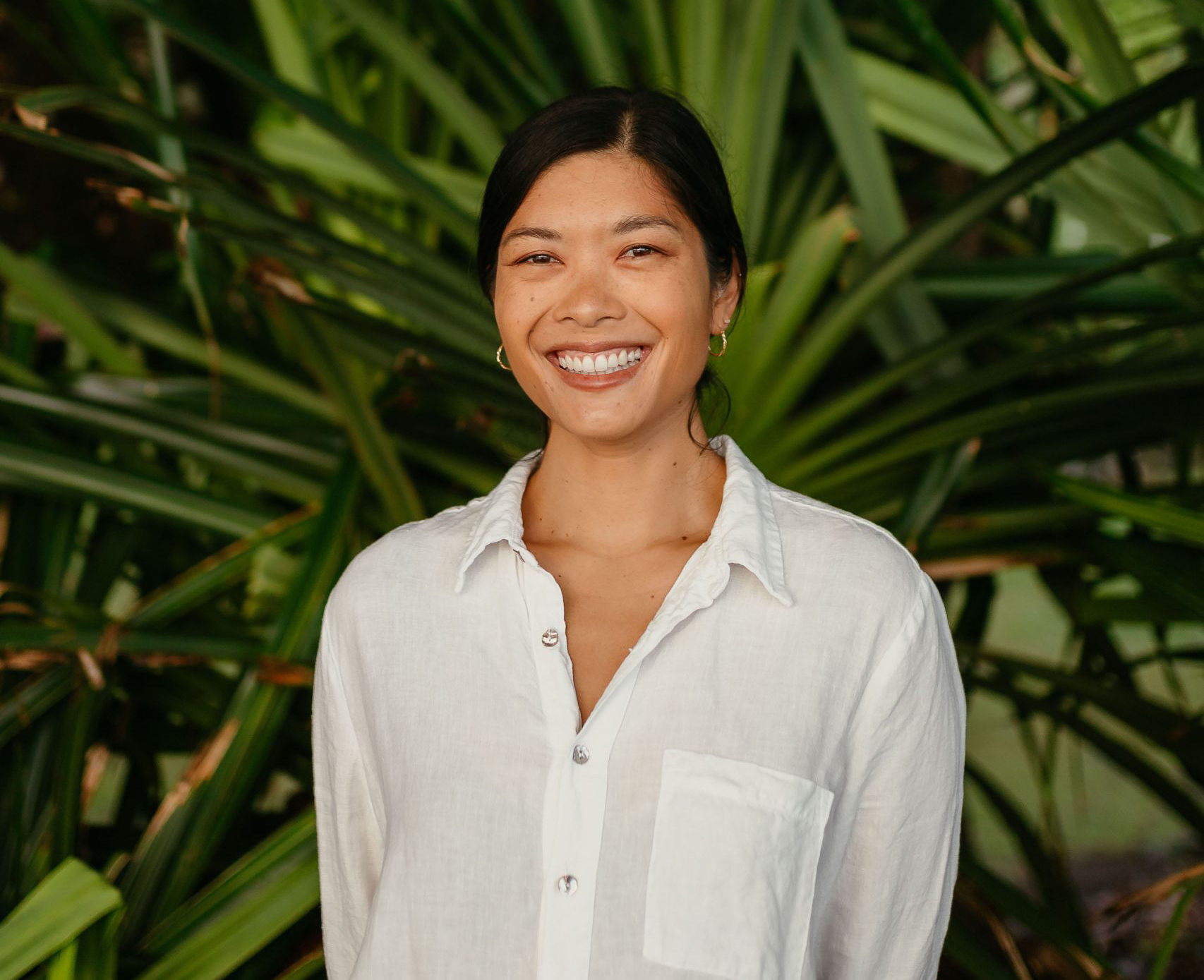
Artist and designer Kailah Ogawa was given a challenge by Hilo-based clothing company Aloha Grown: create two original shirt designs celebrating local culture, farmers and food.
The project fits into the company’s initiative this year to contribute to The Food Basket, Hawaiʻi Island’s food bank that addresses hunger by supporting local agriculture and investing in long-term ways to deal with the chronic problem.
“We’ve worked with Kailah before, and she was the perfect artist to partner with for this collaboration,” said Randy Kurohara, owner and founder of Aloha Grown. “(It) is all about coming together to support local families and the people who grow our food.”
Ogawa’s work is deeply interconnected with place, memory and everyday beauty. This connection was the perfect challenge for her to meet the two shirt themes: “Work of Care” and “Mālama Hilo.”
When creating the designs for the Mālama Kākou collection, Ogawa engaged in conversations about the themes of “mālama” (care) and “pilina” (connection) with her close family and friends.
“When I think of mālama, these are the voices and faces that come to mind: family and friends,” Ogawa said. “They embody so much of what this collection is about — care, community, and the people who make this place so special. It just felt natural to have them take part.”
She asked three questions to help her come up with the designs. What does mālama mean to you? What does it look like? What does it feel like?
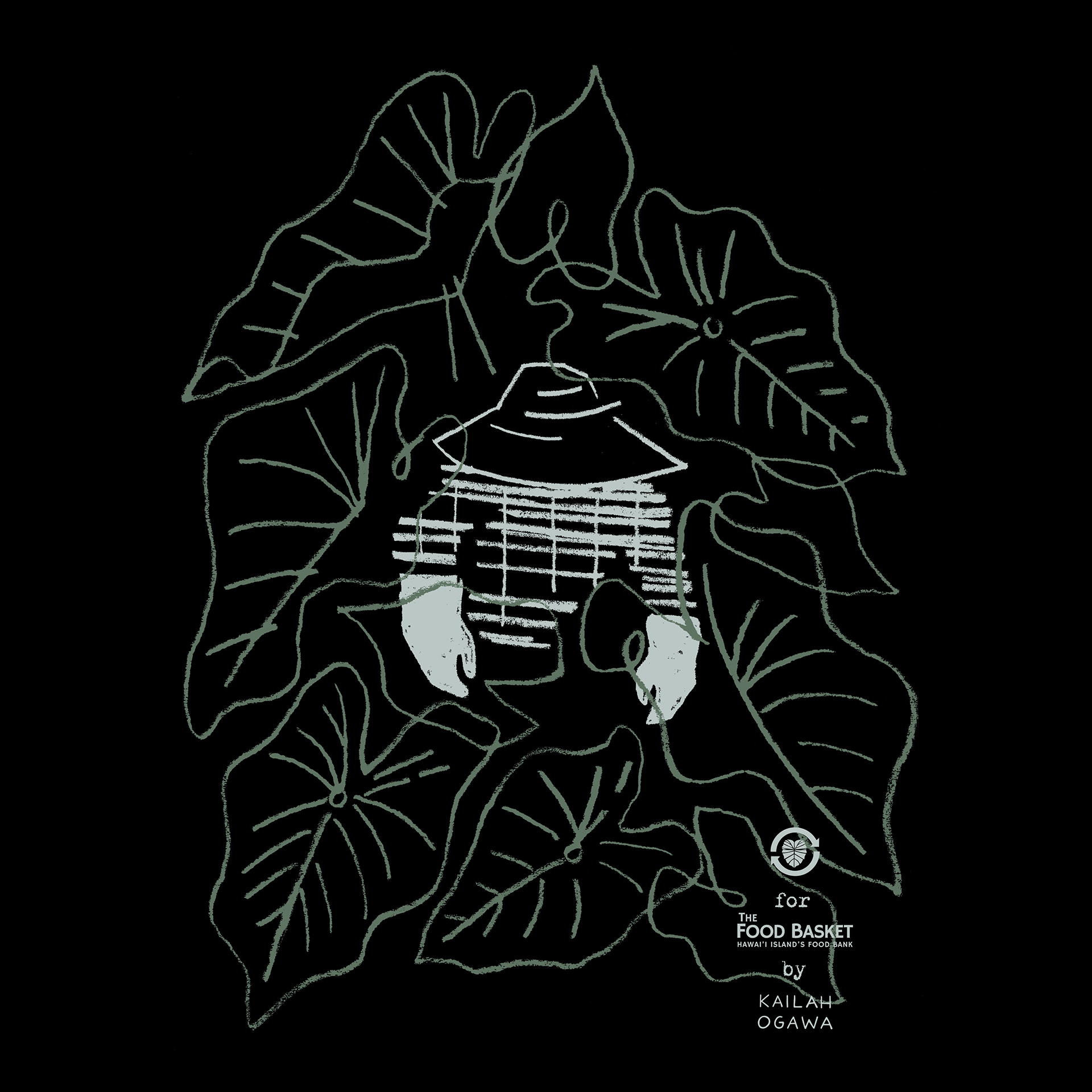
The “Work of Care” design portrays a farmer standing waist-deep in a kalo field, tending to the plants with steady hands. This image honors the quiet, intentional labor of caring for the land, reflecting generations of farmers who understand that caring for the ʻāina also means caring for the community.
The “Mālama Hilo” design depicts a lei woven from phrases reflecting connection and reciprocity: “Mālama ʻĀina. Tending a place returns life to the ʻāina, which then returns us to a place of abundance,” alongside “Everything entirely connected” and “Pilina nā mea āpau.”
The woven text mirrors the twists of a hilo lei, symbolizing relationships intertwined with intention. The design also pays tribute to Hilo, the hometown of Ogawa, who currently works as part of Welcome Stranger, a creative agency based on Oʻahu.
“All of my designs come from simple things I see in my everyday life, and these designs reflect what it takes to sustain life,” Ogawa said. “It means a lot to see that my art can be used in a way that supports our community and helps our neighbors have food on the table.”
Each design is available on shirts for $35 and on totes for $45, with 100% of the proceeds going directly to The Food Basket through May 31.
On Friday, Aloha Grown hosted a pop-up for the public to celebrate the collaborative project and start in-person shirt sales at its store at 224 Kamehameha Ave. in downtown Hilo. The event featured music and refreshments.
“No one should be hungry on ʻāina as abundant as Hawaiʻi Island, yet nearly half of our neighbors experience food insecurity,” said Kristin Frost Albrecht, executive director of The Food Basket. “Partnerships like this help us continue building a food system that feeds our people, supports our farmers, and cares for our land.”
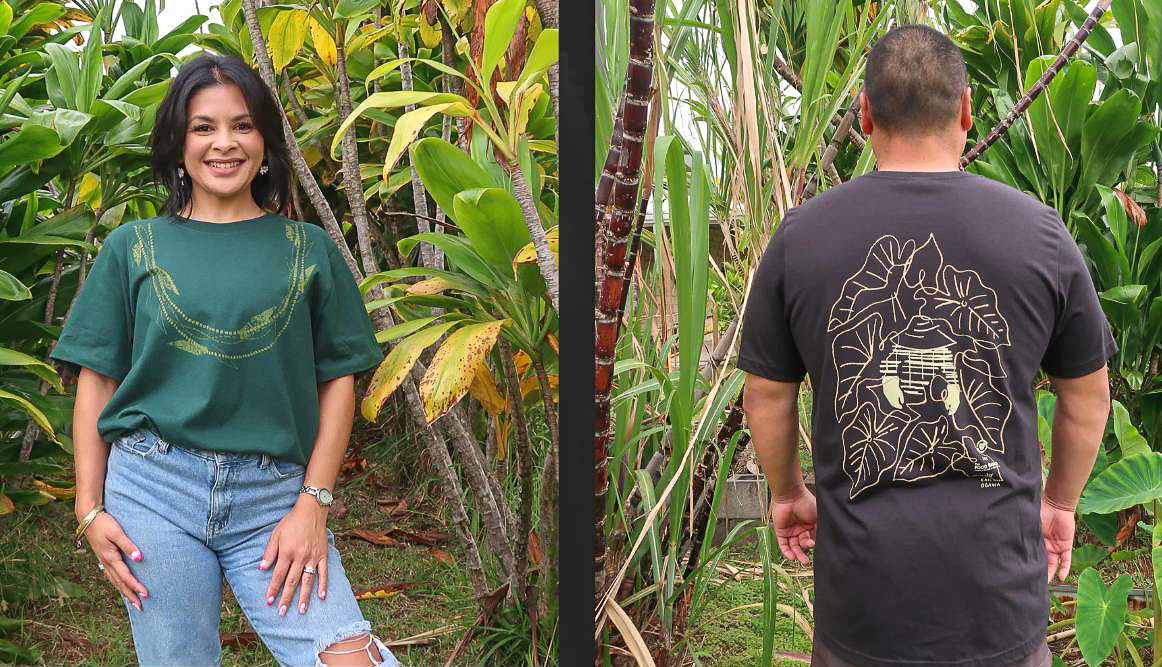
The Mālama Kākou collection is available on the Aloha Grown website or at its retail stores in Hilo, Kailua-Kona and Waimea.
The proceeds from the shirts will support The Food Basket’s programs that assist ʻohana across the island who struggle to have enough to eat. These programs include:
- School Pantry/Keiki Backpack: Provides nutritional supplements to low-income elementary students at Community Eligible Provision schools where 25% or more of students qualify for free meals. School pantries provide access to food that students can take home, and keiki backpacks send food home over long breaks or holidays.
- Da Bux: Discounts Hawaiʻi-grown produce at DA BUX retailers by 50% for customers paying with SNAP benefits. The Food Basket uses DA BUX program funds to reimburse retailers for the discounts.
- Food Pantries: Stocks and operates food pantries and soup kitchens in every district more than once a week.
In addition to these programs, The Food Basket is working to open a farmer’s market at the Hoʻolako food systems campus at 505 Ponahawai St. in Hilo. Local vendors will be able to sell produce, plants, locally produced products, proteins, flowers and wellness/botanical products.
Once the Hoʻolako Campus Farmers Market begins, it will celebrate Hawaiʻi County agriculture by prioritizing locally grown and locally made products, requiring that fresh produce comes from Hawaiʻi County.
To apply for the future farmer’s market or other programs for ʻohana, keiki, kūpuna and farmers, visit the Hawaiʻi Island Food Basket website.