

Hawaiʻi County Department of Environmental Management outlines its budget for council
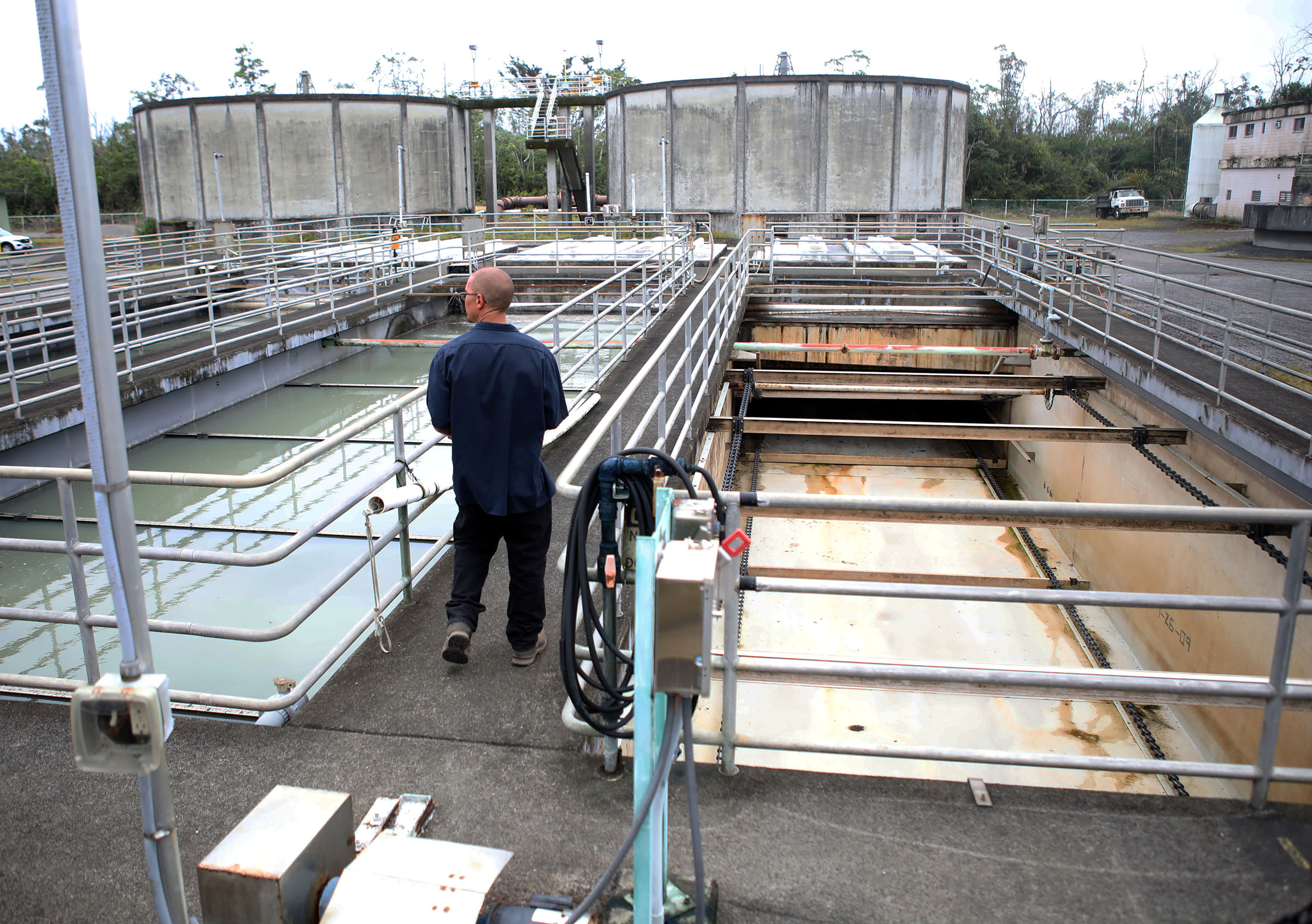
Daniel Girvan, the new director of the Department of Environmental Management, gave a presentation to the Hawaiʻi County Council on Thursday about its priorities that include several wastewater projects for its proposed budget of $95.5 million for fiscal year 2026-27.
The department’s budget, one of the largest in the county, has a proposed increase due to rises in salary, wages and equipment operation costs and despite difficulties filling positions in its wastewater and solid waste divisions.
Of the department’s 264 positions, 70 are vacant, including leadership roles of chief, deputy chief and superintendent.
“For a long time, the job descriptions asked for only civil engineers, but truthfully, any good civil, mechanical or process engineers would be great,” said Girvan, who became head of the department five months ago. “They are project managers more than engineers. Having the description so limited took a whole group of people out of the picture, so we’re hopeful for more applicants moving forward.”
The department did not use the entire funding provided in the current budget, prompting County Council members James Hustace and Matt Kanealiʻi-Kleinfelder to question why and say that its budget may need tightening if more positions remain unfilled.
The County Council has been reviewing Mayor Kimo Alameda’s proposed budget of nearly $1 billion throughout the week and on Thursday also focused on proposals from the Department of Parks and Recreation, the Office of Aging, the Office of the County Auditor, the Office of the County Clerk and Elections Division, and the Mass Transit Agency.
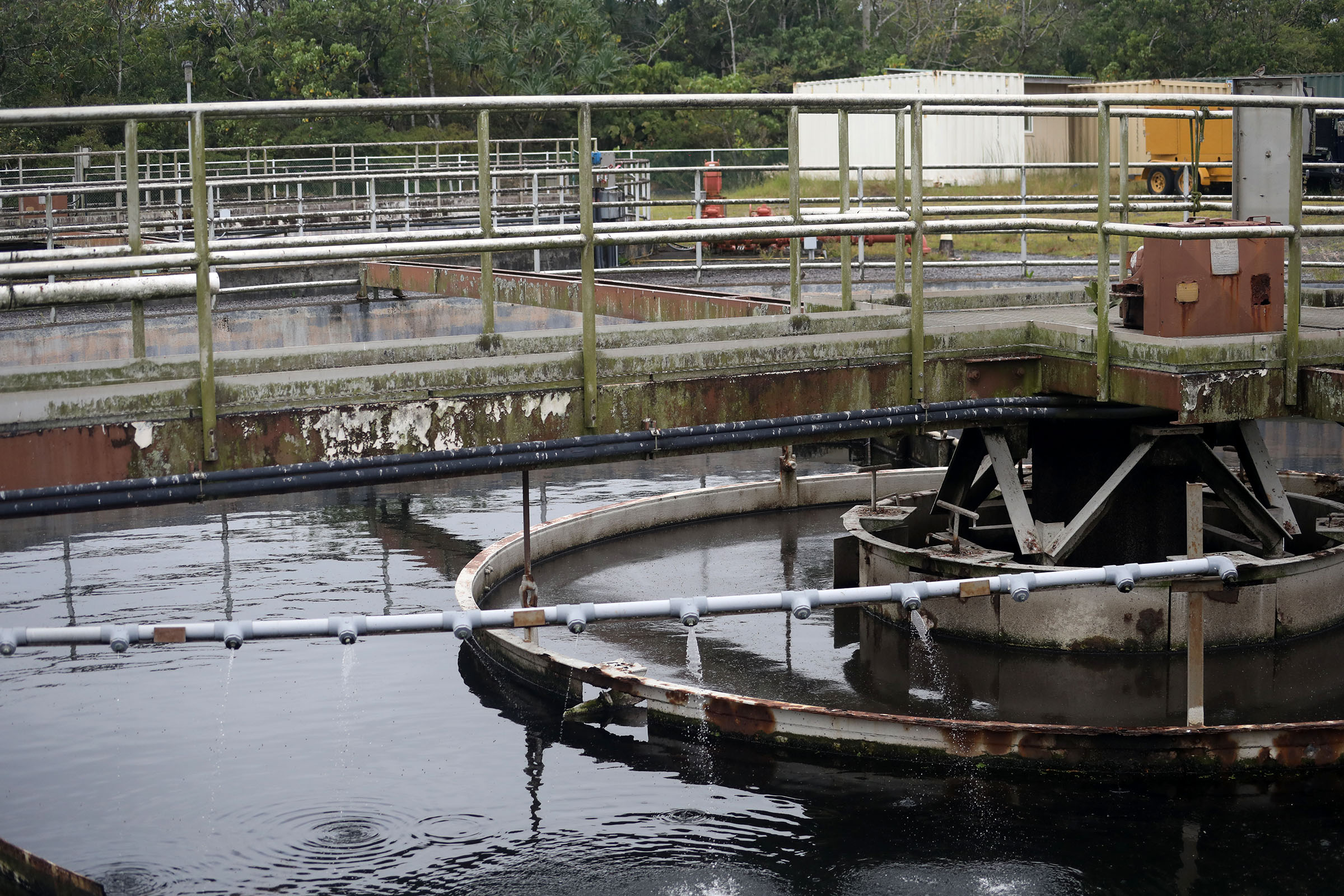
In its presentation, the Department of Environmental Management listed its priorities and initiatives, including:
- Continuing construction of the Hilo Wastewater Treatment Plant Upgrades Phase 1
- Completing the Pāhala Wastewater Collection System Phases 1 and 2
- Continuing construction of the Pāhala Wastewater Treatment Plant
- Completing construction of the Hale Hālāwai SPS Force Main Replacement
- Beginning preparation of a master plan for the multiple solid waste facilities at Kealakehe
- Amending County Code to give the Department of Environmental Management the legal authority to implement the Pretreatment Program
According to the department, the Pāhala Collections System is set to be completed this fall, the Hale Hālāwai Main Replacement will be done by September, and construction will continue in June at the Hilo Wastewater Treatment Plant.
One objective from the department is to establish new sewer fee rates sufficient to cover costs of operations, maintenance, repairs and replacements. But County Council members pointed out that rates would have to increase significantly since the majority of the island is not connected to sewer lines.
“You need to increase the amount of customers and the rates and if residents are located near existing sewer lines, but not using them, that needs to be taken care of,” Kanealiʻi-Kleinfelder said. “With the extra funds left over in the department, that should have been addressed. I am concerned that over the last five years, that has not been a dent in the problem.”
The Department of Environmental Management surprised the County Council when it stated that it has been undergoing a sewer rate study since 2021 and that the total of all delinquent accounts adds up to $1 million in lost revenue.
According to Section 21-5(a) of the County Code, owners of all dwellings, buildings or properties accessible to a sewer are required to connect directly with the public sewer within 180 days after the date of official notice.
Property owners that fail to connect to the sewer system and fail to respond to notices are called delinquent accounts, and their cases may be referred to the Office of Corporation Counsel for legal action.
Violations can result in a fine of up to $500, with each day of continued violation after conviction considered a new offense. But the department had not been following up on offenses or enforcing these violations.
“One project that this department has done a bad job of enforcing is delinquent accounts,” Girvan said. “It turns out that we have mechanisms in place to address this, we just need to utilize them.”
The council also pointed out the department had to redo its bid for the Kealakehe Wastewater Treatment Plant R-1 upgrades. But Girvan said the project timeline should not be compromised.
“This has been impressively unimpressive, unfortunately,” Kanealiʻi-Kleinfelder said. “You have bigger fish to fry and you need to take care of these issues because the massive CIP impact from the Department of Environmental Management on the county is going to stack a massive amount of expense on the county and the more that stacks, the harder it will be to carry the load.”
According to the Proposed Capital Budget and Six-Year Capital Improvements Program, the Department of Environmental Management is searching for $62 million in Capital Improvement Project funds. The projects include:
- Repair/Replacement of Wastewater Facilities ($10 million): Major repairs and/or replacement of wastewater facilities at various locations to ensure compliance with regulations under HAR 11-62 Wastewater Systems, HAR 11-54 State Water Quality Standards, HAR 11-55 State Water Pollution Control, and the U.S. Environmental Protection Agency.
- Rural Transfer Station Repairs and Enhancements ($2 million): Infrastructure repairs and improvements to the rural transfer station locations, such as the construction of recycling and green waste collection facilities and modifications to refuse collection facilities.
- Kulaimano and Pāpaʻikou Rehabilitation and Replacement ($9.5 million): Various items at the Wastewater Treatment Plants, including replacement of inoperable headworks screen equipment, headworks electrical and motor control center improvements, headworks odor control replacement, new grit removal screening equipment, aeration basin blowers and turbine aerator replacement, aeration line replacement, site improvements for portable dewatering equipment, and secondary clarifier equipment replacement.
- Nāʻālehu Wastewater System ($40 million): Close three large capacity cesspools and construct a new transmission main, new pump station, new package treatment plant, a reuse or disposal system for the treated wastewater, and a new wastewater collection system.
- Ocean View Transfer Station ($500,000): Complete the site design and construction of an open-top walking floor trailer to collect and transport municipal solid waste and provide spaces for recycling components.
Friday is the last day of the budget review process in which the council hears the proposals during special commitee meetings. The County Council will hear proposals from the Department of Public Works, the Department of Research and Development, the Office of Sustainability, Climate, Equity, and Resilience, and the Planning Department.
Earlier this week, the council heard from Alameda about the overall budget and from the other county departments:
- Hawai‘i County Council begins budget discussions for upcoming fiscal year
- This is what Hawaiʻi County public safety departments proposed for their new budgets
If the council committee approves the proposals, it will forward the operating budget (Bill 135) and capital budget (Bill 136) with a positive recommendation to the full council for a first reading during a special meeting on May 21.
The council can’t move forward with the budget until the finance director provides them with what the net taxable real property will be for the upcoming fiscal year. Also, the council is responsible for setting the new third tax tier for second homes that are valued at more than $4 million.
The council has until June 20 to adopt the tax rates.
The council has until June 30 to adopt the operating and CIP budgets.