



Lava spattering at Kīlauea calms, with experts forecasting potential change in eruptive window
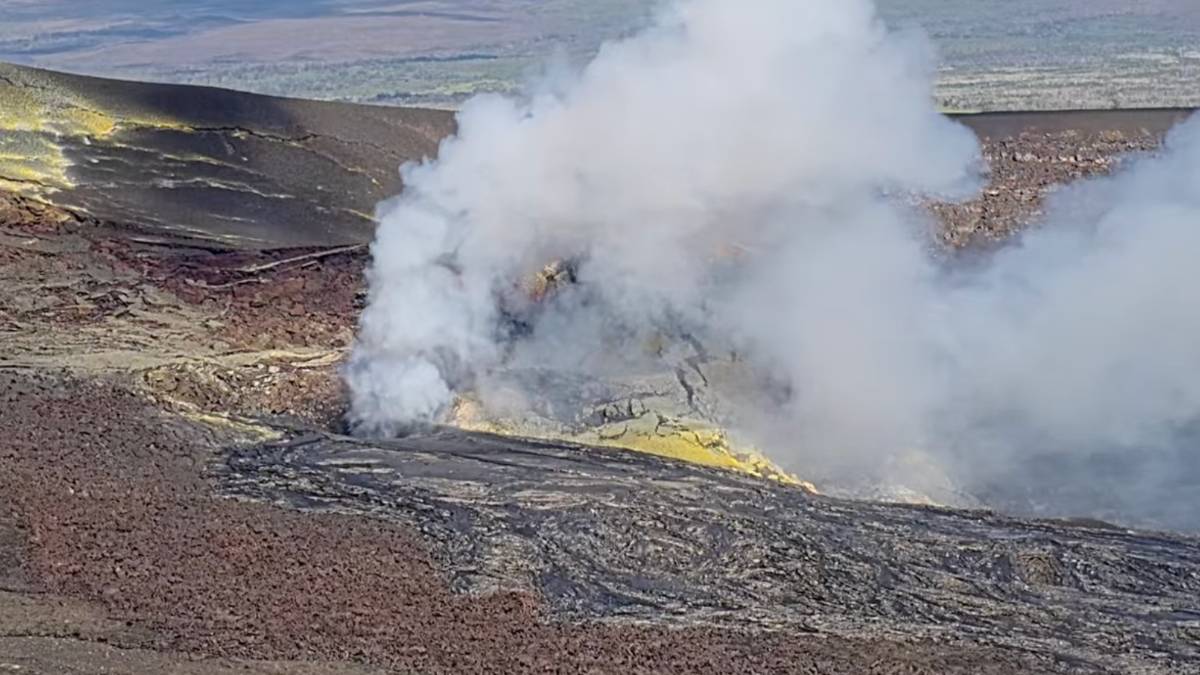
Kīlauea appears to be quieting, potentially delaying the onset of the next lava fountaining forecast window.
There were no overflows from either of the Halemaʻumaʻu eruptive vents in the past 24 hours, according to the daily update from the Hawaiian Volcano Observatory.
The summit of Kīlauea within Hawai‘i Volcanoes National Park has been slowly deflating since Sunday morning.
Further overflows and associated spattering are expected to occur as the onset of episode 44 lava fountaining approaches. Models based on summit inflation indicate that episode 44 lava fountains are likely to begin between now and April 15, with April 7–10 most likely.
However, given the summit region deflation since Sunday morning, the start could be delayed to later within the forecast window.
The most recent was a south vent overflow around 6 a.m. Monday morning. On Monday night, several periods of degassing-related flaming were observed in webcam views of the eruptive vents, and continued strong glow indicates that lava remains close to the surface.
Kīlauea has been erupting episodically since Dec. 23, 2024, from two vents (north and south) in Halema‘uma‘u. Lava fountaining episodes, which generally last for less than 12 hours, are separated by pauses that can be longer than three weeks.
Episode 43 lava fountaining lasted for nine hours on March 10.
The continued tremor, visible glow, and precursory overflows from the eruptive vents following the eruption suggest that another lava fountaining episode is likely soon, the daily update indicates.
No significant activity has been noted along Kīlauea’s East Rift Zone or Southwest Rift Zone.
Seismic tremor is continuous with frequent small, poorly defined bursts possibly related to the rise and fall of magma within the vents.
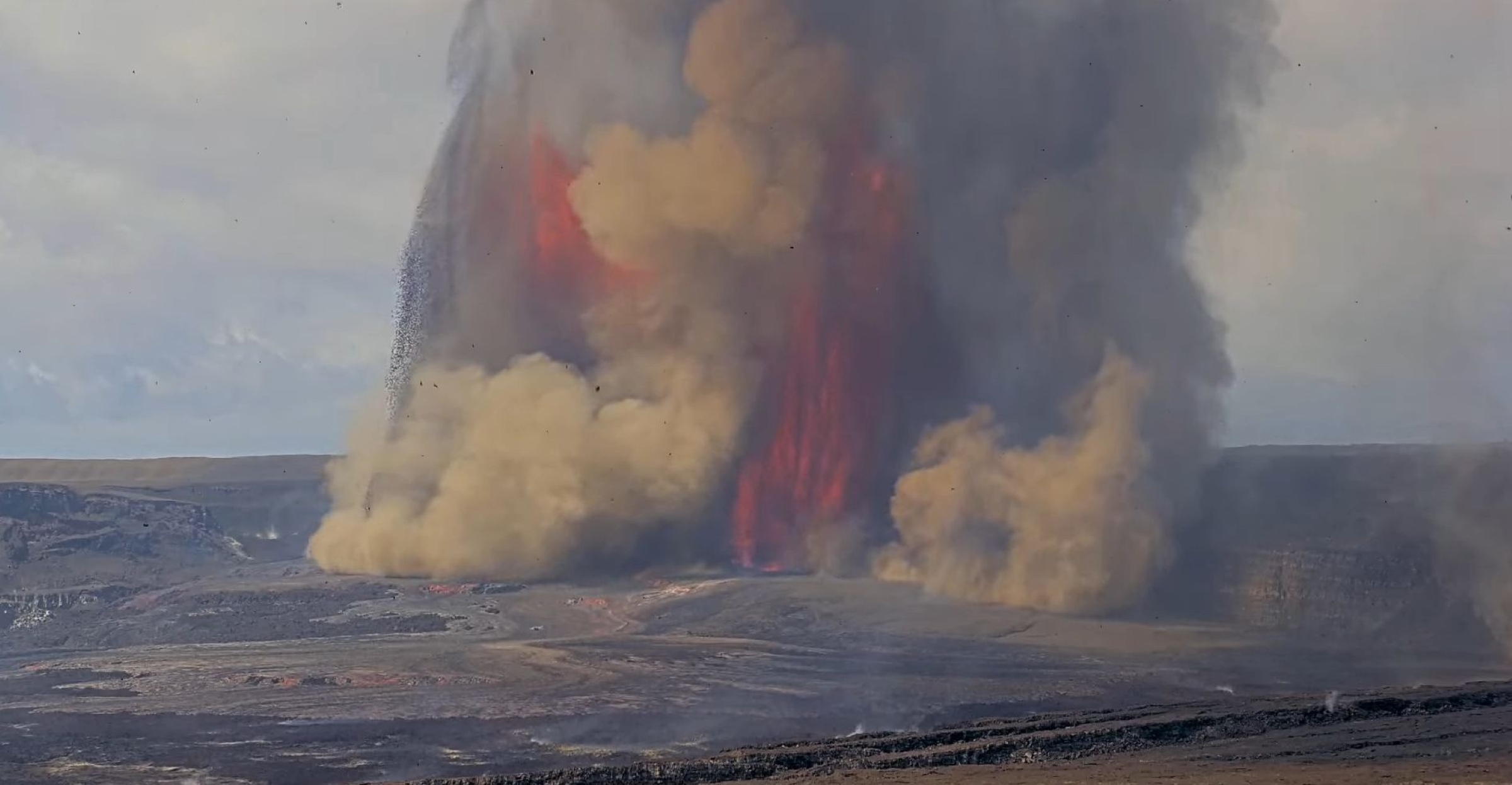
Summit tiltmeters UWD and SMC have recorded mostly inflation since the end of episode 43, with a switch to slow deflation early on April 5. By that point, the UWD tiltmeter had recorded about 24.4 microradians of inflationary tilt. Since Sunday, the UWD tiltmeter has recorded a total of about 1 microradian of deflation.
During eruptive pauses like the one at present, the sulfur dioxide emission rate from the summit has varied within a typical range of 1,000 to 5,000 tonnes of SO2 per day. Winds have been calm with highly variable directions since yesterday afternoon.
Sponsored Content


Subscribe to our Newsletter
Comments