



Change coming to how volcano alert level, aviation color code are applied during Kīlauea lava fountaining episodes
Starting after the next episode of lava fountaining, Episode 44, which is forecast for April 6-14, Hawaiian Volcano Observatory will change how it applies Kīlauea’s alert level and aviation color code.
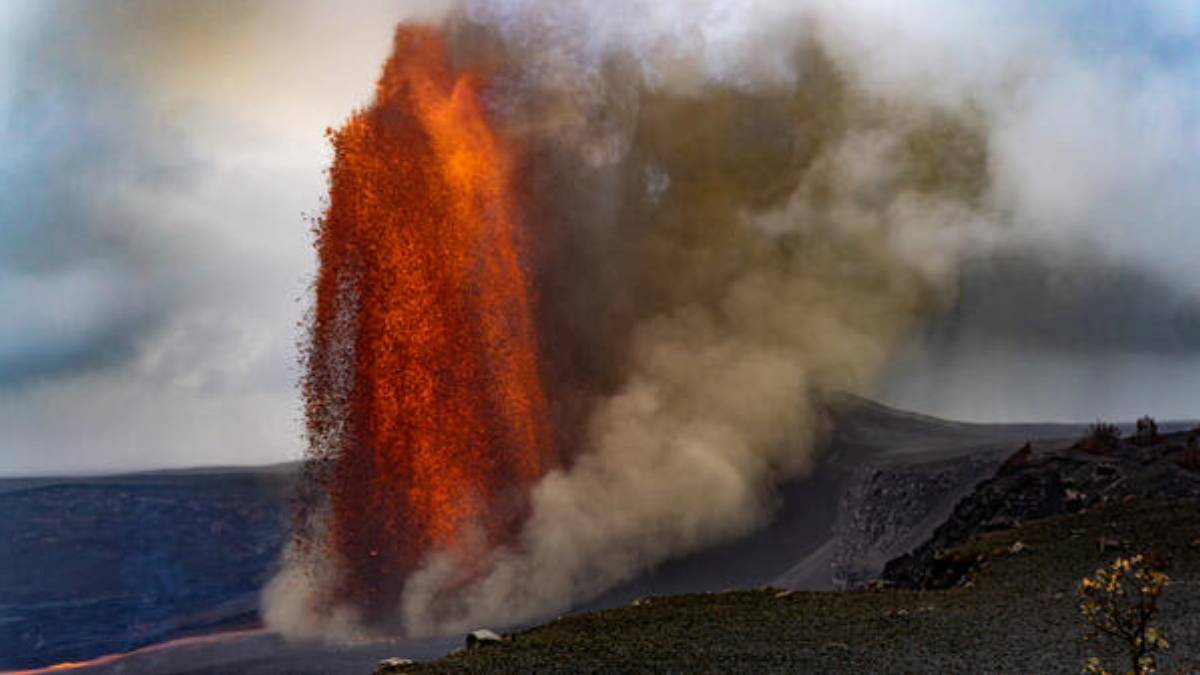
Hawaiian Volcano Observatory uses U.S. Geological Survey volcano alert levels and aviation color codes to communicate to the public and aviation community about volcanic activity, including associated ground and airborne hazards at Kīlauea during its ongoing episodic summit eruption that started Dec. 23, 2024.
The following alert level/aviation color code changes, which will be reported in a Volcanic Activity Notice and Volcano Observatory Notice to Aviation, will take place:
- END OF LAVA FOUNTAINING EPISODE: Kīlauea aler level and aviation color code will be lowered to Advisory and Yellow, indicating that volcanic activity decreased significantly but continues to be closely monitored for increased activity leading to lava fountaining.
- START OF A LAVA FOUNTAINING EPISODE: Kīlauea alert level and aviation color code will be raised to Watch and Orange, indicating an eruption is underway but poses limited hazards.
- PEAK LAVA FOUNTAINING: Kīlauea alert level and aviation color code will remain at Watch and Orange unless a significant impact is expected in Hawaiʻi Volcanoes National Park and surrounding communities or there is the potential for the event to have a significant impact to air traffic or aviation infrastructure. IF hazardous fallout and significant ash emissions occur, Hawaiian Volcano Observatory will raise the alert level and aviation color code to Warning and Red.
Find definitions for U.S. Geological Survey volcano alert levels and aviation color codes online.
These updates will more clearly distinguish hazards during eruptive pauses and lava fountaining episodes.
Pauses have lengthened from a few days at the beginning of the eruption to more than three weeks at present. During pauses, eruptive hazards are greatly reduced.
The forecastable nature of these fountaining episodes allows Hawaiian Volcano Observatory to move between alert levels/aviation color codes with greater confidence than is typical before the start of a new eruption.
The observatory will continue to message about other changes in between major events via daily updates, status reports and short messages on its website and social media @USGSVolcanoes.
“We appreciate the patience of residents and partners as [Hawaiian Volcano Observatory] continues to adapt its communication to reflect this historic, evolving eruptive sequence at Kīlauea summit,” said Hawaiian Volcano Observatory in an information statement.
Subscribe to the Volcano Notification Service to receive timely updates about volcano alert level and aviation color code.
Check out the “Volcano Watch” article “Volcano Watch: Adapting to an evolving eruption; revising Kīlauea’s Alert Level and Aviation Color Code Notifications” for additional information.
More Information about Kīlauea volcano:
- Kīlauea activity summary available by phone: 808-967-8862.
- Kīlauea webcam images.
- Kīlauea photos/video.
- Kīlauea lava-flow maps.
- Kīlauea FAQs.
Hawaiian Volcano Observatory is one of five volcano observatories within the U.S. Geological Survey. It is responsible for monitoring volcanoes and earthquakes in Hawaiʻi and American Samoa.
Email to askHVO@usgs.gov for any additional information or with any questions.
Sponsored Content


Subscribe to our Newsletter
Comments