



Team Rubicon helps homeowners clean hazardous debris from Kīlauea eruption
During Kīlauea’s current ongoing eruption, the Big Island volcano has been spewing lava into the air periodically for more than a year. But Episode 41 on Jan. 24 was different, and highly unusual.
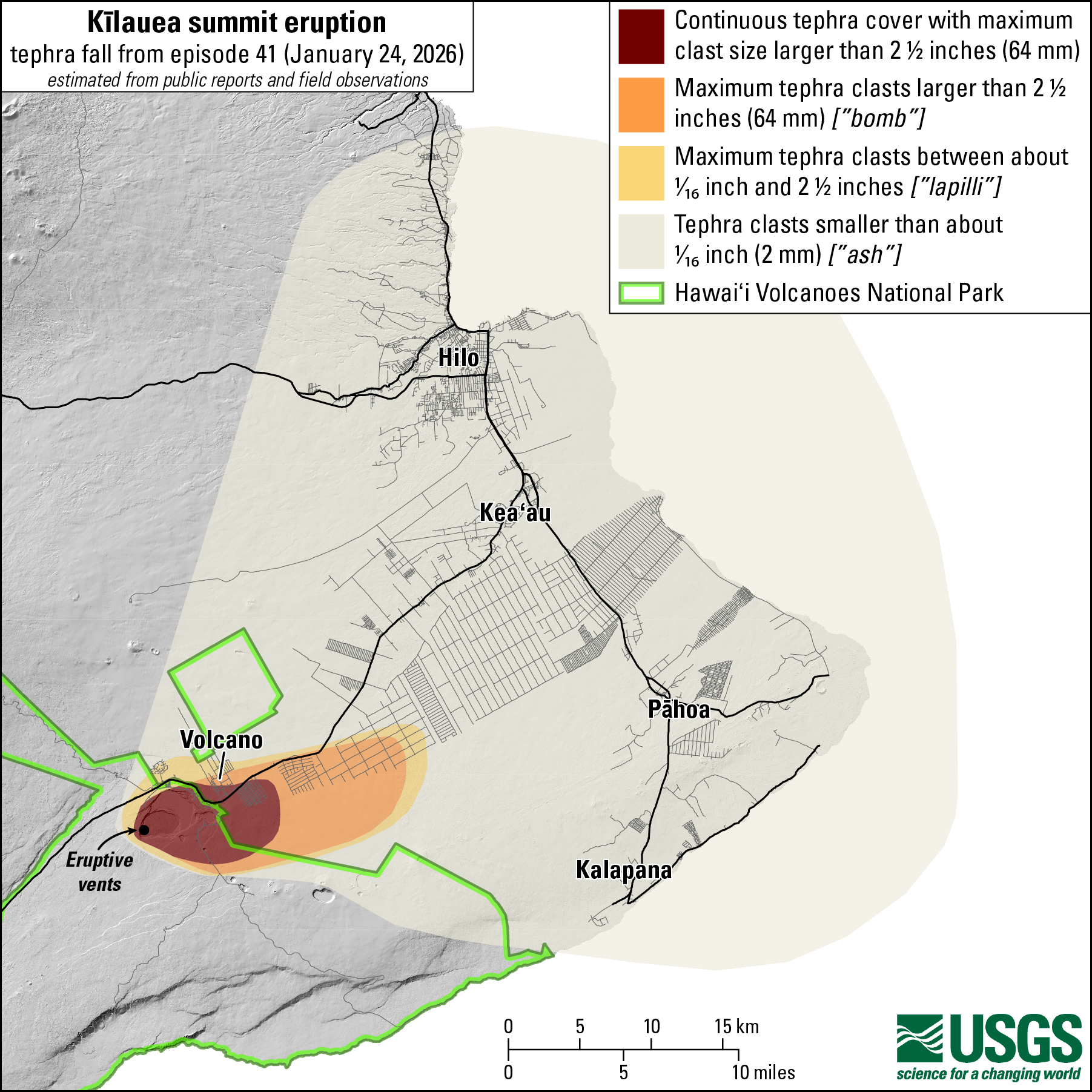
Volcanic debris known as tephra landed on much of Puna and into South Hilo and the eastern edge of Kaʻū, leaving a big mess to cleanup.
While the government cleared roads and public property, Bill Hanson, Administrative Officer for the Hawaiʻi County Civil Defense Agency, said earlier this month that the agency had no plans to remove tephra from private property. Instead, it was coordinating with nonprofit groups for assistance.
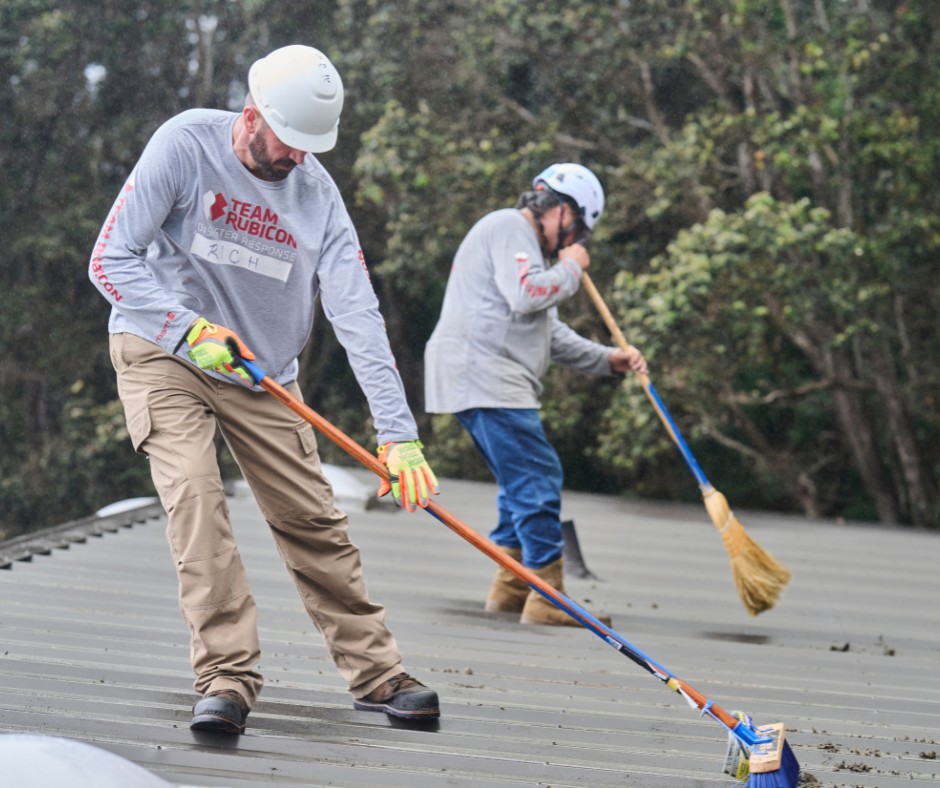
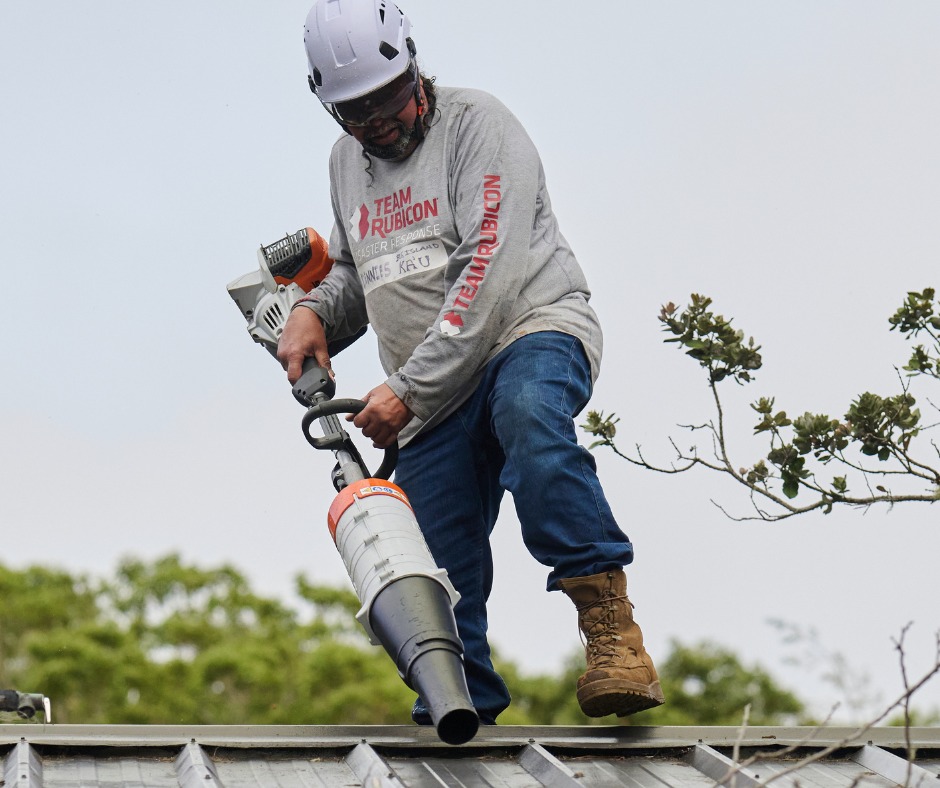
That help arrived this past week for some homeowners in Volcano. Team Rubicon, a veteran-led global humanitarian disaster response organization, worked with local volunteers (which Team Rubicon calls Greyshirts) and outside volunteers to remove ash, tephra and other volcanic debris. At least a dozen people volunteered each day.
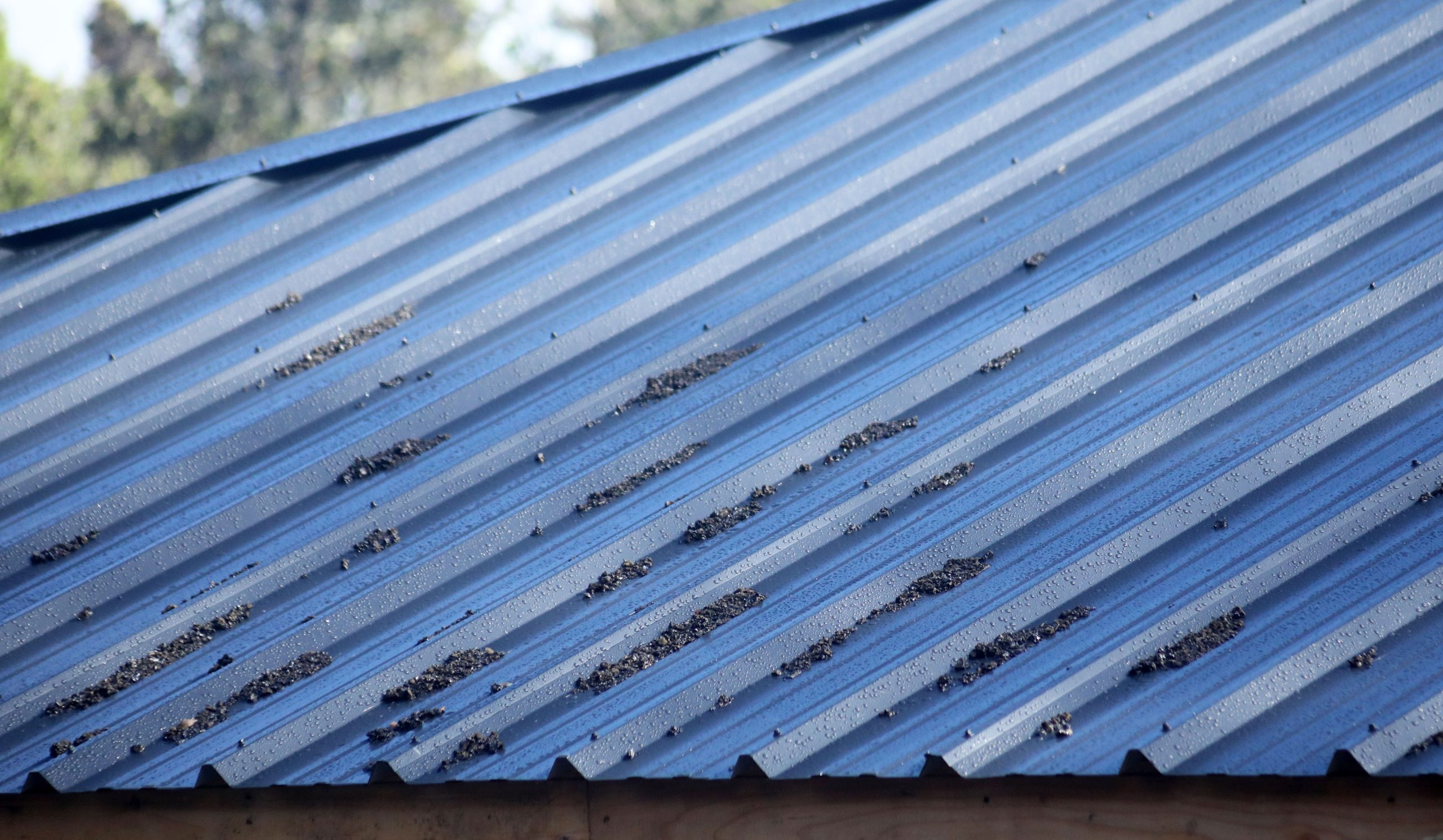
Team Rubicon, which provided a free week of service that ended Wednesday, was focusing on clearing tephra that could enter water catchment systems and contaminate water supply to businesses and households, or clog water systems.
It is particularly important because “anything that hits the roof or the gutters has a possibility of going into those holding tanks, and the material — the ash and tephra — has some acidity to it and can block systems in there, so it’s not good,” said Bill Terrell, incident commander for this Team Rubicon operation.
Once the tephra is blown or swept off the roof, it easily breaks down into small particles and it can either be blown by a leaf blower, or break down enough to be mowed. However, it is not any easy task to clean up the tephra, and can be dangerous.
While removing tephra from roofs, volunteers either brush the debris down with a broom, or use a leaf blower. They also make sure to clear the gutters out so that there’s a free flow for the water to come from the roofs, through the downspouts, and into catchment systems.
Volunteers agreed to help remove tephra from the roofs, gutters, and water catchment systems of more than 60 homes, which is the number Civil Defense identified as needing immediate assistance. However, Team Rubicon was only able to clear 23 homes in the Volcano area.
“When we arrived and started going to these locations, there were many that had been taken care of, but also some that we couldn’t respond to since we did not have the required safety equipment to get on some of the roofs,” Terrell said. “Some of the pitched roofs would have required us to have ropes and more safety equipment.”
Volcano resident Jesse Tunison tried to clear his family’s roof on Jan. 26. He slid and fell more than 20 feet to the ground, shattering his wrist.
“Volcano had just experienced a drought, so my mentality was all about collecting fresh, clean water,” Tunison said “Unfortunately, I shattered my wrist, which requires surgery and at least a year of physiological therapy. I won’t be using it for several months, but I’m thankful because it could have been much much worse.”
On Feb. 14, Team Rubicon volunteers visited Tunison’s house to see if they could clear the tephra, but the height of the house and the moisture on the roof made the job unsafe. While they wanted to help, they were only equipped to do a single story.
It is unclear if there will be more help available for the homeowners who still have tephra on their roofs.
“Volcano Village residents were very unprepared because of the lack of precedent,” Tunison said. “I think the County and State were also unprepared. This kind of response has never been on their radar. The community has been understanding of that.”
The unusual movement of the volcanic debris during Episode 41 was caused by strong updrafts when the two fountains of lava were going high into the air, reaching heights of at least 1,475 feet. The tephra then was blown far distances east and north.
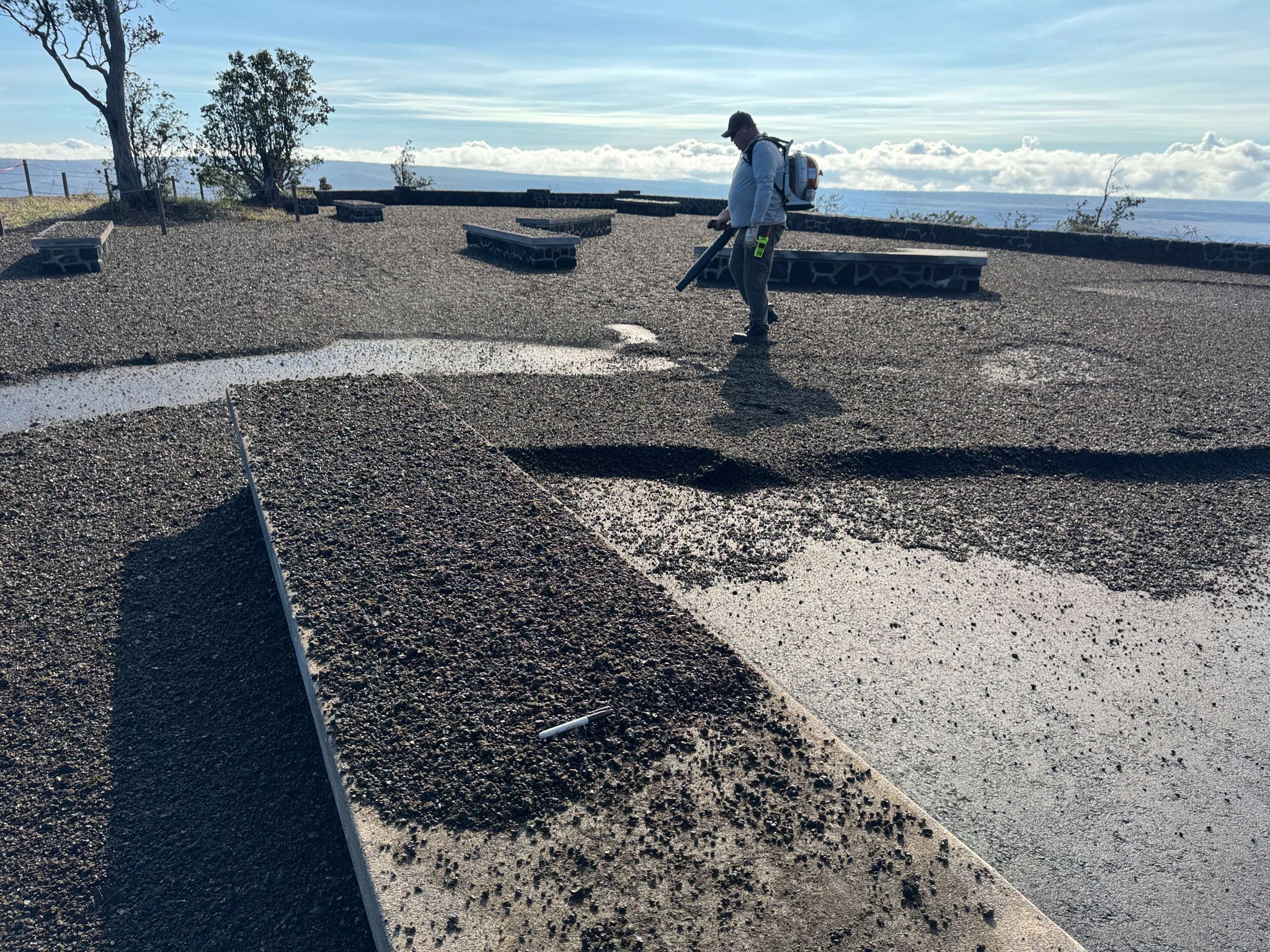
According to the Hawaiian Volcano Observatory, tephra fallout was densest within 5 miles east-northeast of the vents in Halemaʻumaʻu crater, with a thick tephra layer covering the summit region of Hawaiʻi Volcanoes National Park and parts of Volcano Village and Mauna Loa Estates adjacent to the National Park.
“The ground in these areas was completely or nearly completely blanketed with pieces of tephra that was so thick in areas that road markings were not visible to drivers,” the observatory said in its Volcano Watch: When it rained rocks.
Residents and visitors reported everything from fine ash to reticulite (easily breakable volcanic rock) measuring up to 1 foot in diameter.
The last time tephra of this size fell was more than 40 years ago, during the Puʻuʻōʻō vent eruption on the East Rift Zone of Kīlauea, which experienced its 30th episode of lava fountaining on Feb. 4, 1985.
The tephra includes Pele’s hair, which are thin golden fibers of volcanic glass, that was reported over the summit area of Hawaiʻi Volcanoes National Park, parts of Volcano Village and Mauna Loa Estates, and even as far away as Hilo. Smaller tephra and ashfall were reported from Mountain View to Pāhoa to Pepeʻekeo.
While the Hawaiʻi County Civil Defense Agency provided precautionary information about the volcanic debris, warnings about health impacts and assistance, some community members have had a hard time getting all the information from the county.
“Most of our community is kupuna. They have a hard time navigating all the links or signing up for alerts online,” Tunison said. “I think if there were permanent lists of all the resources residents can access printed out and posted at the Cooper Center, it would help immensely.”
According to Tunison, the Volcano Emergency Response Team has been doing a great job handling out free personal protection equipment, such as N95 masks, gloves and protective glasses, which are needed for cleaning tephra.
Tephra poses health risks, irritating and potentially damaging the respiratory system and eyes. It usually forms when small-scale explosive activity of lava fountains shreds and blasts molten rock into the air, solidifying before falling to the ground.
However, this type of activity is rare for Kīlauea, which typically erupts with lava flows.
On Feb. 15, Episode 42 lasted nearly 10 hours. This event produced minimal tephra fall outside the closed area of Hawaiʻi Volcanoes National Park.
But the current episodic lava fountaining eruption at the summit of Kīlauea is not over, and a combination of fountaining dynamics and wind conditions will determine where tephra fall may occur in future episodes.
Preliminary models suggest the likely forecast window for the onset of Episode 43 lava fountaining is March 2 to 14.
While preparing for the next eruption episode, the Hawaiʻi County Civil Defense Agency advises the public to take the following safety precautions:
- Temporarily disconnect gutters feeding into water catchment systems; and do not reconnect the system until volcanic hazards have passed and ash and debris are washed off the roof, out of the gutters and lines
- Close doors and windows and stay indoors where possible until it is safe to go outside
- Use goggles and masks while cleaning tephra to avoid exposure to skin, eyes and respiratory system
- Those with respiratory sensitivities should take extra precautions to minimize exposure.
The Civil Defense Agency provides links on its website for guides on the impacts of ash and how to protect yourself from inhaling or ingesting ash from water systems.
Hawaiian Volcano Observatory also has created a new citizen science tool that will help scientists make maps of areas affected by tephra fallout. The public can report of any tephra and ashfall by using the reporting tool, “Is Tephra Falling?”
Sponsored Content


Subscribe to our Newsletter
Comments