



UPDATE: Episode 38 produces ash cloud over Puna, rare triple lava fountain; destroys 1 of 3 livestreaming webcams at Kīlauea summit
Update at 10:44 p.m. Saturday, Dec. 6, 2025: Hawaiian Volcano Observatory reports that Episode 38 of the ongoing episodic eruption inside Halemaʻumaʻu Crater in the summit caldera of Kīlauea volcano on the Big Island has ended.
The latest episode in the series that began Dec. 23, 2024, ended abruptly at 8:52 p.m. today as the south vent ceased activity.
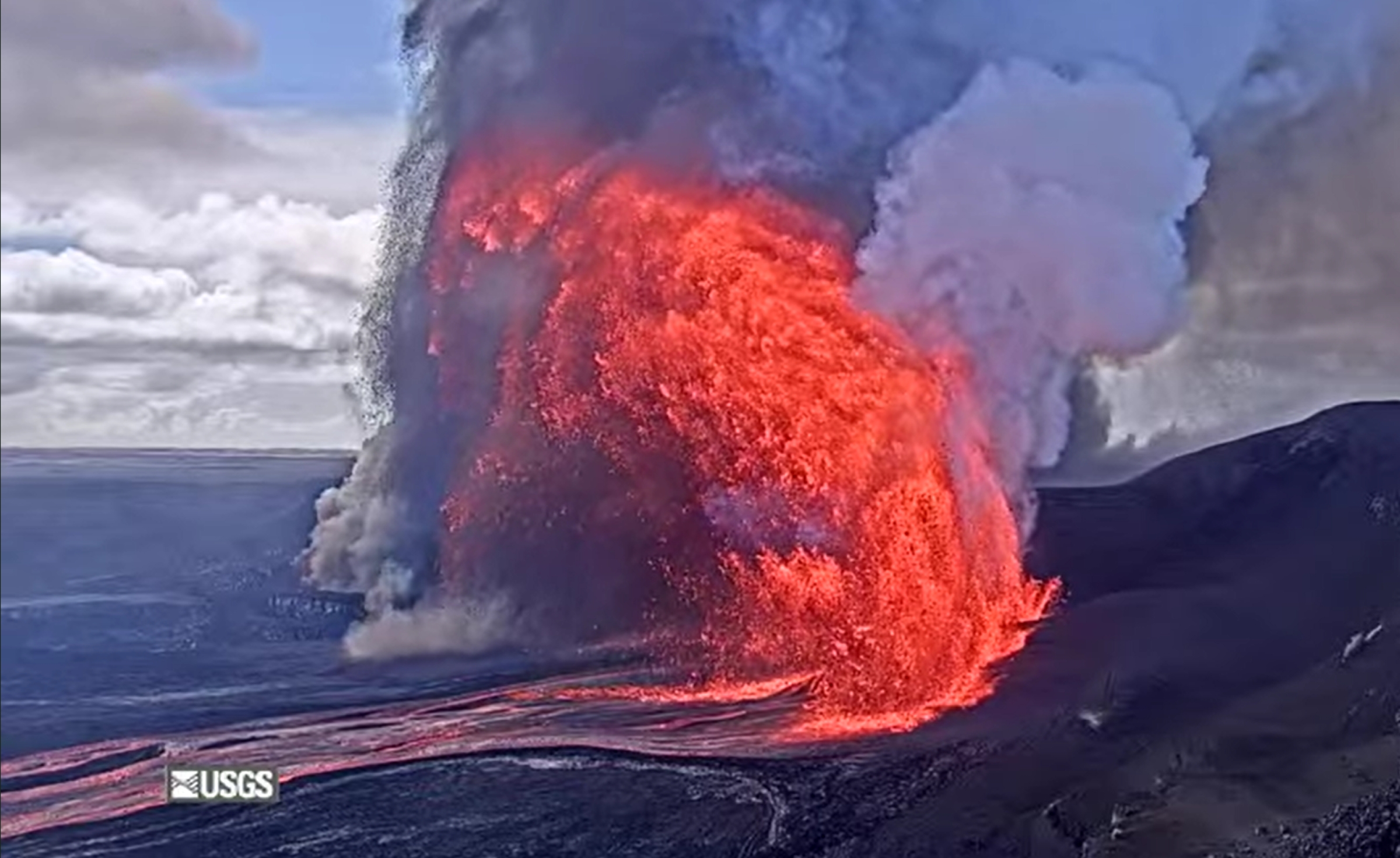
This episode featured a little more than 12 hours of continuous lava fountaining, which included a rare triple fountain for part of the day as lava ejected from the south vent and two other vents inside the north cone in the southwest portion of the crater.
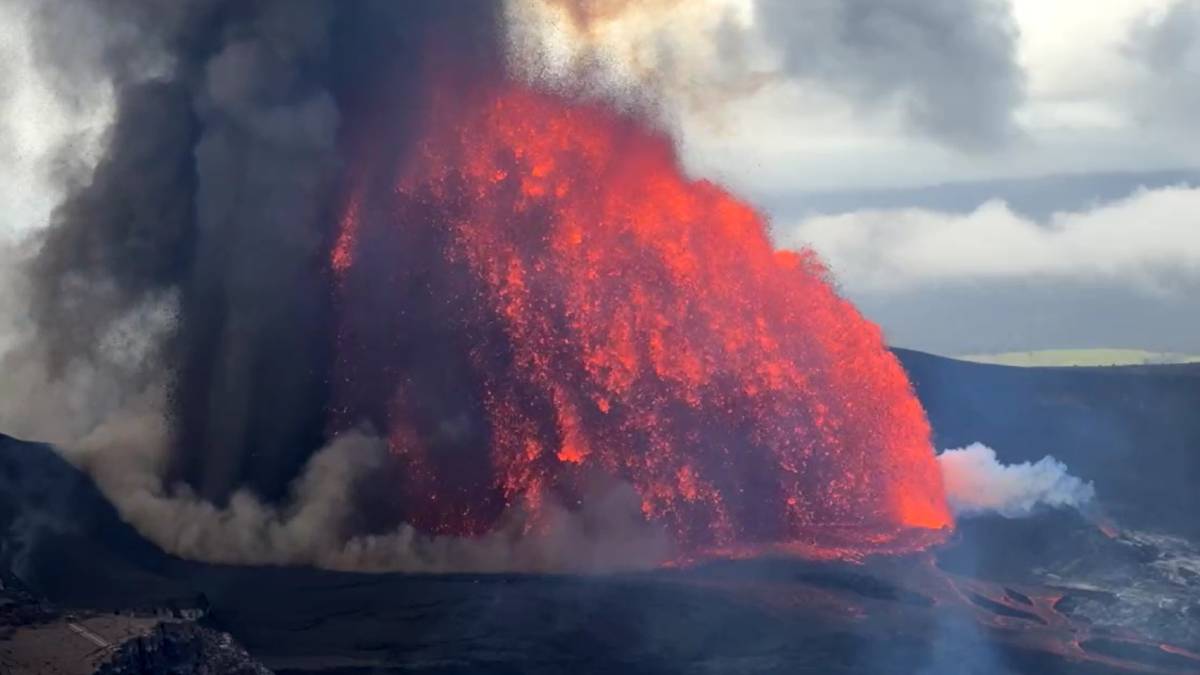
The dual north vents stopped erupting at about 11:50 a.m., much earlier than their southern counterpart.
Lava fountains reached heights of up to 1,000 to 1,200 feet during Episode 38. Fountaining produced an estimated 16 million cubic yards of lava.
The combined average eruption rate was more than 250 cubic yards per second from the lava fountains.
Lava flows from this episode’s fountains covered 50% to 60% of the Halemaʻumaʻu Crater floor.
Flows near the vents and on the floor of Halemaʻumaʻu within the southern part of Kaluapele — Kīlauea’s summit caldera — might continue to exhibit slow movement or incandescence as they cool and solidify during the coming days.
The Uēkahuna tiltmeter at the volcano’s summit recorded about 33.1 microradians of deflationary tilt during this episode.
The end of Episode 38, similarly to its predecessors, was coincident with a rapid change from deflation to inflation at the summit and a decrease in seismic tremor intensity.
Volcanic gas emissions have greatly decreased with the end of this episode.
The gas plume earlier Saturday reached to more than 20,000 feet above sea level. Tephra —including Pele’s hair and fine ash — carried in lower levels of the plume fell in Pāhala and other communities southwest of the vents.
Satellite imagery showed the upper regions of the gas and ash cloud moved due east of the summit across lower Puna and well out to sea before turning south. Reticulite pieces up to the size of a baseball fell along Chain of Craters Road east of Kīlaueaʻs summit, transported by the high eastern plume.
Gas and heat driving that enormous plume were the result of the extremely high effusion rates provided by Episode 38 in its early stages.
Sustained lava fountains began erupting at 8:45 a.m. Saturday from two vents within the north cone after just more than 5 hours of precursory lava overflows. The south vent then began fountaining at 8:49 a.m.
A rare triple fountain event was underway within the next 30 minutes, with the two north vents and the south vent all erupting together by 9:15 a.m. at heights of about 500 feet. The south vent fountain grew to about twice as high as the north vent fountains by 9:40 a.m.
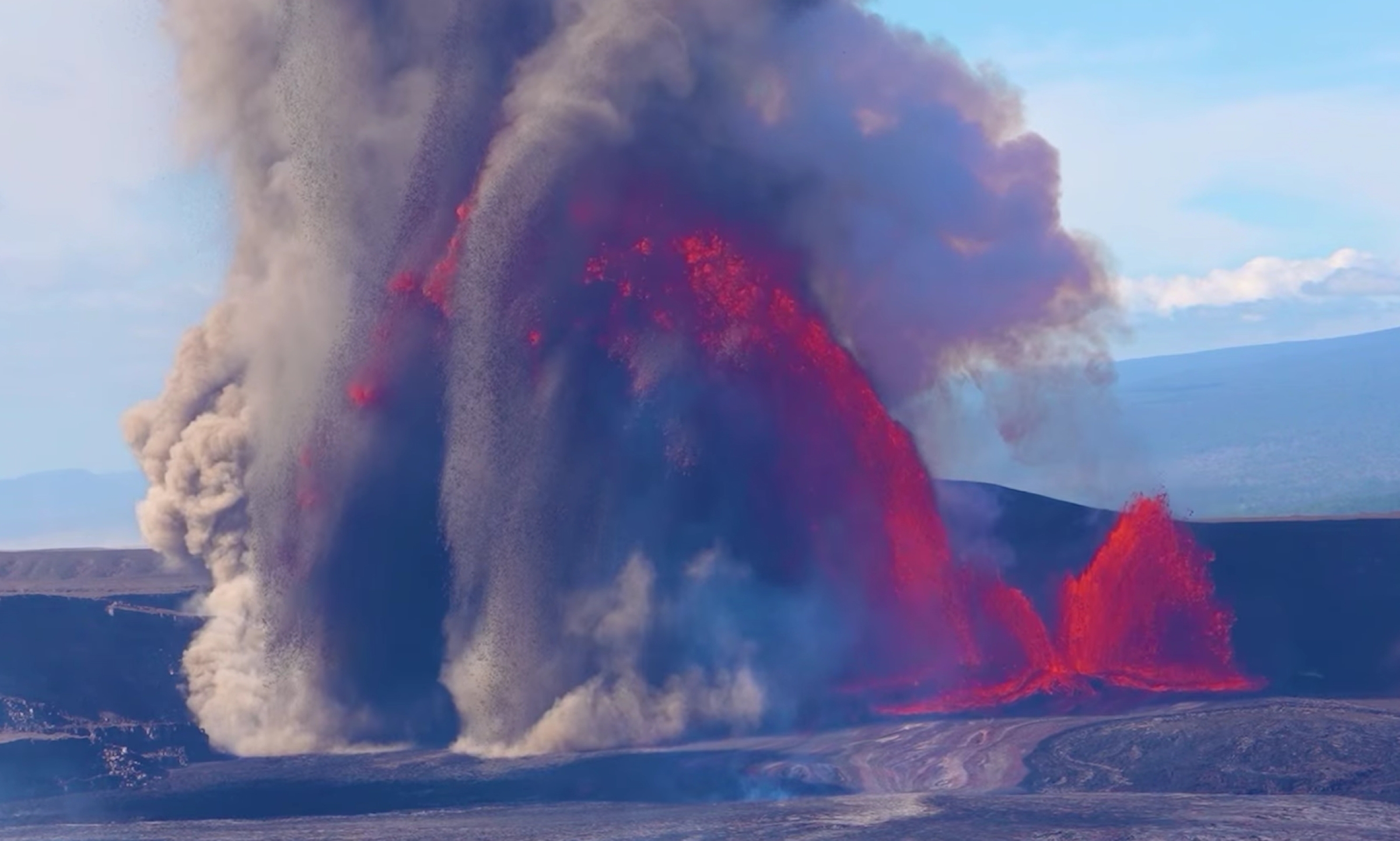
The highest peak or instantaneous effusion rate of 1,300 cubic yards per second happened just before 10 a.m., when the south vent exploded. The enlarged south vent produced an inclined fountain of more than 1,000 feet tall that sprayed the south wall of Halemaʻumaʻu.
Hot pumice and molten spatter from this fountain destroyed the Hawaiian Volcano Observatory V3cam at one of three livestreaming site around the caldera.
No changes have been detected in the East Rift Zone or Southwest Rift Zone.
Kīlauea’s Volcano Alert Level remains at Watch and its Aviation Color Code at Orange. All current and recent activity is within Hawaiʻi Volcanoes National Park.
Hawaiian Volcano Observatory continues to closely monitor Kīlauea volcano.
Original story published at 11:53 a.m. Saturday, Dec. 6, 2025: Episode 38 of the ongoing episodic eruption within Halemaʻumaʻu Crater at the summit caldera of Kīlauea volcano on the Big Island is underway — and brought a new feature not seen yet or very often at all.
A triple lava fountain.
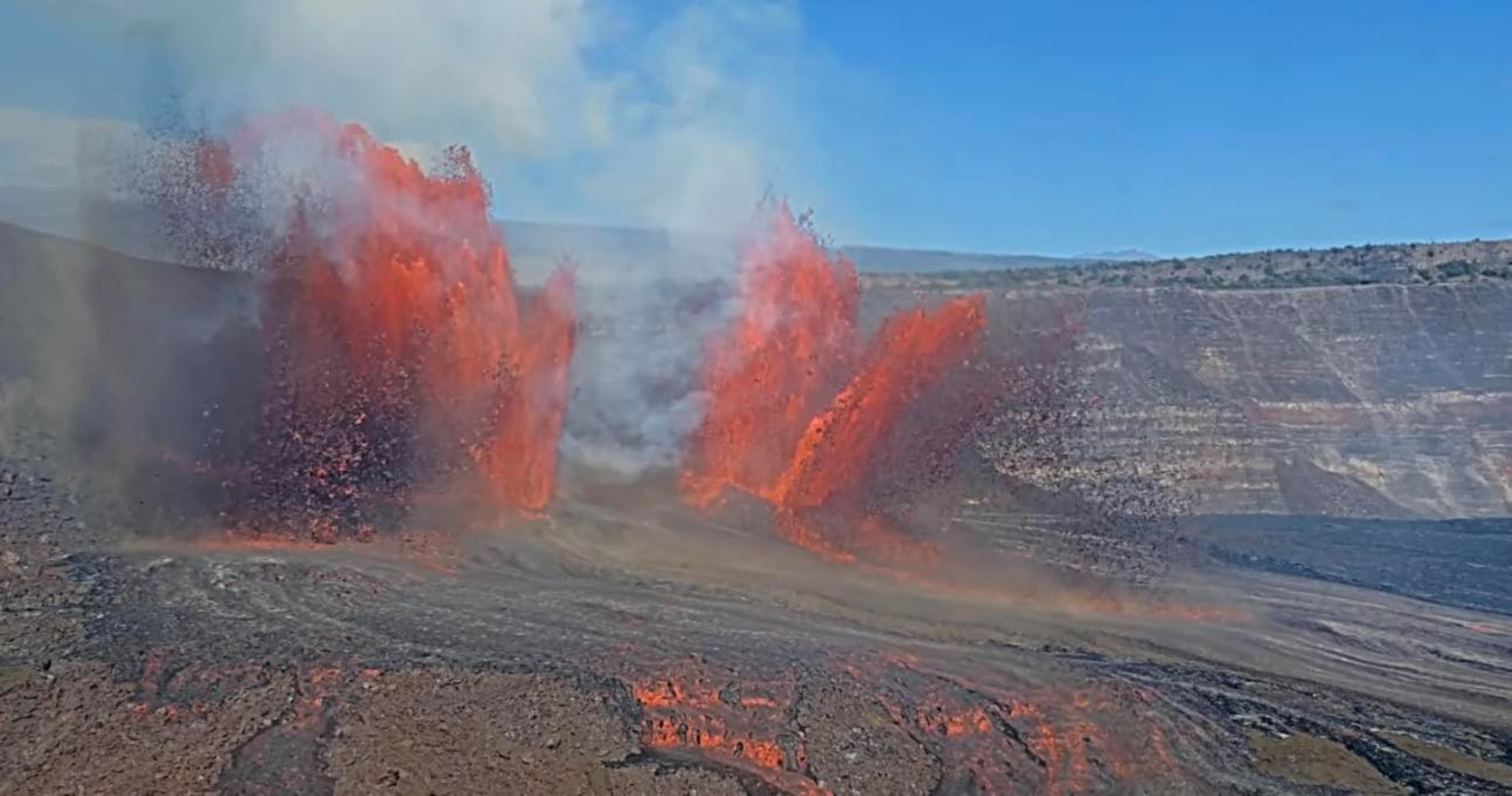
Hawaiian Volcano Observatory reports that the latest episode of the eruption — which began almost a year ago on Dec. 23, 2024 — started with steeping increasing tremor and decreasing inflation at 8:45 a.m. today (Dec. 6), which was followed by sustained lava fountains of between about 50 and 100 feet tall from the north vent in the southwest portion of the crater.
By the time of the observatory sent out its volcano activity notification via email just after 9 a.m., fountain heights were rapidly increasing and erupting from the left and right vents within the north cone.
All eruptive activity is confined to Halemaʻumaʻu Crater and inside Hawaiʻi Volcanoes National Park.
Past episodes produced incandescent lava fountains of more than 1,000 feet high. The spilt nature of the north vent suggests Episode 38 could produce lower fountains similar to Episode 37, when the same two vents existed in the north cone.
A view of the livestreams just before 11 a.m. showed at least the north and south vents of the volcano still fountaining and one lava geyser extending well more than 500 feet.
Low fountains and overflows were confined to the two sub vents within the north cone for several hours prior to the onset of Episode 38.
Fountains and flows from the south vent began at 8:49 a.m.
Hawaiian Volcano Observatory reported at 10:41 a.m. that all three vents continued to produce fountains, with the south vent reaching up to 1,200 feet tall and north vent fountains dropping to less than their maximum of 500 feet so far during this latest episode.
Prior to the south vent becoming dominant, there were three roughly equal sized 500-foot-high fountains with two from the north vents and one from the south vent.
The triple fountain is an extremely rare event, and this is the first time during this eruption it has been observed.
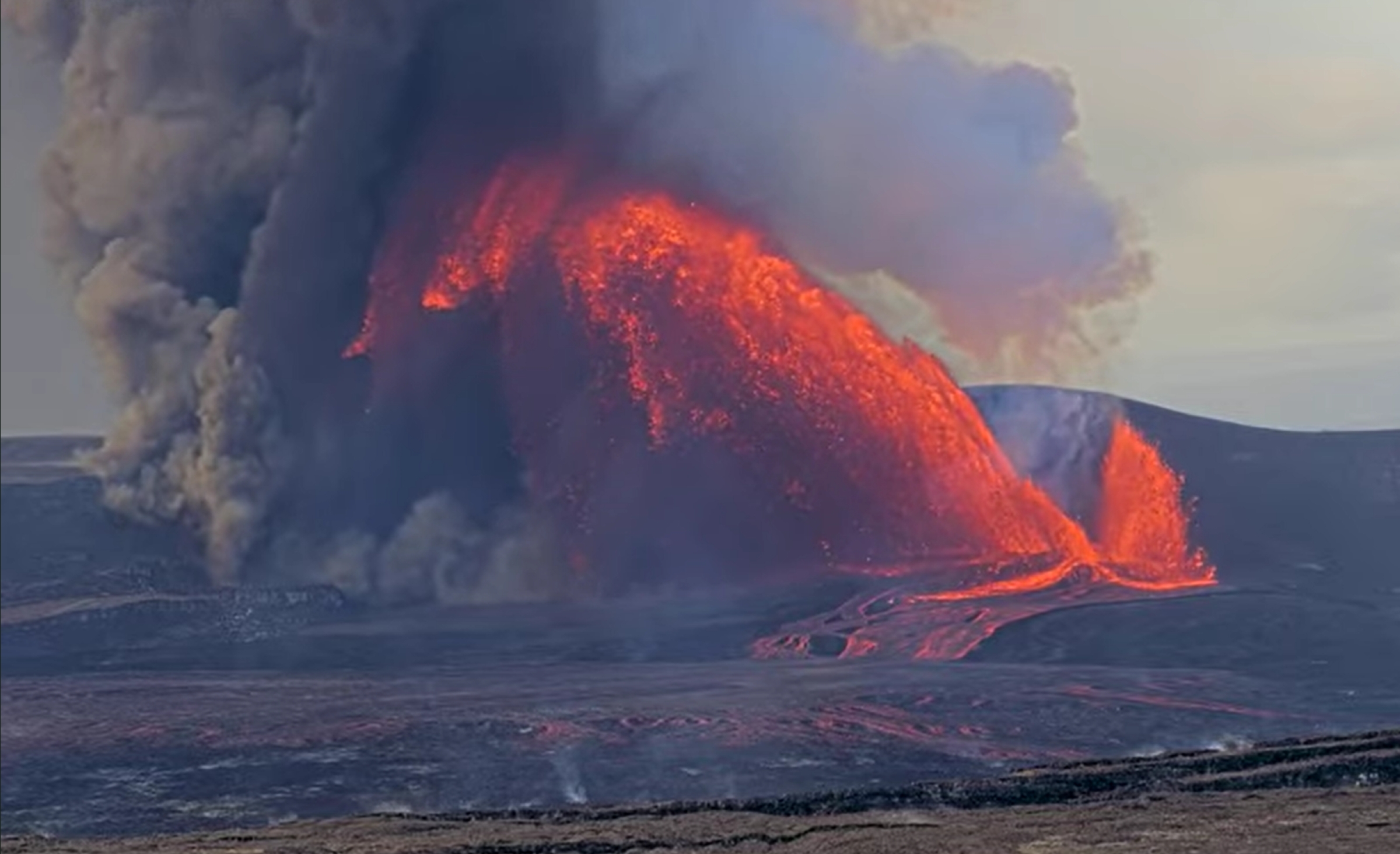
If you can’t make it to the park to see Episode 38 in person, there are still two Kīlauea summit livestream cameras that show eruptive lava fountains — they are available here: V1cam and V2cam.
Hot lava and pumice from the south vent fountained destroyed the V3cam site just before 10 a.m. Saturday.
The associated plume — composed of water vapor and sulfur dioxide gas (possibly with Pele’s hair and fine ash) — currently has a maximum height of about 15,000 feet above ground level.
National Weather Service forecasters in Honolulu show winds are blowing from the north-northeast at about 10 mph, suggesting volcanic gas emissions and volcanic material could be distributed south of Halemaʻumaʻu.
The summit deflated about 9.5 microradians as measured on the Uēkahuna tiltmeter in about 1 hour and 45 minutes.
The rapid tilt drop and very high output from both vents suggest this might be another relatively short episode, lasting less than 6 to 8 hours, similar to episode 37.
Episode 38 was preceded by small, sporadic spatter fountains and six precursory overflows from the north vent that began at about 12:50 p.m. Friday (Dec. 5).
Continuous overflows began at 3:37 a.m. and increased in intensity until 8:45 a.m., when sustained fountaining began.
Inflation reached just more than 16.6 microradians since the end of Episode 37 before the newest episode began this morning.
Seismic tremor began increasing and tilt at the summit switched from inflationary to deflationary at about 7:45 a.m., about the same time increased lava output began from the north vent.
Most episodes of Halemaʻumaʻu lava fountaining since Dec. 23, 2024, continued for about a day or less and were separated by pauses in eruptive activity lasting generally at least several days.
No changes have been detected in Kīlauea’s East Rift Zone or Southwest Rift Zone.
Vog — or volcanic smog created when sulfur dioxide emitted from the volcano during an eruption reacts with the atmosphere to create the visible haze — and volcanic fallout such as Pele’s hair and tephra continue to be the main hazards associated with the ongoing episodic eruption.
Hawaiian Volcano Observatory continues to closely monitor Kīlauea volcano.
Big Island Now news reporter Nathan Christophel contributed to this story.
Sponsored Content


Subscribe to our Newsletter
Comments