



Nonprofit purchases 3 acres in Volcano to grow cat sanctuary now helping only kittens
Two years ago, Erin Young was at a transfer station in East Hawai‘i feeding a feral colony of cats when she discovered an abandoned gray and white kitten.
Young planned to trap the feline, get it fixed, and find it a home. But two weeks after seeing the kitty, she learned it had died after being shot with a BB gun.
“One of the other people who feeds at the transfer station found it and informed all of us, and buried it,” Young said.
Since 2014, Young had been feeding and rescuing feral and abandoned cats on Hawai‘i Island, but the death of the kitten inspired her to do more. In 2024, she started the nonprofit Volcano Cat Sanctuary, where she currently houses 15 cats on her property in Puna and has placed 15 other felines in foster homes.
Alessandra Rupar, a sanctuary employee who does intake, social media and handles adoptions, said now the nonprofit only deals with kittens. But with the expansion, Rupar said they also will focus on older cats and those with special needs.
Since becoming a nonprofit, almost 300 kittens have been helped, Young said. About 150 of the community cats have found homes, with the others trapped, fixed and released. While they don’t have homes, they won’t be able to produce more feral cats.
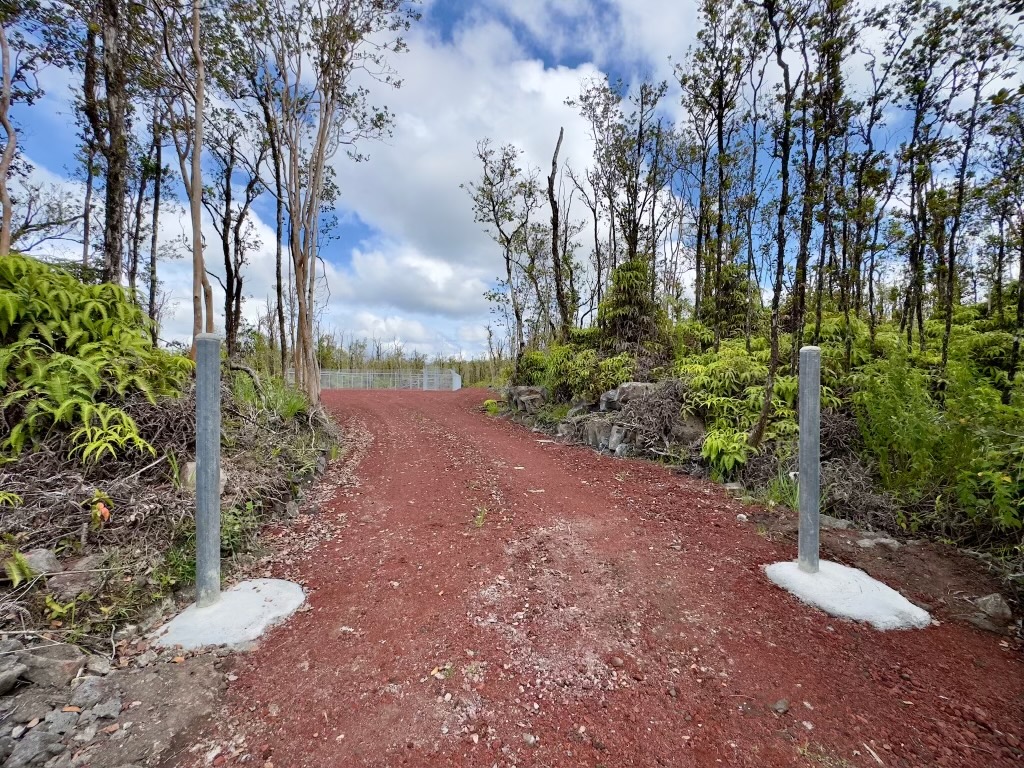
Young and her team say this is only a start. They purchased 3 acres in Volcano for $40,000 to expand the sanctuary. The organization has set up a GoFundMe to raise $30,000 to build a cat-proof perimeter fence and a secure front gate around the sanctuary.
As of Saturday, the GoFundMe has raised $1,904.
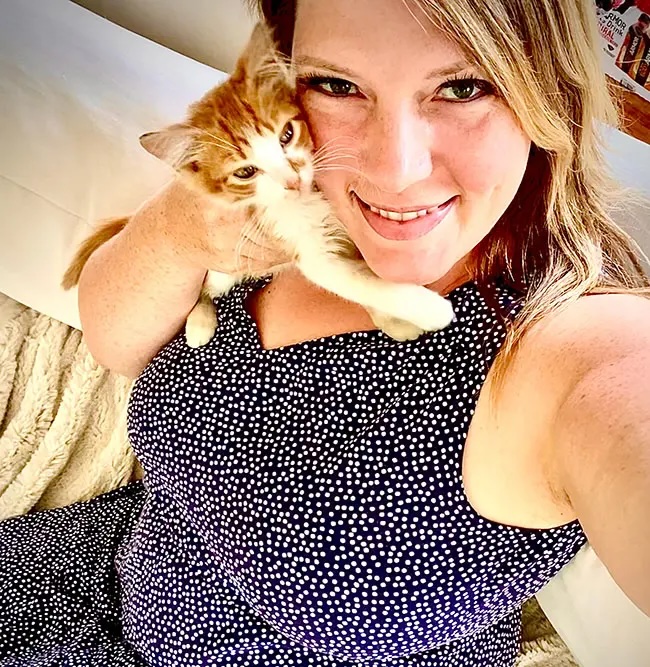
Young said operating costs for the sanctuary currently run about $15,000 a month. This does not include the extra expenses of installing perimeter fencing, clearing the land and putting up gates on the new property.
“Thousands of cats across the islands are abandoned by their owners, living in cat colonies in less than ideal situations and endangering native bird species or sea mammals,” Young said. “Pet owners frequently have to leave the island, or move out of their current housing, and often their beloved pets have no place to go.”
She said the expanded sanctuary will provide a safe haven for cats. For some, it will only be temporary housing. For others it will become their permanent home. Young said this will help relieve stress on the animals and the pet owners who are forced to give them up.
Her expansion plans also come at a time when it could soon be illegal for her and others to feed cats at the transfer station and other county properties due to the passage on Aug. 7 of Bill 51 by the Hawai’i County Council.
To become county law, it now has to get final approval from Hawai‘i County Mayor Kimo Alameda, who said he’s inclined to support it because he agrees with the provision of prohibiting the feeding of pigs, goats, sheep and pigeons.
“These animals are not domesticated pets, and as originally wild or free-ranging species, they are capable of surviving without supplemental feeding,” the mayor said.
But he said he also recognizes the concerns raised about prohibiting the feeding of feral cats.
“Unlike the other animals listed, feral cats occupy a more complex ecological and community role,” he said. “It is unclear whether they could adequately sustain themselves through natural predation alone, such as hunting rodents, without additional impacts to local ecosystems.”
Since the bill passed the County Council, Young said the sanctuary team has been getting 20 to 30 calls a day from people desperate for help with their cats. Some people are looking to rehome their cats. One elderly person called because of being overwhelmed with 30 felines on their property.
“Every day feels like a crisis,” Young said.
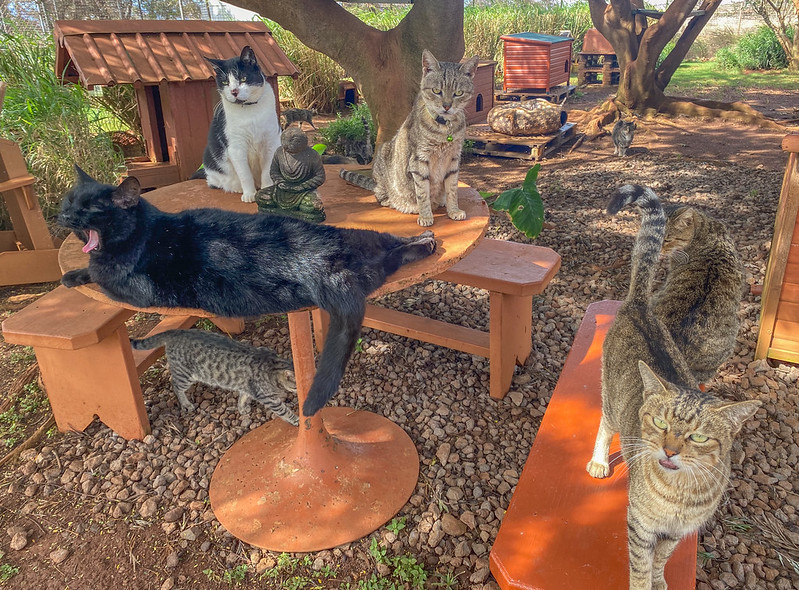
Young also has big ideas to make it a tourist destination. She said she is inspired to replicate the Lāna‘i Cat Sanctuary model that now is home to about 700 rescued cats.
She envisions a place where people can come and interact with the cats. It would eventually include a place for people to eat and have coffee, a playground for kids and an event venue.
The Lānaʻi Cat Sanctuary is one of the top attractions for tourists who visit the small island that is part of Maui County. It also has led to the drastic reducing of the once out-of-hand feral feline population, while protecting the native birds.
“It’s a fun, sweet place to be,” Young said. “It’s inspiring because it’s managed so well and clean.”
Hawai‘i County Council Member Dennis “Fresh” Onishi, who represents South Hilo and a portion of Kea‘au, said a sanctuary as a tourist destination would be the first of its kind on Hawai‘i Island.
 The Lānaʻi Cat Sanctuary helps fund the care of about 700 rescued cats with donations from tourists who hang out with the cats. (Cammy Clark/Big Island Now)
- The Lānaʻi Cat Sanctuary helps fund the care of about 700 rescued cats with donations from tourists who hang out with the cats. (Cammy Clark/Big Island Now)
- About 700 rescued cats now call the Lānaʻi Cat Sanctuary home. (Cammy Clark/Big Island Now)
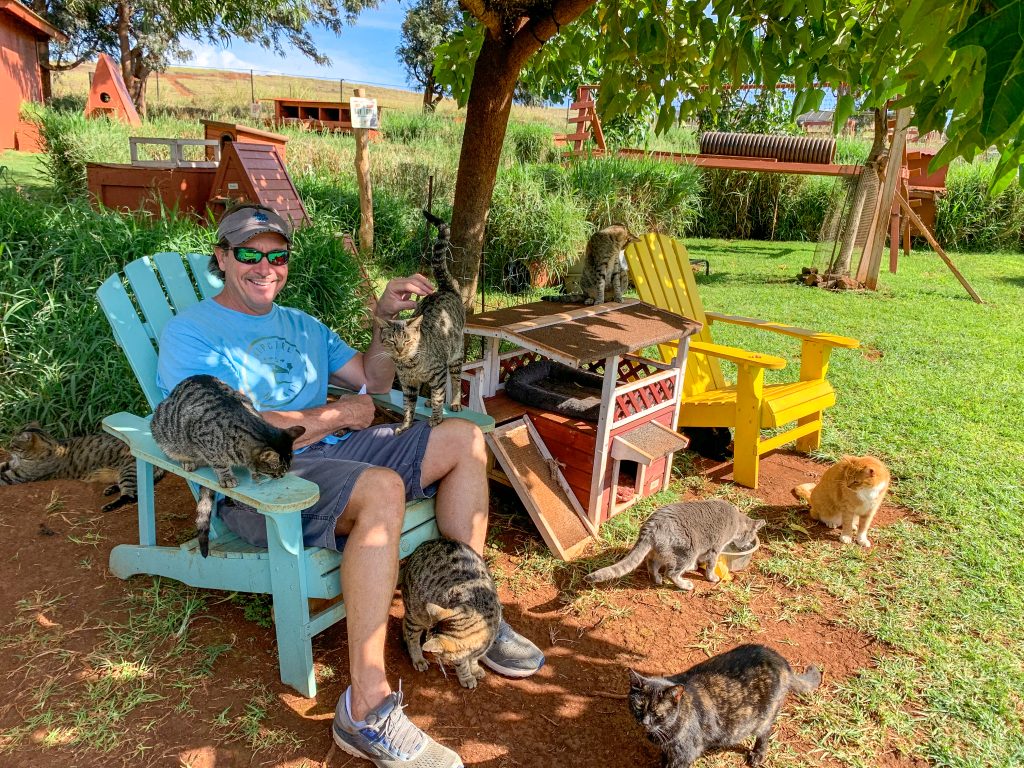
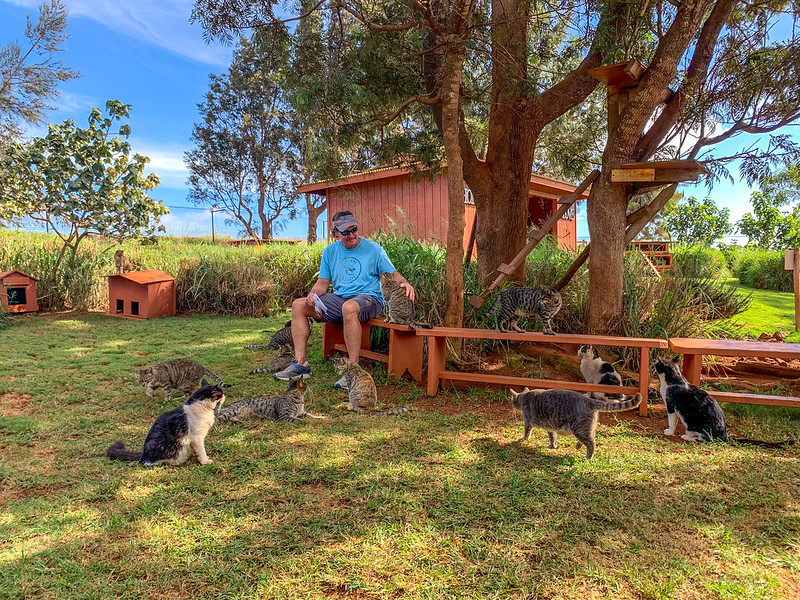
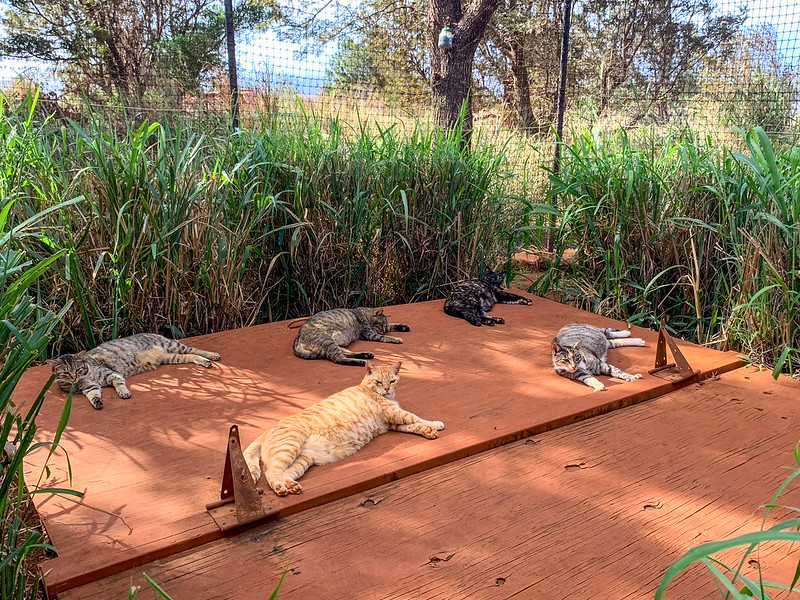


During conversations about Bill 51, Onishi said he was interested in discussing the development of a cat sanctuary similar to Lāna‘i.
He has visited the sanctuary and said he thought it was a well-managed operation, with its intake of feral cats, a treatment facility, pens that hold the tame cats, nice landscaping and well maintained grounds.
“They created a petting cat zoo for visitors to come from all over the world,” Onishi said. “By doing so, the visitors donate to the sanctuary and continue to donate through mail.”
Young reached out to Onishi’s office for assistance with funding from his district funds.
But Onishi said while he supports the concept of starting a sanctuary like the one on Lāna‘i, he had some concerns about the Volcano location. Due to the large amount of rain the area receives, he is worried the sanctuary could breed different types of diseases from cats’ waste.
Young said she is a little worried about the rain at the new site, but that’s why it’s critical they have some structures built before moving the cats.
While Young had already planned to expand her nonprofit after buying the three acres of land in Volcano, she is feeling the urgency to get it up and running as soon as possible.
Bill 51 states anyone caught feeding feral animals on county property could face a $50 fine for the first violation and $500 for additional violations of the ban.
With this new bill looming, Young hopes to start accepting felines at the expanded sanctuary by the end of the year.
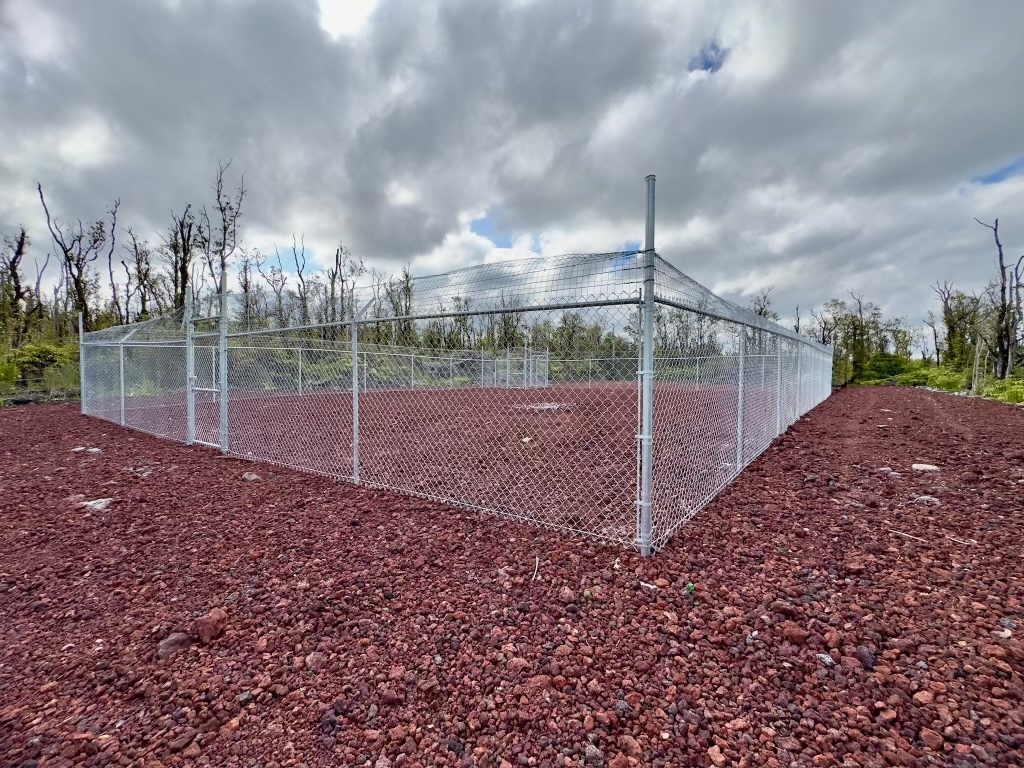
Work is now underway to get the space ready to move the cats to the new sanctuary, with two-thirds of an acre currently fenced in.
“If our sanctuary is successful, we would love to open other locations or help others replicate what we have done, and hopefully one day, do as good of a job protecting birds, cats, and all other species as Lāna‘i has done,” Young said.
Sponsored Content

_1770333123096.webp)

Subscribe to our Newsletter
Comments