


Hawaiʻi voters to decide amendments on timing for judge appointments, funding public infrastructure
For Hawaiʻi voters in the Nov. 3 General Election, two state constitutional amendment questions and one Hawaiʻi County Charter amendment question are on the ballot.
The first state amendment asks voters if the state Senate should have more time to confirm a judicial appointment, and the second asks voters to decide if counties and developers can use infrastructure bonds as a new way to finance public infrastructure in Hawaiʻi.
A supermajority of the state Legislature voted to place each of these two questions on the ballot. Each amendment must win a majority of the ballots cast to pass. A blank vote will count the same as a “no” vote.
Hawaiʻi County voters will also have a question that will amend the county charter, which is essentially the local constitution, to give the Hawaiʻi County auditor the power to appoint a deputy.

Question 1: Shall the Constitution of the State of Hawaiʻi be amended to allow the Senate more time to consider and act on the appointments of justices and judges by increasing the timeframe from 30 days to 60 days for appointments made between April 1 and Dec. 31 when the Senate is not in regular session or is about to adjourn the regular session?
Hawaiʻi lawmakers generally meet between January and May, but governors sometimes nominate judges outside those months or late in the session, forcing senators to convene special sessions to consider the appointments.
According to Senate Bill 121, each special session costs approximately $5,000 for airfare and per diem for neighbor island senators, in addition to senator and staff time. A longer timeframe would give senators more flexibility, reduce the need for special sessions and cut costs.
If residents vote “yes” on the measure, the Hawaiʻi State Constitution will be changed to allow the Senate 60 days to decide if it rejects any judge appointment from the governor or chief justice between April 1 and Dec. 31. The 30-day timeframe will remain the same from Jan. 1 to March 31.

Question #2: Shall the Hawaiʻi State Constitution be amended to direct the Legislature to authorize the counties to issue resilient infrastructure for shelter and equity bonds to fund public improvements in designated districts, repaid solely by future growth in property tax revenues within those districts, not by increasing real property tax rates, where such bonds are excluded from the counties’ debt limit and are subject to accountability and oversight requirements as may be provided by law?
If residents vote “yes,” the amendment will authorize counties to issue housing infrastructure growth bonds to pay for public infrastructure for new development or redevelopment through future property tax revenues within the designated districts.
The bonds have been named “Resilient Infrastructure for Shelter and Equity,” or RISE bonds.
For private development in Hawaiʻi, the cost of financing public infrastructure is usually 100% of the developer’s responsibility.
As development occurs over the years, property taxes would rise. The difference between the base value and the new value of property taxes — the tax increment — would repay the RISE bond. The base value would continue to go to the county.
According to Senate Bill 3219, RISE bonds will only fund infrastructure in RISE bond districts and will not count toward the county debt limit and will not impact its borrowing capacity. The bonds will only be used specifically for public works, public improvements or other actions for housing and community development.
County mayors and the state have traditionally competed for public funds, but this would be a new source of money for infrastructure. All four mayors and Gov. Josh Green have expressed support for the amendment and are encouraging voters to vote “yes.”
“If you’re out there and you’re worried about your taxes going up in some other ways, they won’t. It only is new revenues from whatever we’re able to create, which is the tens of thousands of homes that we need,” Green said.
Hawaiʻi County Mayor Kimo Alameda sees the amendment as a great compromise for developers to come and build necessary infrastructure such as schools, health centers, roads, water and electrical systems.
“Developers want to expand infrastructure, but they cannot fund the cost for the infrastructure, especially when we don’t want to raise property taxes and the federal government has cut a lot of funding,” Alameda said. “In my mind, if there is not a good incentive to get developers to play in the sandbox, then the government cannot build what they want for the county.”
The amendment allows counties to create RISE districts and issue RISE bonds, but does not designate those districts or put in place regulations for the RISE bonds. Those decisions will be made later by each local county government through new ordinances, public hearings and council votes.
Each county must create a RISE district that dictates where RISE bonds can be used to fund public infrastructure and what regulations are attached to a RISE bond.
The state Office of Planning and Sustainable Development has outlined the steps to creating a RISE District:
- Create an ordinance for the Hawaiʻi County Code to create a process for creating a RISE district.
- An area for a RISE district is identified, and an ordinance is sent through the Hawaiʻi County Council.
- If the ordinance passes, the Department of Planning identifies what infrastructure is needed to incentivize developers to come in and propose to build homes.
- The Department of Planning goes back to the council to get an appropriation to fund a list of infrastructure improvements. The first step of financing is through general obligation bonds, which can then be paid off through RISE bonds once they are feasible to be issued.
Hawaiʻi County Charter Question: Shall the Hawaiʻi County Charter be amended to allow the County Auditor to hire a deputy and exercise the same power, with respect to the employees within the Auditor’s office, as the department heads in the executive branch?
If residents vote “yes,” the amendment would change the language of the charter to add that the county auditor may hire a deputy and exercise the same power as the other county department heads, who can currently appoint their own deputies.
According to Hawaiʻi County Council members and County Auditor Clare McAdam, the ability to appoint a deputy would provide a clear line of succession and prevent long-term vacancies that can create delays in releasing audits.
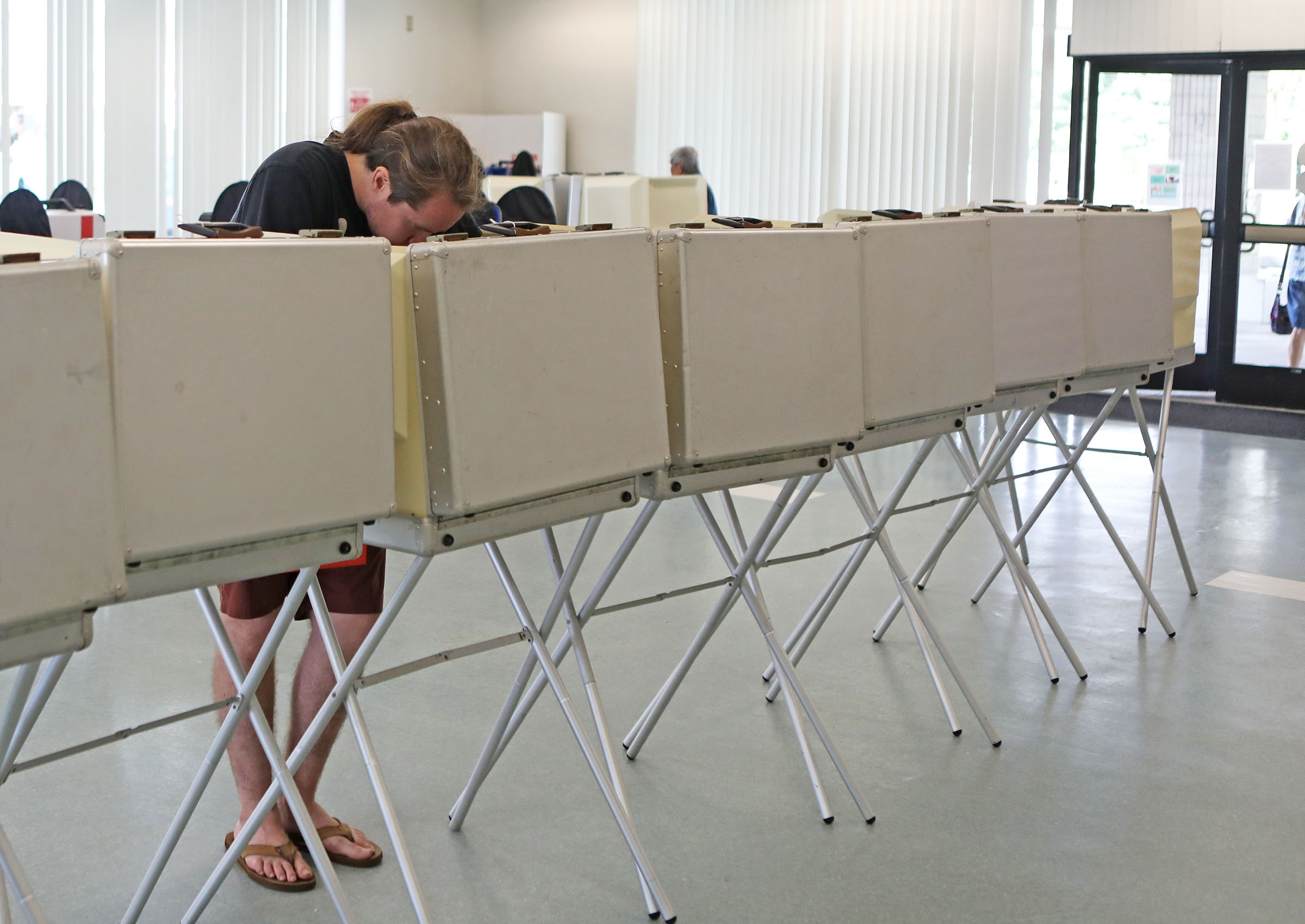
The Hawaiʻi Office of Elections reported that ballots should have arrived in the mailboxes of registered voters by Oct. 16. If you did not receive your ballot, or need a replacement, you may request for a replacement ballot to be mailed to you.
Track your ballot with BallotTrax to know when it is mailed, returned and counted. Ballots must be received — not postmarked — by 7 p.m. Nov. 3. Ballots received after the deadline cannot be counted.
For any further questions, call the Elections Division at 808-961-8277.