

Native Hawaiian turnout for elections is low. Two college students created resource to bolster voting
An interactive resource aims to inform Native Hawaiians about the history of civic engagement in the Hawaiian Kingdom and connect it to modern voter registration.
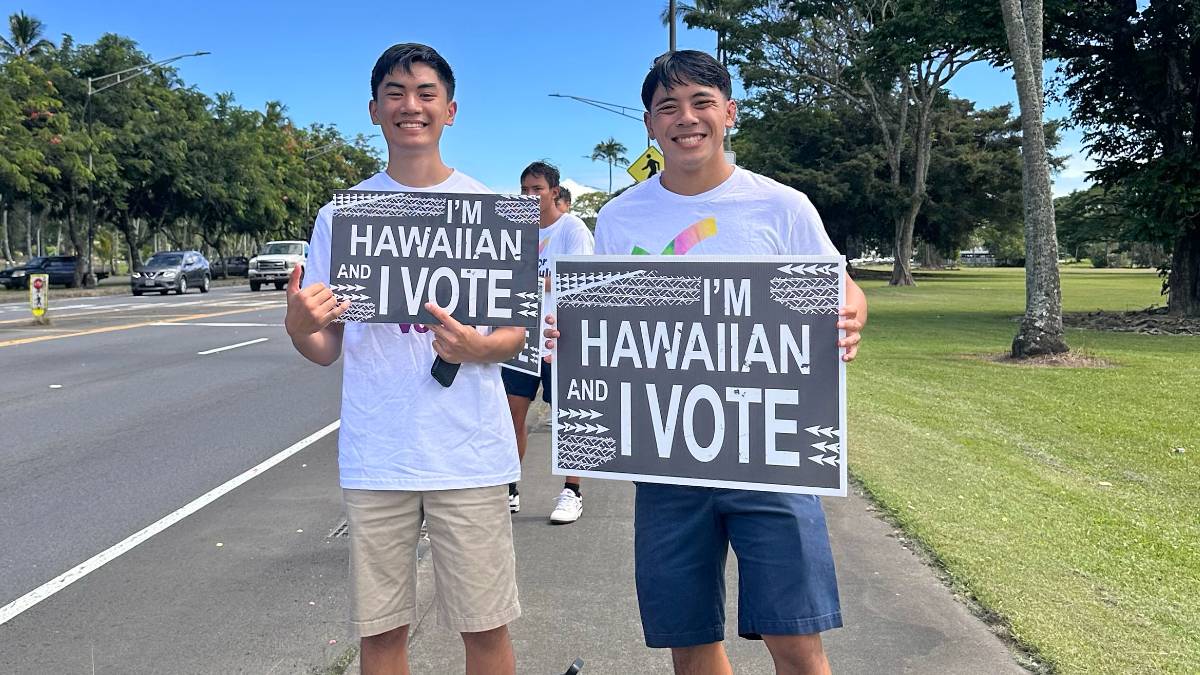
For decades, Native Hawaiians and those who live in the Hawaiian Islands traditionally turn out in low numbers for U.S., state and local elections, which has contributed to higher poverty, lower education and other negative outcomes.
But this summer, two Native Hawaiians from the Big Island — who graduated together at Kamehameha Schools-Hawaiʻi and now attend mainland colleges — collaborated on an interactive digital project “Kuleana ʻŌiwi: Democracy is Indigenous” that they hope will inspire better turn out and civic engagement.
Funded by the Center for Native American Youth Democracy is Indigenous Grant, Kamahaʻo Halemanu and Cajohn Mar, both 19, created the project’s timelines, maps, photographs, music and speeches to document key political developments in the Hawaiian Kingdom and show how historical civic engagement shaped modern Hawaiian.
By connecting the history of the Hawaiian Kingdom’s political system with the modern U.S. system, Halemanu and Mar hope the interactive digital resource will boost Native Hawaiian voter turnout — both young voters and the broader community — in the 2026 primary election on Aug. 8, the general election on Nov. 3 and future elections.
“I want people to see that voting is not an endorsement of a broken system. It is a shield. It is a weapon of defense,” said Halemanu, who attends Amherst College in Massachusetts.
“When you cast a ballot, you are bringing your ancestors into the fold to protect the resources, the culture, and the future of the lāhui (collective group with a shared identity).”
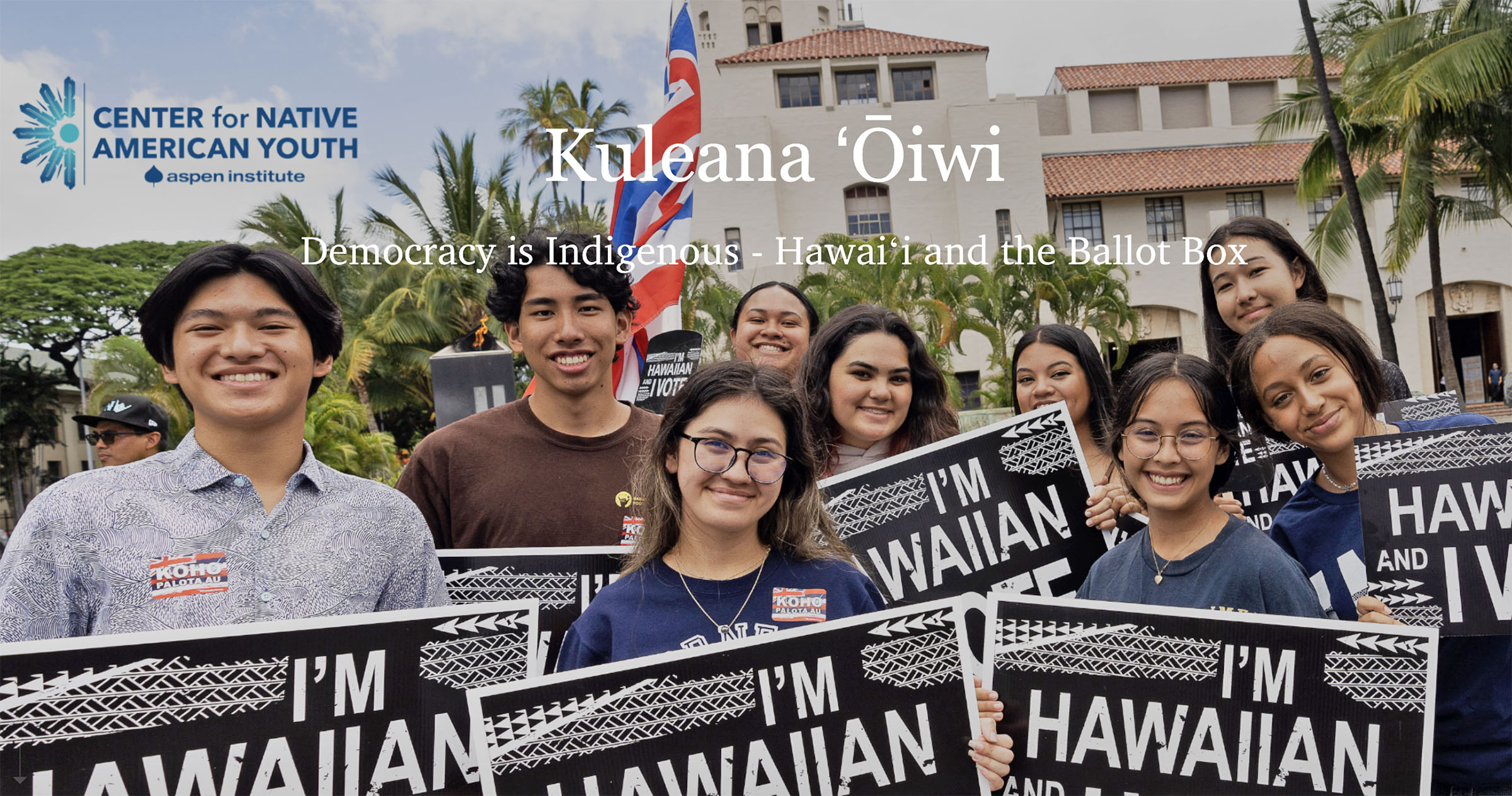
Halemanu and Mar, who attends Oregon State University, hope it will become a long-standing educational resource for the community.
“I wanted to think about boosting voter numbers, or at least changing the framework of voting for Native Hawaiians to show them that voting isn’t a negative system and Native Hawaiians did vote in the Kingdom of Hawaiʻi,” Halemanu said.
For centuries, Native Hawaiian society was built on a system of governance that required constant community collectivity and collaboration.
The traditional Hawaiian land division and governance model was the ahupuaʻa system, which used natural watershed boundaries to give communities self-sufficient access to fresh water, farming zones and coastal fisheries. The system built a foundation of interdependence.
According to their research, while the aliʻi (chiefs) held political and spiritual authority, they were bound by a strict social contract with the makaʻāinana (the people of the land).
Aliʻi could only rule effectively if they cared for the ʻāina and the people. If aliʻi were unjust, the makaʻāinana possessed political leverage to leave and move to a different ahupuaʻa,. Without makaʻāinana to cultivate land, aliʻi possessed no power.
“The main target audience for our project is the Native Hawaiian community in Hawaiʻi, so I wanted to share the information that our ancestors took part in civic engagement and a sophisticated voting system before even the U.S.,” Halemanu said. “For me, learning that history as a descendant gave me chicken skin and helped me discover information about myself that we don’t always learn thoroughly.”
As global political landscapes shifted in the 19th century, the Hawaiian Kingdom adapted at an unmatched pace and with sophistication. Rather than abandoning indigenous values, the monarchy codified them into modern legal systems, establishing a globally recognized constitutional monarchy.
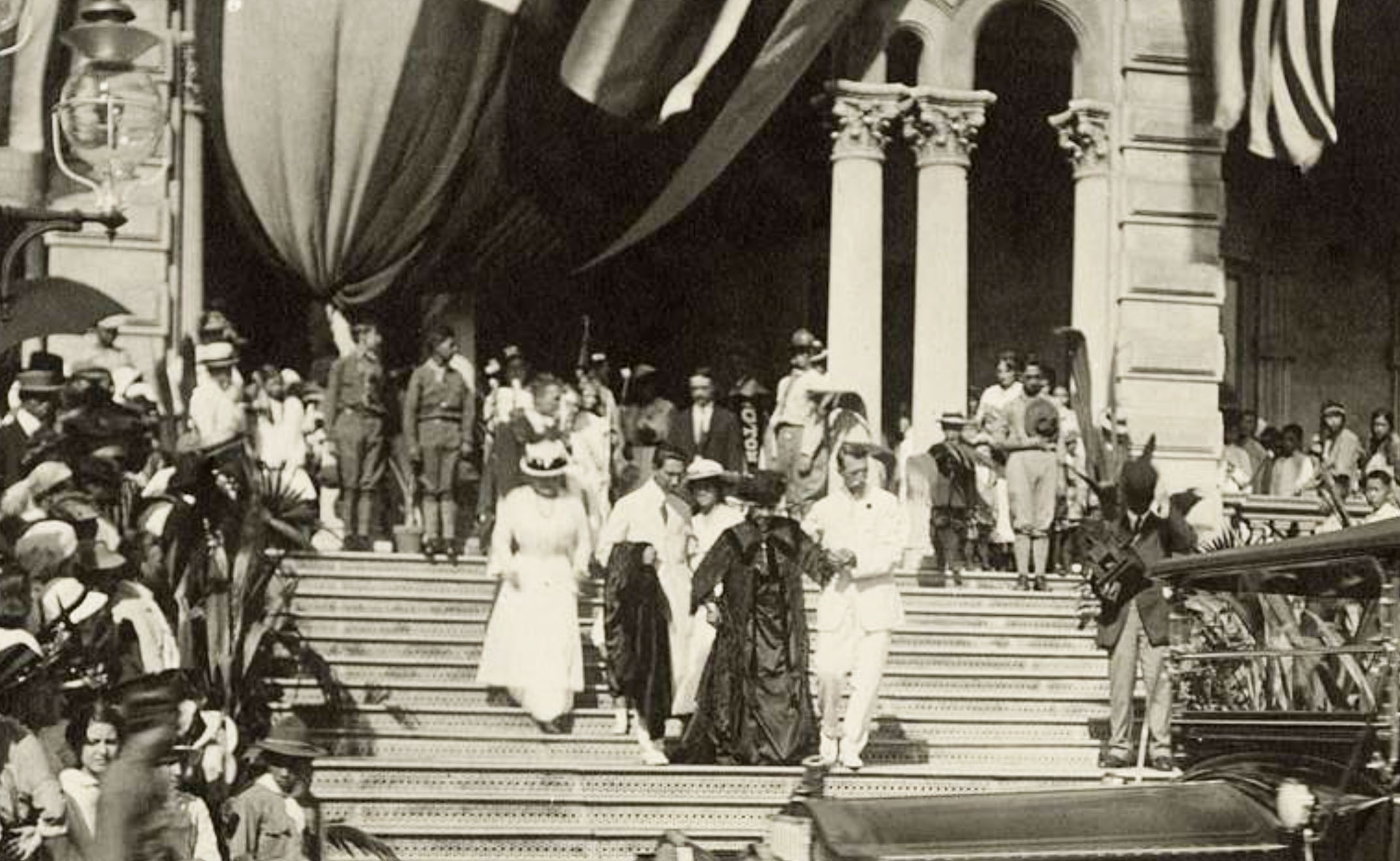
King Kamehameha III proclaimed the 1840 Constitution, which created a representative body and declared that no law could be passed without the approval of both the Nobles and the representative House of Representatives chosen by the people. The 1852 Constitution then granted universal male suffrage to all citizens of the Kingdom.
“There was a time when Native Hawaiians achieved widespread voting rights and universal literacy decades before many Western nations allowed ordinary or indigenous citizens to step foot inside a voting booth,” Halemanu said.
During this golden era, Native Hawaiians were the vibrant majority of the electorate, actively steering the foreign and domestic policy of their nation.
Today, Hawaiʻi voting rates have declined and are below the U.S. national average and baseline.
“I think a lot of Native Hawaiians, or people living in Hawaiʻi, have gotten this idea that they are only one person and that their vote is not going to count,” Halemanu said. “My perspective is that civic engagement is a duty and responsibility. If people want to elect Native Hawaiians into office, they have to vote from them. Voting is the one sure way to shape policies and government and it’s our kuleana (responsibility) to contribute.”
| Election Year | Hawaiʻi Voter Turnout | National Average | Turnout Deficit |
| 2024 General | 50.3% | 64.1% | -13.8% |
| 2022 Midterm | 40.5% | 46.2% | -5.7% |
| 2020 General | 69.6% | 66.8% | +2.8% |
| 2018 Midterm | 52.6% | 53.4% | -0.8% |
Social factors such as homelessness, substance abuse, degradation of cultural values and the lack of funding for education all are aspects that contribute to the Native Hawaiian voting deficit, according to Halemanu.
According to the 2019 U.S. Census Bureau, only 10.6% of Native Hawaiians or part-Hawaiians hold an associate degree or higher. Native Hawaiian or other Pacific Islander students accounted for only 0.3% of all associate degrees.
Current 2026 data indicate nearly 17% of Native Hawaiian Pacific Islander families live in poverty, 4% higher than the national average.
According to Halemanu, these factors are the catalyst of a cycle that is not easy to break. But breaking the cycle is necessary for crucial decisions regarding housing affordability, the protection of ʻāina (land) and wai (water), educational funding, and economic development. Without local voting, those decisions are left in the hands of outside interests and a vocal minority.
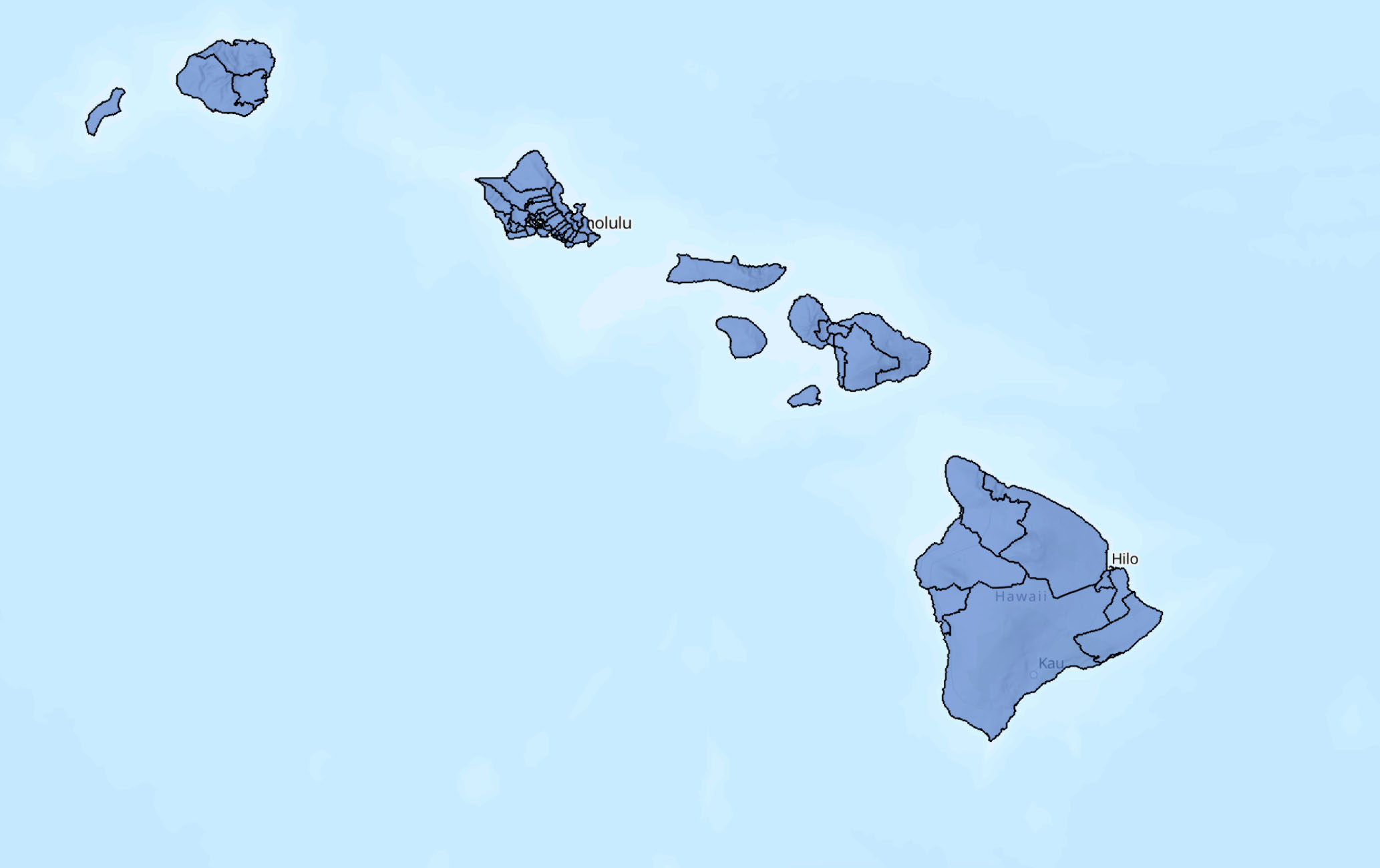
Along with the history and voting data, the project also provides direct, accessible tools to help voters register and understand their ballot. There is information on mail-in voting, specific voting locations, and maps that lay out the county districts, the state House of Representatives districts and the state Senate districts.
“In one of the most recent censuses done, there are more Native Hawaiians living outside of Hawaiʻi than inside Hawaiʻi,” Halemanu said. “One out of every two have to leave their ancestral home because they are forced to, which is sad.
“If there is any solution to the migration of Native Hawaiians, it is going to come from voting. We can elect officials who have good intentions for the Native Hawaiian community. We have to come together to prop them up.”
For Halemanu and Mar, developing this project has fostered deep community engagement. While researching the Kingdom-era political history and mapping current district boundaries required reaching out to mentors and peers to ensure the information was accurate and culturally resonant.
Now that the project is live, there is a centralized, non-partisan resource that reflects Native Hawaiian heritage that can now be shared with families and friends to encourage voter registration ahead of the general election on Nov. 3.
“I hope that every time there is an election, this tool can be updated and used perpetually,” Halemanu said. “I hope it improves voter turn out. I hope my friend benefitted from doing this project with me and in the long run, I hope that people can share the history of civic engagement of the Hawaiian Kingdom and inspire family and friends to vote, too.”
Halemanu will be starting his sophomore year at Amherst College and is majoring in Educational Studies and American Studies (Indigenous Studies) and Mar is also starting his second year at Oregon State University and is majoring in Electrical and Computer Engineering.
To keep people engaged with “Kuleana ʻŌiwi,” the two students are starting a social media campaign and will be posting interesting information and photographs related to civic engagement.
Find “Kuleana ʻŌiwi: Democracy is Indigenous” at https://storymaps.arcgis.com/stories/1566ff5e8cf24151bc701ff7368bc88a.