


Legacy Hilo Rehab and Nursing recognized for care of stroke patients
Legacy Hilo Rehab and Nursing by ʻOhana Pacific Health has enhanced guideline-based care for stroke patients, ultimately improving and prolonging lives.
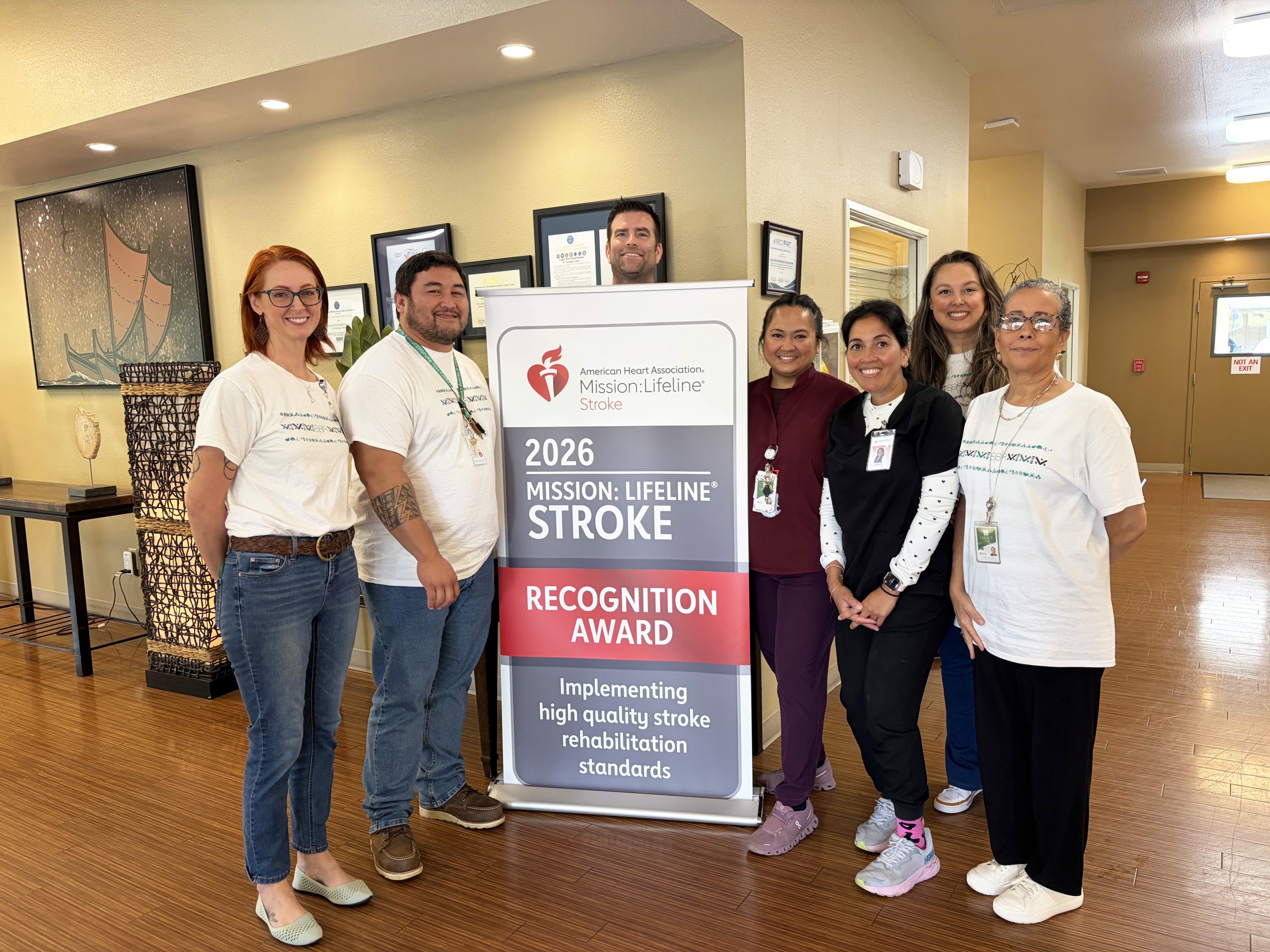
Legacy Hilo Rehab and Nursing, a 100-bed skilled nursing and rehabilitation facility, was recognized for its participation in the American Heart Association’s Mission: Lifeline Stroke post-acute care initiative to enhance guideline-based care for stroke patients, ultimately improving and prolonging lives.
Stroke is a leading cause of serious long-term disability in the U.S., and approximately 800,000 people each year experience a new or recurrent stroke, according to the American Heart Association’s 2025 statistical update.
Participation in the American Heart Association’s post-acute care initiative can help facilities support faster and more effective recovery from stroke through standardized coordination, adherence, and implementation of evidence-based care.
Evidence-based rehabilitation and secondary prevention interventions improve recovery after stroke and reduce secondary complications. However, stroke rehabilitation expertise, processes of care, and educational resources vary among sites where post-acute care is delivered.
The American Heart Association, the world’s leading nonprofit organization focused on heart and brain health for all, developed quality standards based on the association’s 2016 Guidelines for Adult Stroke Rehabilitation and Recovery to address these gaps.
The post-acute care initiative provides a framework for assisting facilities to improve care according to the American Heart Association’s rigorous science-based requirements for stroke rehabilitation, including program management, patient and caregiver education and support, care coordination, clinical management, and quality improvement.
“Participation in this program benefits the patient and the facility by standardizing care practices,” said Chasen Fukuda, health care quality program consultant. “When there are evidence-based processes during every phase of care, patients have the best opportunity for positive outcomes. This initiative helps patients and their loved ones know participating facilities follow these important best practices.”
Facilities participating in the post-acute care initiative receive a participation stipend and site-specific quality improvement support, along with process improvement ideas surrounding quality standards for stroke recovery, rehabilitation, and secondary prevention.
Facilities also have the opportunity to be part of a learning collaborative, working with experts in stroke rehabilitation to build tools and share and create best practices. Participation improves collaboration between post-acute care facilities and others involved in stroke care, including hospitals and outpatient providers.
“Six years ago, ʻOhana Pacific Health took over Legacy Hilo and really turned this place around,” said Kerry Pitcher, administrator of Legacy Hilo. “I am so proud of the team we have here, and their continuous commitment to providing the best rehabilitation and post-acute care for individuals recovering from serious illnesses and injuries, including stroke.
“Through this initiative with the American Heart Association, we are strengthening our ability to deliver evidence-based care that supports recovery and improves outcomes,” Pitcher continued. “We are proud to bring these resources to our teams and help more people regain their independence, maximize their recovery, and improve their quality of life.”