


FEMA joins county, state emergency management teams to assess South Kona earthquake damages
After the joint Preliminary Damage Assessment report is completed, it will be sent to FEMA with the hope of securing federal financial aid to recover from the disaster.
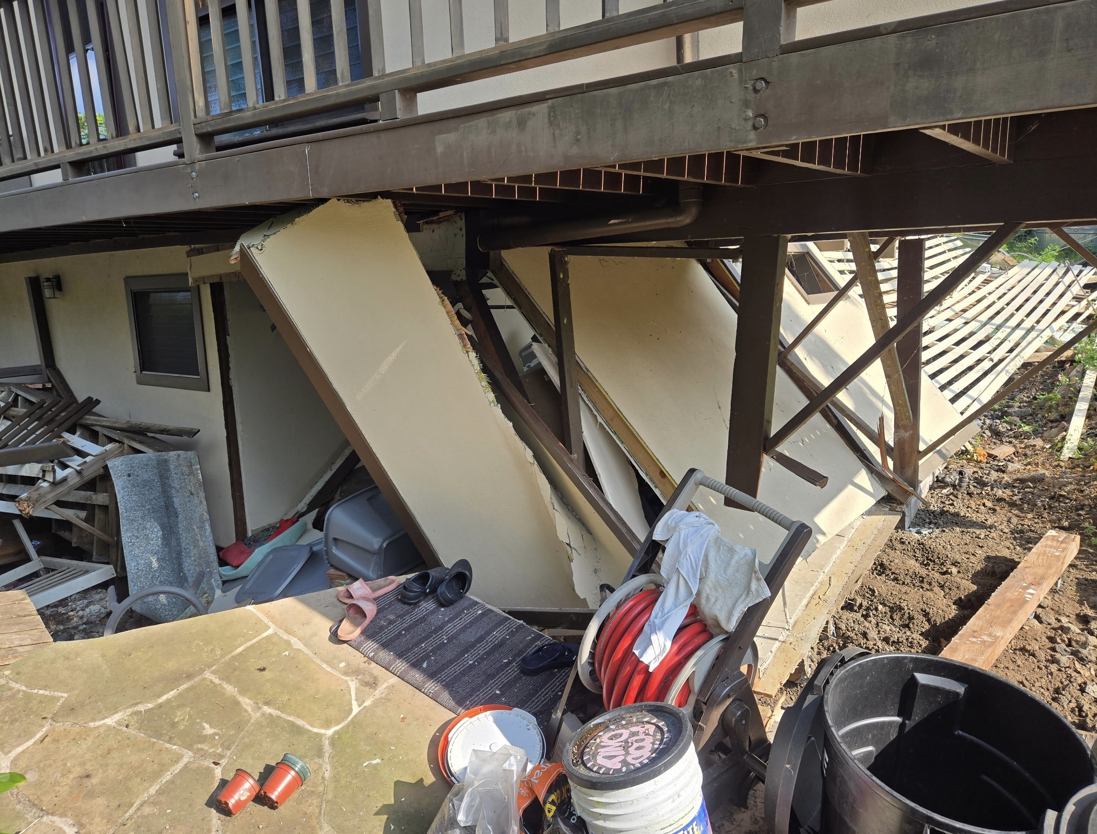
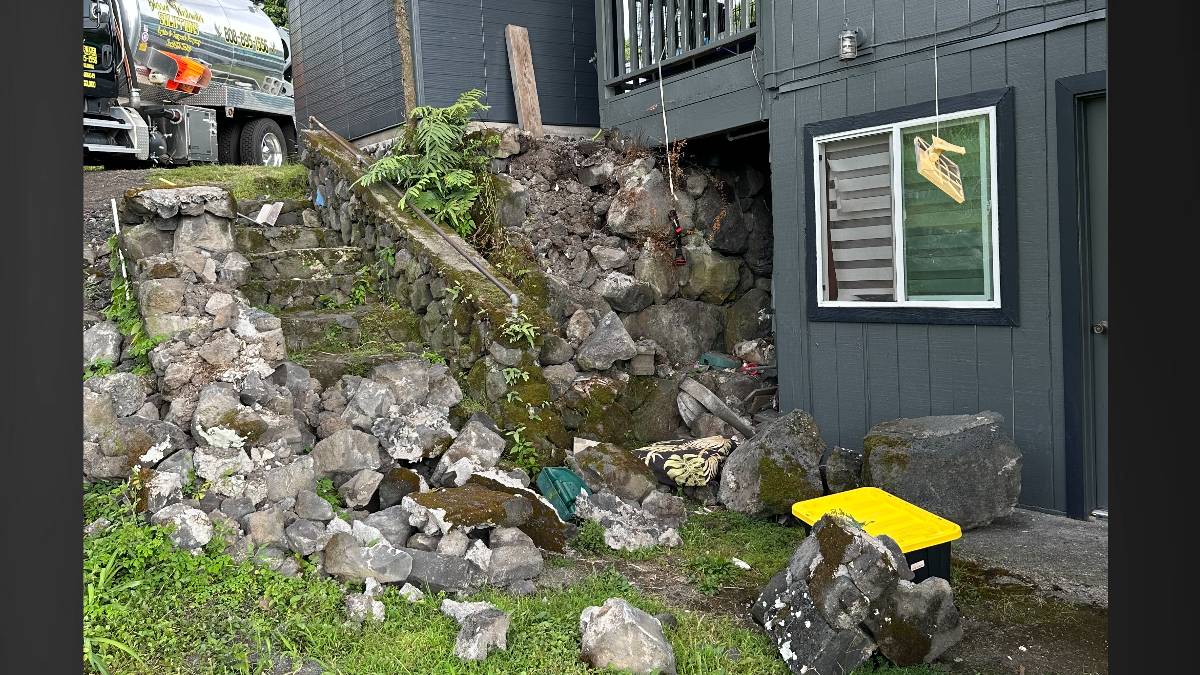
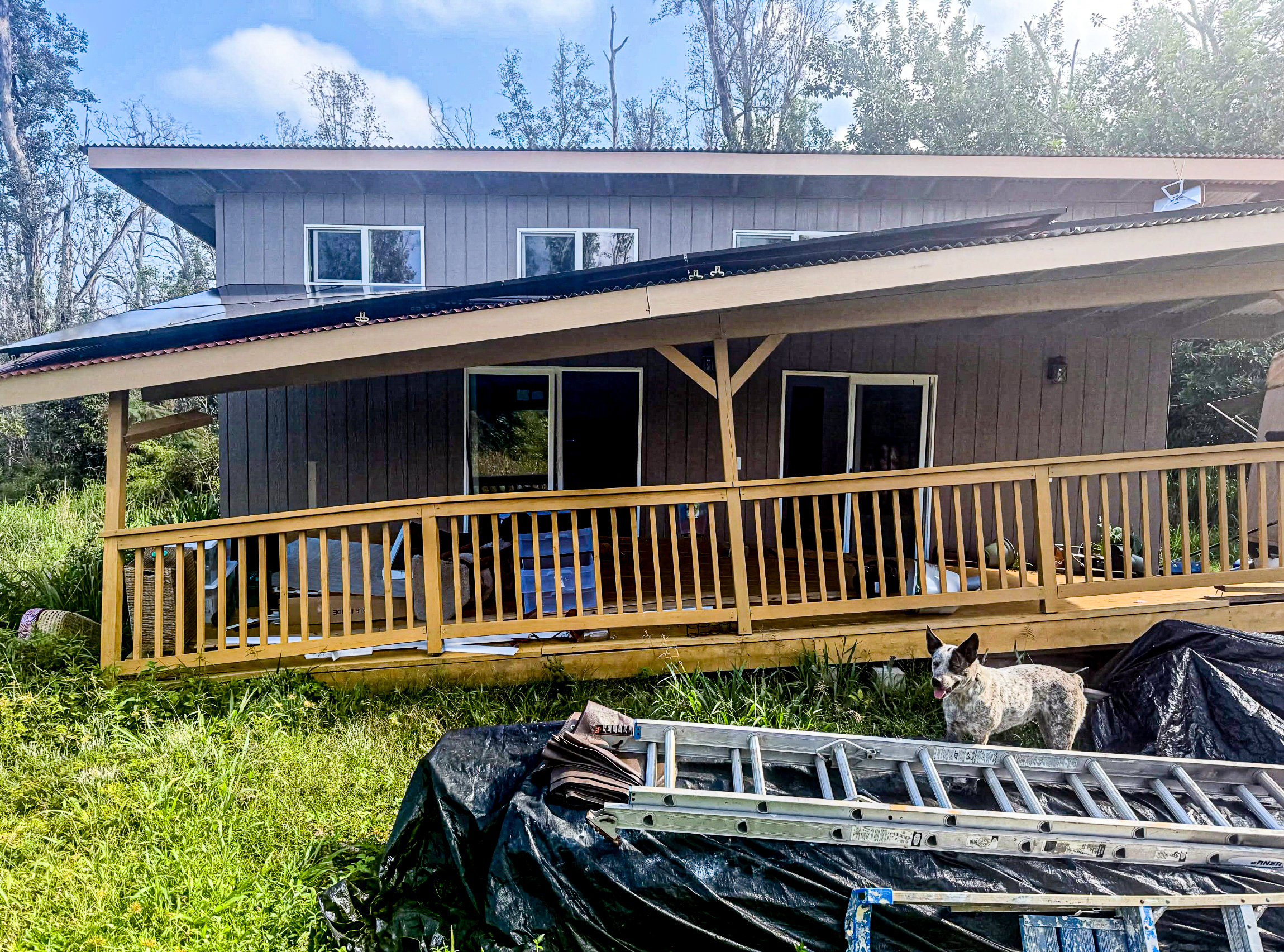
The Federal Emergency Management Agency is in South Kona this week to assess properties damaged by the 6.0 magnitude earthquake that struck on May 22, rocking homes off their foundations and destroying dozens of catchment systems that left residents without potable water.
On Wednesday, Hawai‘i County Civil Defense Administrator Talmadge Magno told Big Island Now that eight teams encompassing members of FEMA, the Hawai‘i County Civil Defense Agency, the U.S. Business Administration and Hawai‘i Emergency Management Agency began visiting properties stretching from South Kona to Ocean View to conduct a joint Preliminary Damage Assessment.
The agencies are working together to document the full scope of damage and ensure the impacts to the communities are clearly understood, said James Barros, administrator of the Hawai’i Emergency Management Agency.
“This assessment helps inform recovery decisions and ensures we are advocating for the support communities may need,” he said.
The visits will continue on Thursday and Friday. Magno said after the assessment, a report will be generated and submitted to FEMA to secure federal financial aid for residents impacted by the tremor.
“These next few days are going to be critical,” Magno said.
The joint assessment will help validate the extent of the damage to homes, infrastructure and community systems.
The earthquake, which centered about 4 miles east-southeast of the Hōnaunau-Nāpōʻopoʻo area, along the western flank of Mauna Loa, caused road closures. Crews with the Hawaiʻi Department of Transportation worked to clear several landslides that blocked multiple roadways, including Highway 11 between Captain Cook and Ocean View and Nāpōʻopoʻo Road in Captain Cook.
Magno said there have been just under 200 damage reports made with the county that are classified as destroyed or major damage. This includes seven homes that collapsed, with 50 reports of impacts to water systems, Magno said.
The Department of Water Supply is still setting up its 4,000-gallon contract tanker in Miloli‘i three times a week for households that have damaged catchment systems. A water buffalo holding 400 gallons of water is also stationed in Kona Paradise where people can go to get potable water.
Magno said he didn’t have a financial damage assessment he could share.
While the earthquake significantly impacted the South Kona community, there were no widespread effects around the rest of the island.
“We’re going to have to write a good report to justify federal aid,” Magno said. “We have to really prove the damage was substantial enough that the federal government needs to provide support.”
Magno feels the county has met some of those criteria and is hoping to secure individual financial assistance programs that would address repairs or long-term housing.
After the joint report is generated, Magno said it will go to FEMA for review.
A joint Preliminary Damage Assessment does not automatically result in a federal disaster declaration, but it is a key step in determining whether additional assistance may be warranted, the Hawaiʻi Emergency Management Agency said in a news release.
Residents and businesses in impacted areas are encouraged to continue reporting damage through Hawaiʻi County’s established damage reporting process. Accurate and timely damage information helps local, state and federal partners better understand community impacts and coordinate recovery support.
The state will continue to coordinate with county, federal and nonprofit partners as damage assessment and recovery operations move forward. For more information or to register for resources, visit www.ready.hawaii.gov.