


Catch of day during Kauaʻi Mother’s Day fishing outing is seabird in distress saved by teen sailor
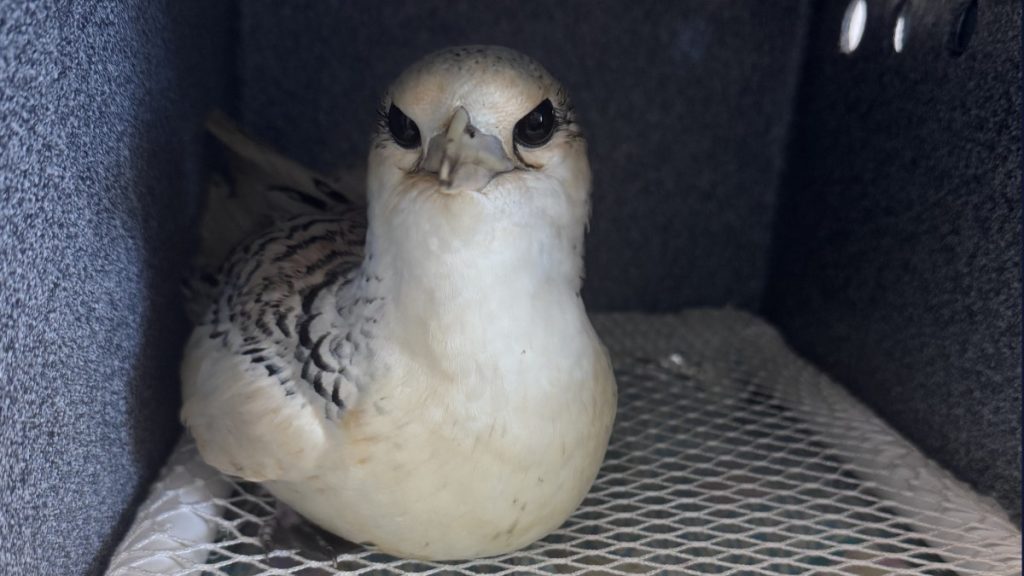
What began as a Motherʻs Day fishing trip tuned into a wildlife rescue after a Kauaʻi teenager spotted a struggling seabird in distress drifting offshore at Kawailoa Bay Beach and swam out to save it.
Xavier Prentice was spending the holiday with family and friends when he noticed what first appeared to be a dead bird floating below a rocky cliff.
“My son was fishing on the cliff for several hours when we spotted the bird floating,” said his mother Melissa Tremblay.
At first, the family thought the bird died. But watching closely, they noticed movement.
“We saw the head shaking,” Tremblay said. “And Xavier said if the bird’s wings were waterlogged, it wouldn’t be able to fly.”
Xavier, a student at Hawaiʻi Technology Academy and sailor with Kauaʻi Sailing Association, said he immediately knew the bird needed help.
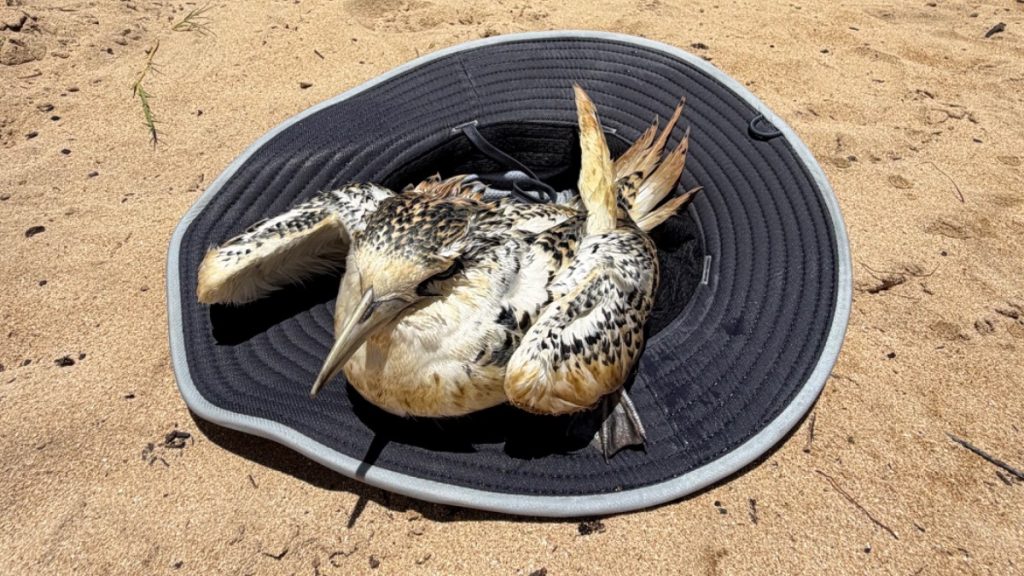
Without hesitation, the teenager jumped from the rocky shoreline into the ocean and swam about 60 feet to reach the struggling bird. He carefully carried it back to shore inside his hat.
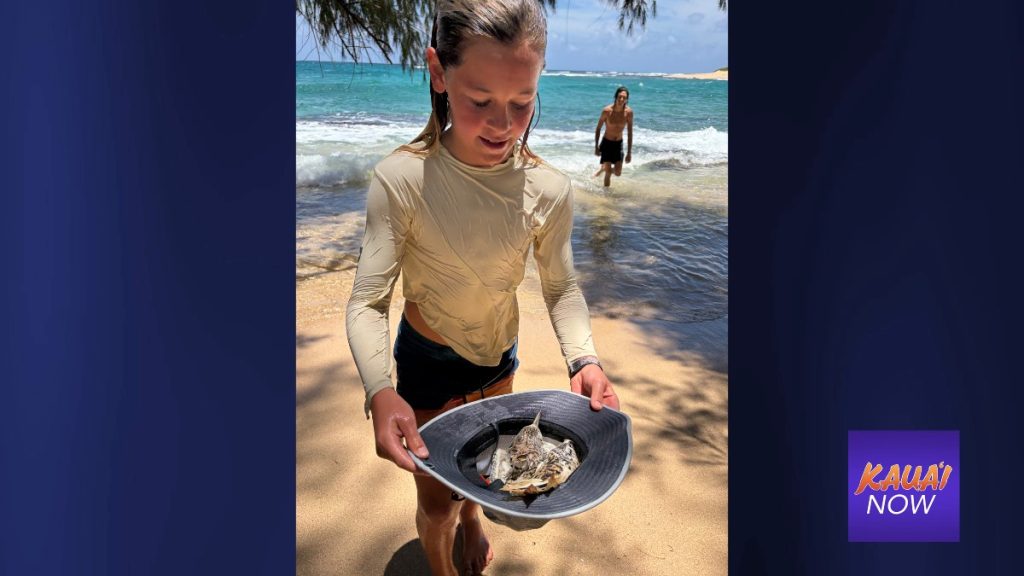
The family initially thought the bird was a shearwater, but after sending a photo to a biologist friend, they learned it was actually a juvenile koaʻe kea, or white-tailed tropicbird, a native Hawaiian seabird known for its white feathers and long tail steamers.
Hawai‘i Department of Land and Natural Resources Division of Forestry and Wildlife says the indigenous birds nest in locations several locations throughout the islands, including on Midway Atoll, Kaua‘i, Moloka‘i, Lāna‘i, the offshore islet Mokoli‘i, O‘ahu and the Big Island.
They also breed outside Hawai‘i on islands in the Atlantic, Indian and greater Pacific oceans along with the Caribbean.
Adult koaʻe kea, however, are solitary and pelagic, or living in the open sea, so their range is poorly known.
They are a sight to behold, favorite subjects of photographers and volcanologists who capture them in photographs while they are often seen soaring above eruptions at Kīlauea caldera, especially during the ongoing episodic eruption that began Dec. 23, 2024.
 Koa‘e kea flies circles above the eruptive vent inside Kīlauea summit during a lava fountaining episode Dec. 29, 2024, riding thermal updrafts from the lava pond below. (Photo by M. Patrick/U.S. Geological Survey)
- A koa‘e kea flies above Kaluapele, the caldera of Kilauea volcano, on May 5, 2025, inside Hawai‘i Volcanoes National Park. (Photo by J. Wei/National Park Service)
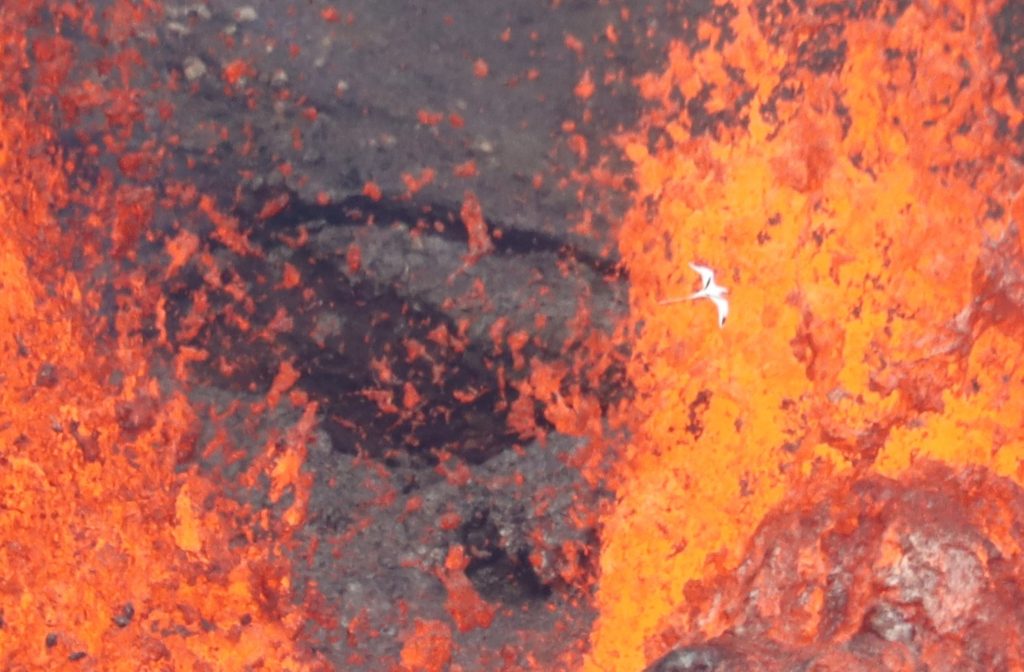
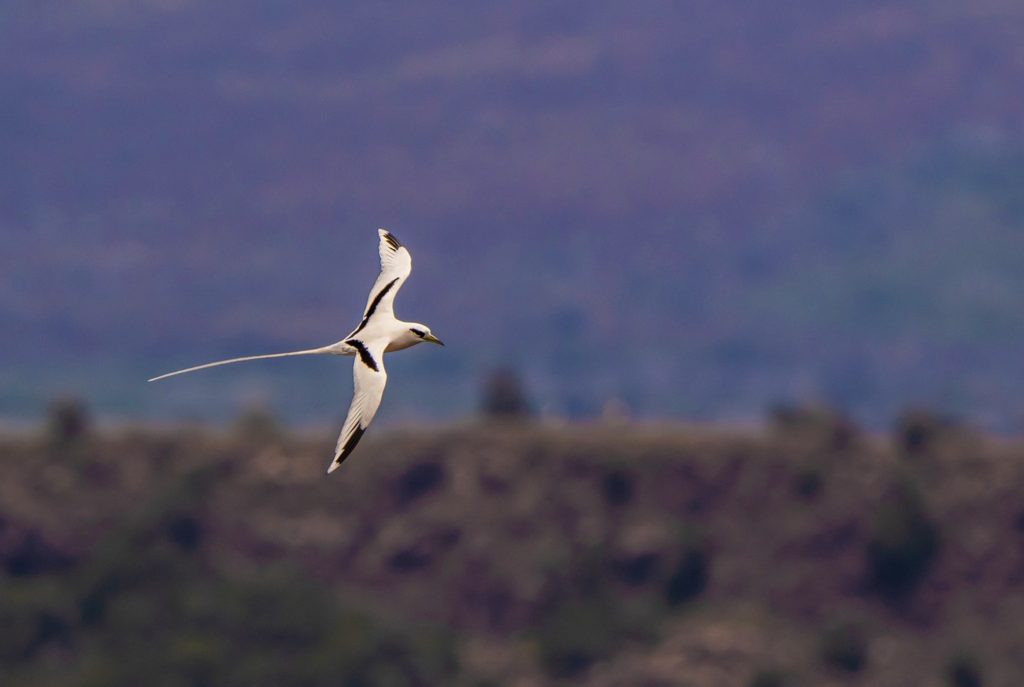
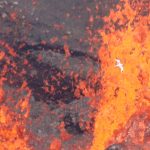
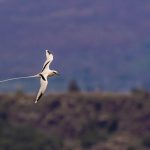
Koaʻe kea are commonly spotted circling lava fountains and riding thermal updrafts from the lava lake below, using the hot winds as a sort of “skate park” for birds.
Native Hawaiian tradition says the kinolau, or the supernatural body form, of Punaʻaikoaʻe — a handsome Oʻahu chief who sought protection from Hawaiian Pele — can be seen as the koaʻe kea flying over Kīlauea.
While the bird Xavier saved turned out not to be a shearwater, the biologist friend did connect him and his family with Kauaʻi-based seabird rehabilitation nonprofit Save Our Shearwaters to get help.
Following guidance from rescue staff, the family transported the bird to the Kōloa Fire Station, one of several off-season aid stations, where volunteers coordinate emergency pickups for injured seabirds.
Xavier, his brother and two friends kept the bird shaded and calm while waiting for its transport, hoping it would recover.
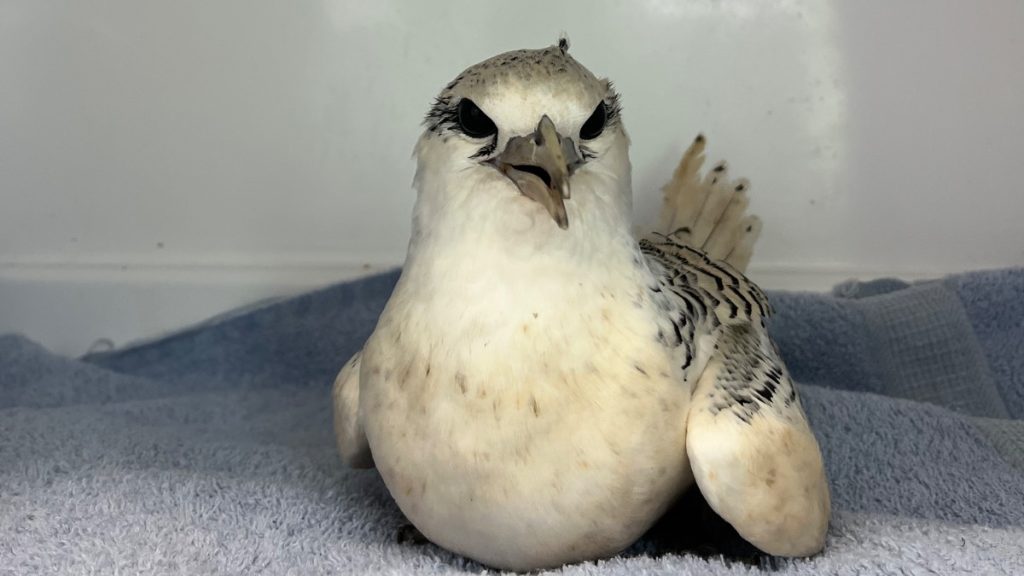
Save Our Shearwaters Senior Program Manager Jacqueline Nelson said Wednesday, May 27, that the bird continues to improve in the nonprofit’s care.
“This patient is doing well,” Nelson said. “The bird is gaining good weight and is feisty as ever.”
She added that the young bird grew strong enough to begin supervised pool sessions, which help seabirds bathe, preen and restore waterproofing of their feathers before being released back into the wild blue yonder.
Nelson said the rescue also raised community awareness about how to respond when native seabirds are found injured or grounded.
Tremblay added that the experience helped Xavier hone his instincts to protect wildlife.
“If you teach your kids to be outdoors and learn about the land and what surrounds them,” she said, “you create little people who can take care of these birds and everything around us.”
Nelson and Save Our Shearwaters is “ecstatic to see people rallying behind our native birds,” as conservation work is inherently a collective community effort.
“Every single patient we treat at [Save Our Shearwaters] starts with just one person in our community caring enough to help when they see a native bird in distress,” she said.
The nonprofit’s staff also praised Xavier and his family for their actions, calling the rescue “a highlight of our year.”
“Make sure you have the Save Our Shearwaters number saved in your contacts,” Tremblay said. “I already have the monk seal hotline, but did not have their number.
“The organization has an emergency line, and they answer anytime, even on Mother’s Day.”