


UPDATE: Episode 46 lava fountaining ends at summit of Kīlauea, about 9 hours after it began
Editor’s note: This story was updated at 6:23 p.m. on May 5.
Hawaiian Volcano Observatory reports that Episode 46 of the ongoing episodic summit eruption of Kīlauea volcano within Hawaiʻi Volcanoes National Park on the Big Island ended shortly before 5:30 p.m. Tuesday, May 5, after just more than 9 hours of continuous lava fountaining.
The episode began shortly after 8 a.m. Tuesday morning.
U.S. Geological Survey decreased Kīlauea’s volcano alert level to advisory from watch and aviation code to yellow from orange because of reduced ground and aviation hazards following the end of Episode 46.
Tephra fall from volcanic ash clouds was greatest within 3 miles of the two active vents in the crater; lighter ash and shards of volcanic glass Pele’s hair could remain suspended for large distances away from the vents.
Volcanic gas emissions — known as vog once they react in the atmosphere — also could be carried even great distances from the caldera.
Lava on the floor of Halemaʻumaʻu and the southwest of Kaluapele, Kīlauea’s summit caldera, remain hot and could slowly move during the days immediately following Episode 46.
Eruptive vents and lava flows are confined within Halemaʻumaʻu Crater in the southwest portion of the volcano’s caldera inside the national park.
Other significant hazards also continue to exist, including Halemaʻumaʻu crater wall instability, ground cracking and rockfalls that can be enhanced by earthquakes. Tephra material on the crater rim close to the eruptive vents also is prone to cracking, slumping and small landslides that sometimes expose hot and molten material within.
The episodic summit eruption began Dec. 23, 2024.
Hawaiian Volcano Observatory continues to closely monitor Kīlauea and will issue additional notices as needed based on activity.
Regularly scheduled daily Kīlauea updates are posted on the observatory website.
More information
- Hawaiʻi Volcanoes National Park visitor information
- Kīlauea webcam images
- Kīlauea photos/video
- Kīlauea lava flow maps
- Kīlauea FAQs
Episode 46 of continuous lava fountaining in Halemaʻumaʻu began after nearly 18 hours of precursory activity.
Lava geysers from the north vent reached up to 650 feet by 11 a.m. Tuesday.
U.S. Geological Survey models showing that Episode 46 reached its peak effusion rate and unlikely to generate taller lava fountains. Fountains from the south vent remained small and intermittent throughout this eruptive episode when and if they happened.
National Weather Service and Washington Volcanic Ash Advisory Center reported the plume from Episode 46 reached up to 20,000 feet above sea level by about 11 a.m. Tuesday.
Forecasters at National Weather Service also issued an ashfall advisory originally in effect until 8 p.m. Ground-level sensors near the eruptive vents indicated winds were blowing from the southeast.
Volcanic gas emissions and volcanic material were distributed to the northwest direction from Halemaʻumaʻu in the first hours of the most recent episode, with fist-sized and sparse smaller clasts reported at Uēkahuna Overlook in Hawaiʻi Volcanoes National Park and between mile markers 31 and 32 on Highway 11.
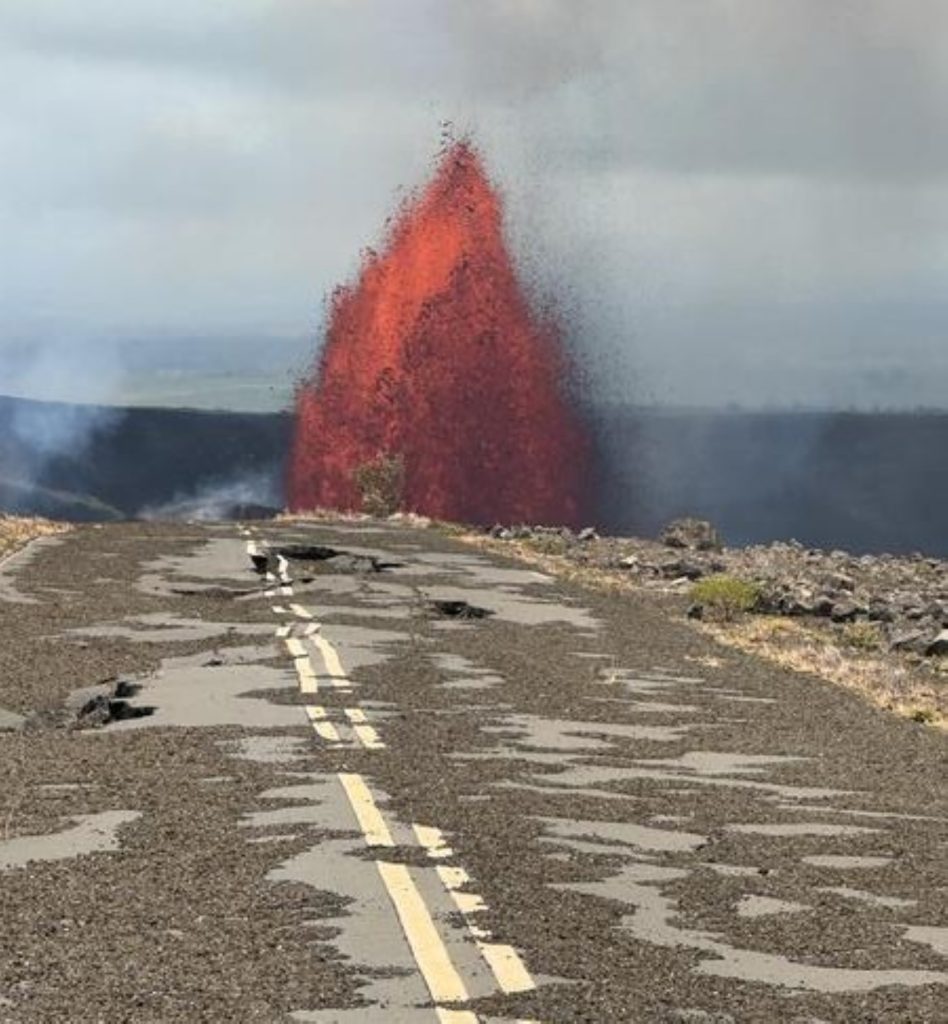
 Photo captured from the south rim of Halemaʻumaʻu Crater. North vent lava fountain during Episode 46 of the ongoing Kīlauea summit eruption May 5, 2026, rose above the crater rim. In the foreground, the damaged remains of Crater Rim Drive, which became impassable during the 2018 Kīlauea summit collapse, are littered with tephra fallout from past lava fountaining episodes. (M. Patrick photo/U.S. Geological Survey)
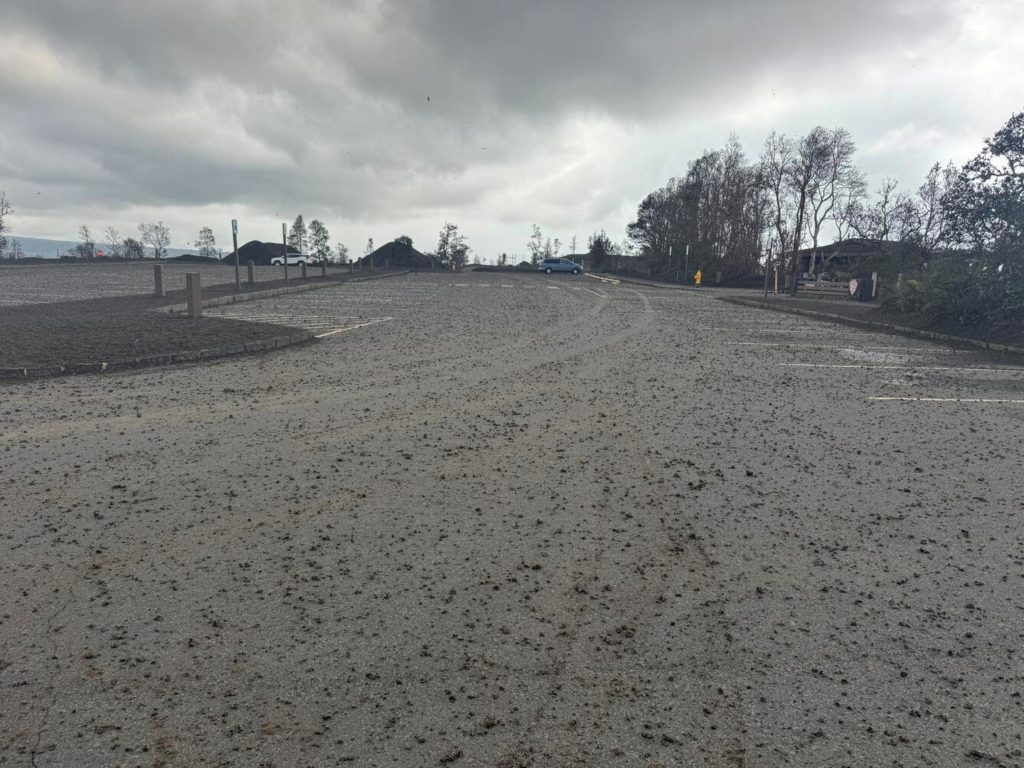
- During the beginning of Episode 46 lava fountaining the morning of Tuesday, May 5, 2026, winds blew from the southeast. Volcanic gas emissions and volcanic material were distributed northwest from Halemaʻumaʻu, with fist-sized and sparse smaller clasts reported at Uēkahuna overlook in Hawaiʻi Volcanoes National Park and between mile markers 31 and 32 on Highway 11. This photograph shows the parking area of Uēkahuna overlook at 9:45 a.m. Tuesday, about an hour and a half after the lava fountaining episode started. (M. Patrick photo/U.S. Geological Survey)
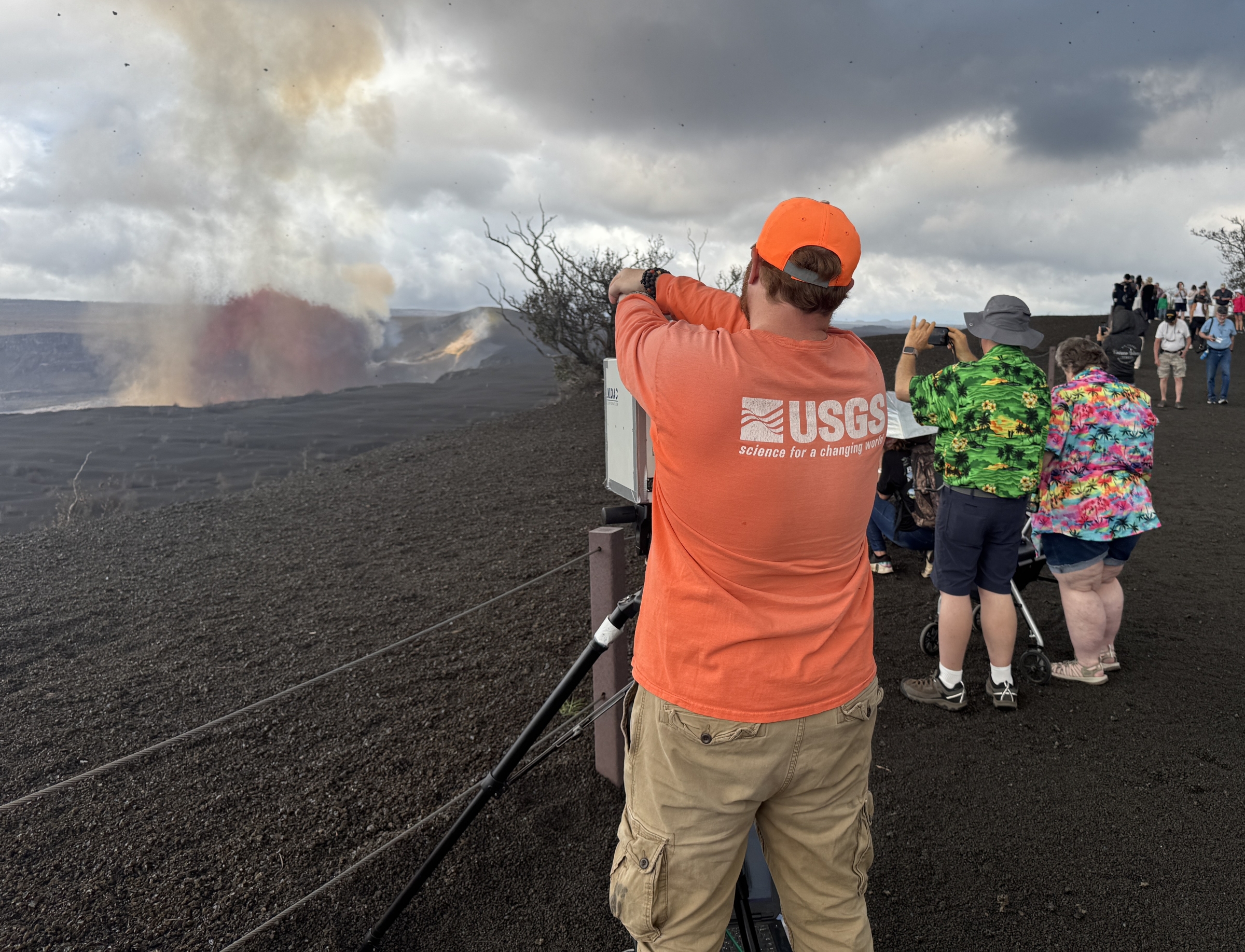
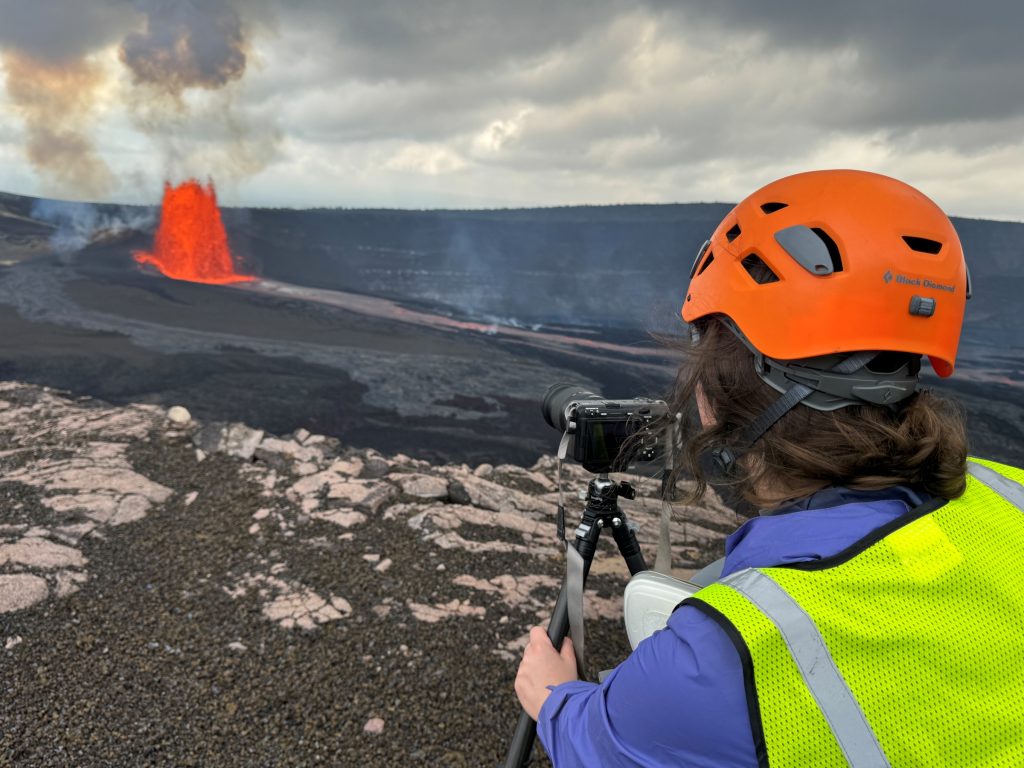
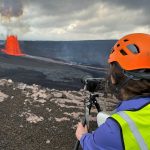
- A Hawaiian Volcano Observatory geologist monitors Episode 46 lava fountain in Halemaʻumaʻu at the summit of Kīlauea volcano Tuesday, May 5, 2026, on the Big Island. From various locations around Kaluapele, Kīlauea’;s summit caldera. (M. Patrick photo/U.S. Geological Survey
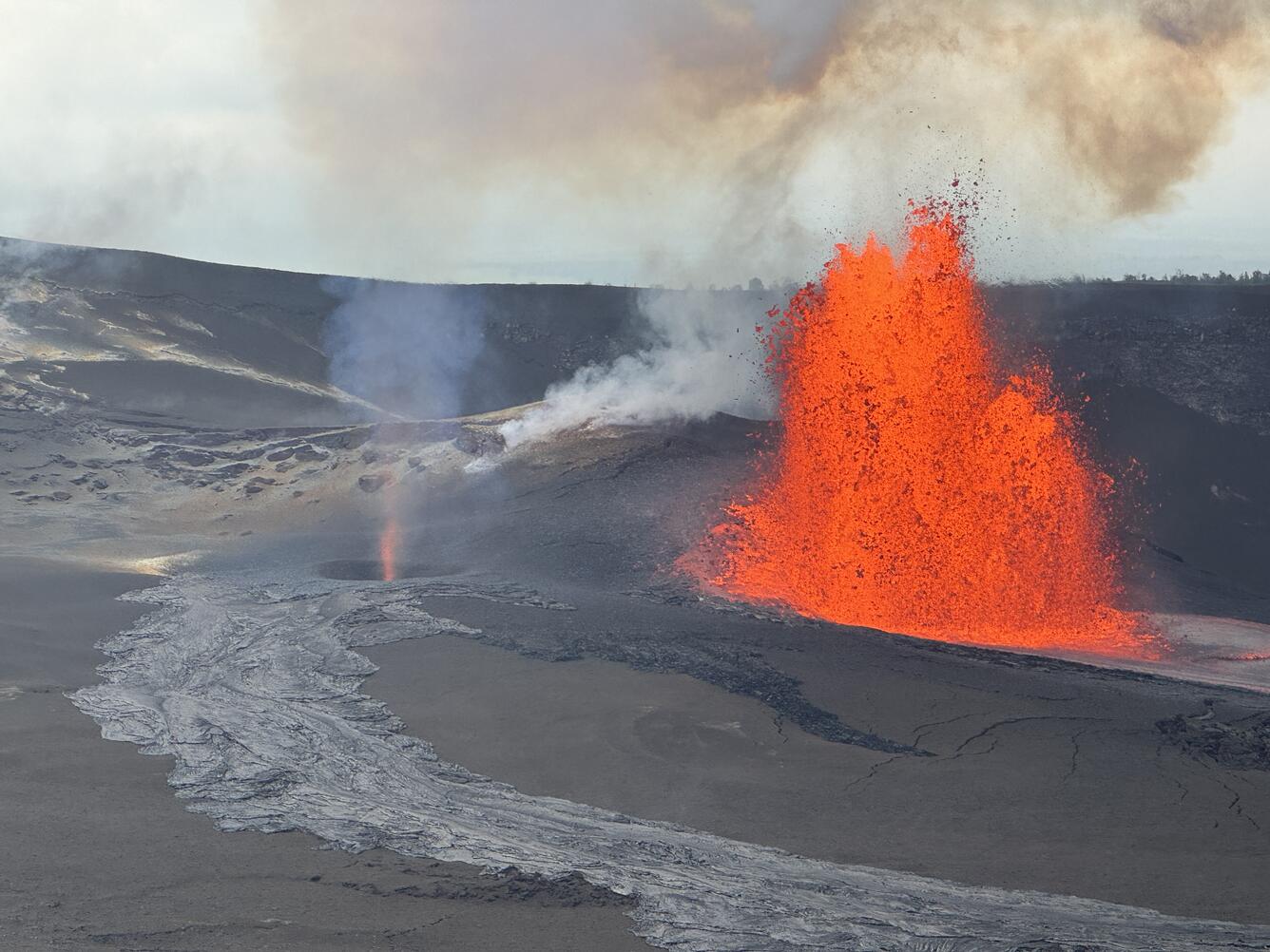
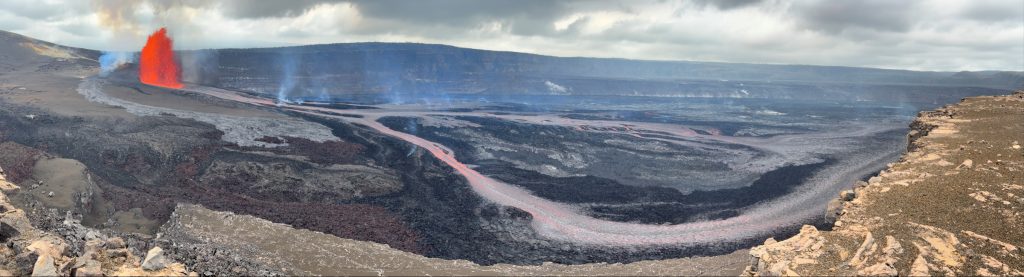
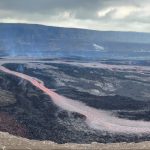
- Episode 46 of lava fountaining in Halemaʻumaʻu Crater at the summit of Kīlauea began shortly after 8 a.m. Tuesday, May 5, 2026. This panoramic photograph, captured at 1 p.m. from the south rim of Halemaʻumaʻu, shows the lava fountain from the north vent feeding a channelized lava flow across the crater floor. (M. Patrick photo/U.S. Geological Survey)
Fallout in these areas decreased by late Tuesday morning, but higher-level winds were southwesterly, suggesting the plume and tephra could be transported northeast as Episode 46 continued.
Communities impacted by the plume and tephra fallout included Volcano and Mountain View.