


Hawaiʻi County reviving program to give victims of minor crimes a louder voice, reduce backlog of cases
In 2024, Andrew Church was preparing to face charges from a domestic incident, but instead of going through the courts, his family decided to pursue a different route that allowed for discussion and problem solving.
Church was able to have his charges dropped when he completed this alternate route through the Restorative Justice program, which gives the victims of minor crimes the opportunity to be at the center of the justice they receive.
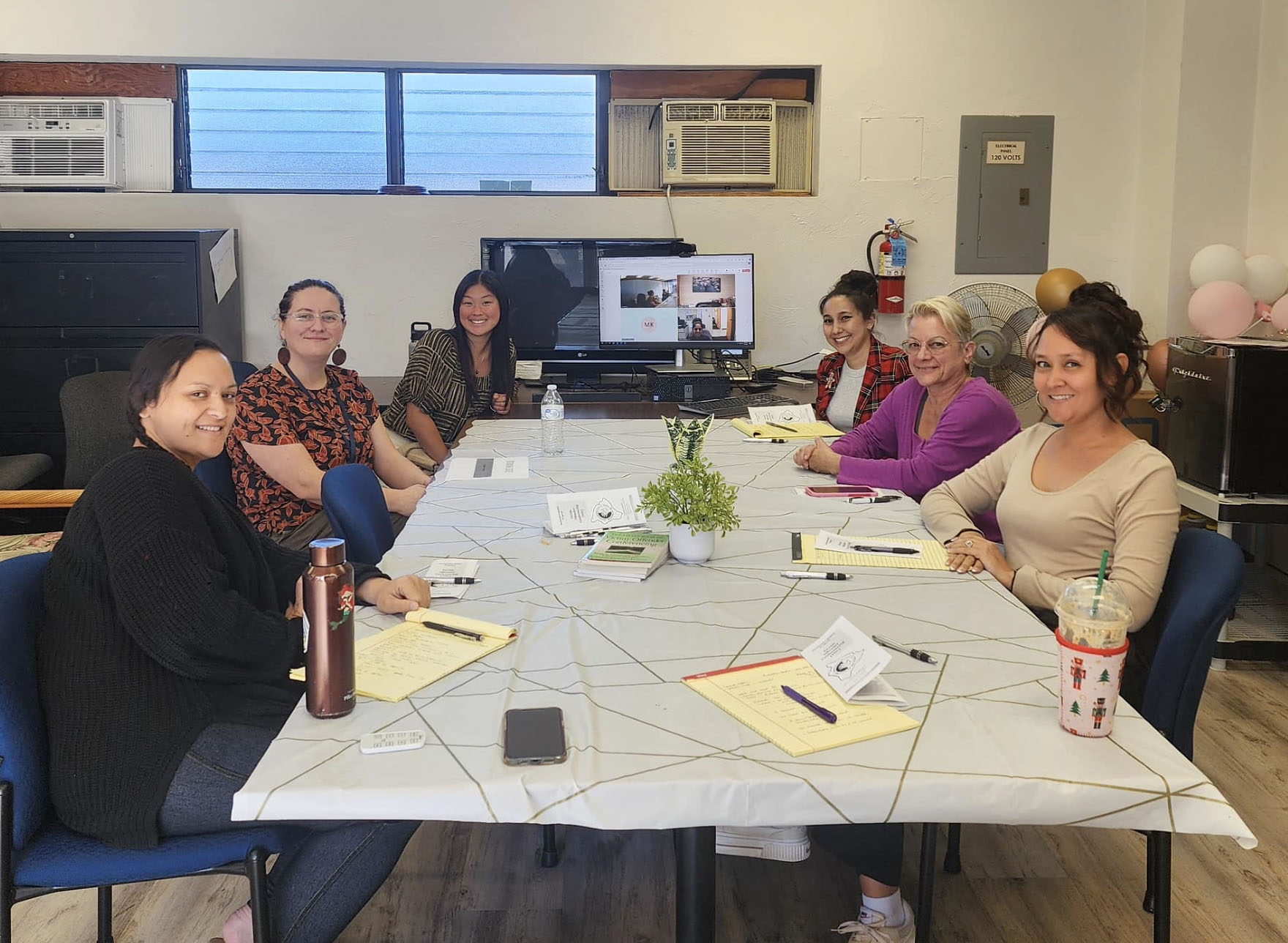
Located within the Hawaiʻi County Office of the Prosecuting Attorney, the Restorative Justice program can be an option for eligible offenders if the victims want to pursue it.
The program is victim-centered and voluntary. The method can hold offenders directly accountable to the people and communities they have violated while restoring the emotional and material losses of victims.
Restorative Justice is only available through referrals that come directly from prosecutors after cases are assigned with police reports. The referrals often are cases involving family members, dog bite incidents, or situations where the victim does not want to press charges or see the offender go to jail.
After receiving a referral, Restorative Justice Program Manager Amanda Makio or Coordinator Lauren Sugai, will contact the victim first to see if it is a path the victim wants to pursue.
The Hawaiʻi County Restorative Justice program began in 2014, and was the creation of Tim Hansen and former Mayor Mitch Roth, both former prosecutors.
The program initially included a large team that supported homicide victim survivors, taught victim impact classes at the Hawaiʻi Community Correctional Center, hosted outreach events, and helped offenders reintegrate into communities through open dialogue and healing practices.
Although the Restorative Justice started strong, it began to slow during the COVID-19 pandemic, with many employees leaving for more stable positions, and with limited access to facilities such as prisons.
Makio had volunteered with the program since its inception, and in 2022 was hired for the victim assistance unit in the Prosecuting Attorney’s office. When the program faced challenges, she decided to take the steps to revitalize it.
“It was during this time that I felt that the program was about to end,” Makio said. “I decided to apply for a position, and in 2023, we started getting referrals again.”
Since the revitalization of the program, the number of referrals has grown significantly, from 80 in 2023 to 230 in 2024, and 270 by July 2025. Of these, Makio and Sugai have completed about 30 cases.
“It doesn’t sound like a lot, but we are victim-centered and listen to what they want,” Makio said. “Sometimes they want to see them in jail, and sometimes they just want to see an offender get help or to listen to concerns.”
This is what makes Restorative Justice different from mediation.
“We don’t know who caused harm in mediation, but in this, we ask the victim what they think justice looks like and how the harm would be repaired,” Makio said.
After the initial talk with a victim, Makio will reach out to the offender, who often wants to participate to maintain a clean criminal record. The process involves significant preparation, including multiple one-on-one meetings to allow emotions to calm before the meeting between the parties.
Makio notes that the program is sometimes seen as mediation or a “slap on the wrist,” but justice is decided by the victim. If the offender does not follow through, the case returns to court.
“We get a lot of dog bite cases, which are controversial,” Makio said. “If a dog bites someone, the owner might get a fine or have to put the dog down, but they are not liable for fences, kennels or medical bills.”
Makio recently closed a case in which all the victim wanted was to express his fear of a dog on his property as an elderly person.
“He didn’t want the young man in trouble, but wanted acknowledgment and an apology,” Makio said.
Last year, Church was the offender in a dispute with his family and was offered the chance to take part in the Restorative Justice program instead of facing the court system. He and his impacted family members participated in a victim-offender conference to decide together what is fair and what he could do to repair the harm that was done.
Restorative Justice gave Church’s family a faster, less painful avenue to finding their own sense of justice, and it pushed Church to changing his life for his family, and also himself.
“The conference assists in the healing process,” Makio said. “It provides a setting for offenders to learn the full impact of their actions and take responsibility for their behavior.”
Makio collaborates closely with Going Home Hawaiʻi, a nonprofit that offers innovative reentry and reintegration services to help victims find justice outside the courts, which can often take more time.
“There is accountability in sitting across from the person that was harmed and acknowledging that what was done was wrong,” Makio said. “That doesn’t always happen in the court system because offenders can plead no contest and don’t have to speak at all. Then, the only right a victim has is to make a victim impact statement.”
So far this year, the Restorative Justice program has facilitated $6,000 of restitution to victims from 2025 cases.
All cases are screened thoroughly in the Restorative Justice program. Violent cases are not accepted, and background checks are conducted on both the victim and offender. Most participants are first-time offenders, although Makio has worked with juveniles and those struggling with mental illness and substance abuse.
“Many victims, offenders and public defenders are shocked to learn that this program exists and is an option for them,” Makio said. “It is the justice system’s version of hoʻoponopono.”
Hoʻoponopono is a traditional Hawaiian practice of reconciliation and forgiveness focusing on resolving conflicts and restoring harmony. It centers on acknowledging responsibility, seeking forgiveness, expressing gratitude and cultivating love, aimed at cleansing and healing.
Makio is working with Sugai to offer victim impact classes at the prison again but has not had the time with only two people on the team and 130 active cases.
She hopes the County of Hawaiʻi can establish a webpage for the program on the Office of the Prosecuting Attorney website.
“Some people think I am a scam when I call, so hopefully we can get the website up soon after all the county red tape,” Makio said. “We want to reach more people and pursue opportunities to talk about the nuances of the criminal justice system and how victims have the power to reframe their circumstances.”
Restorative Justice will host a victim impact panel with Big Island Drug Court this fall and seeks volunteers who have been crime victims of varying degrees.
To learn more about the Restorative Justice program, or to volunteer for the victim impact panel, email Makio at amanda.makio@hawaiiprosecutors.gov.