


State, environmental groups challenge EPA’s partial rejection of Hawaiʻi’s clean air plan on Big Island, Maui
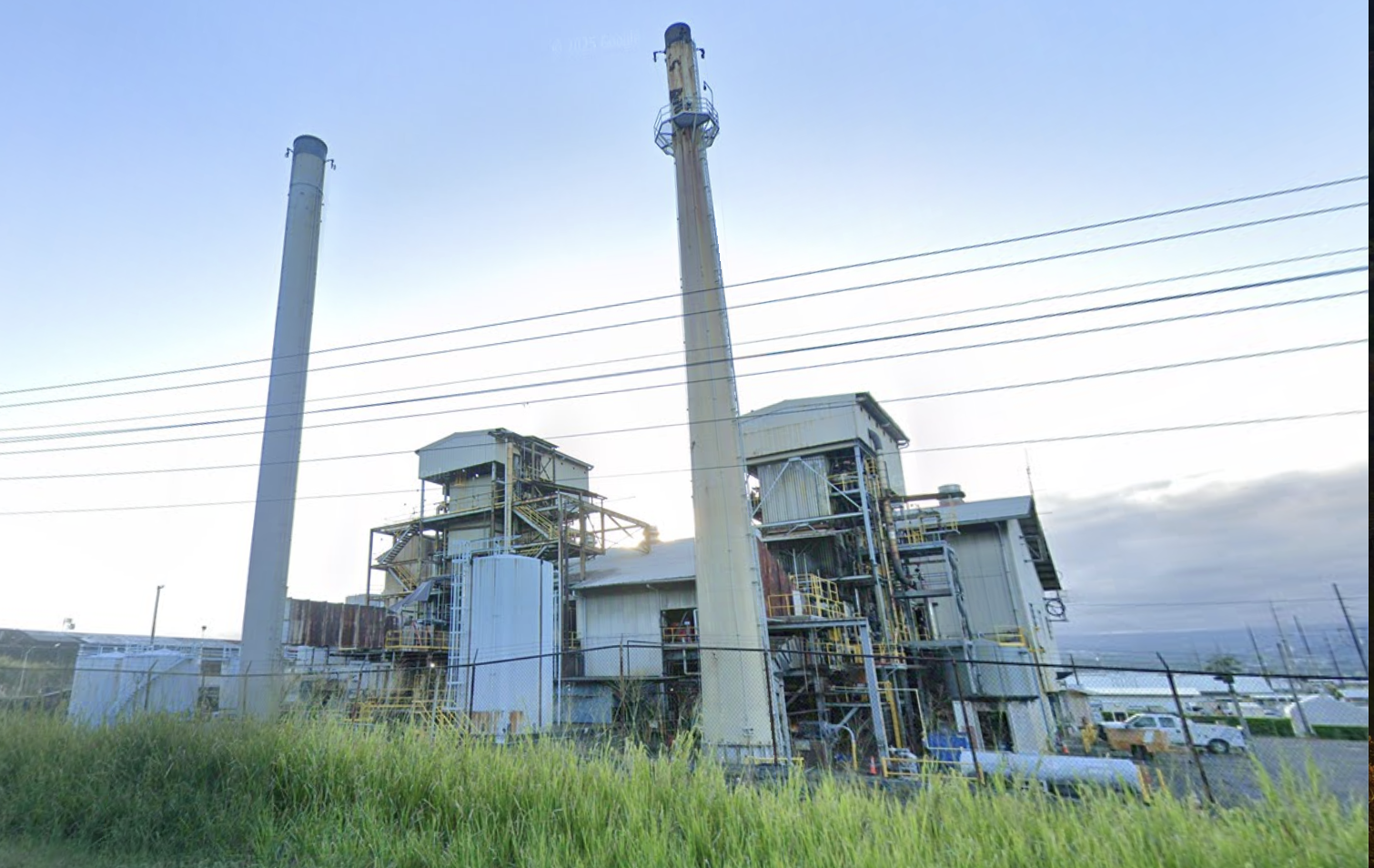
Hawai'i's regional haze plan would have cleaned up haze-causing pollution by retiring obsolete fossil fuel power plants, including Kanoelehua Hill Generating Station in Hilo, but Hawaiian Electric said it would have caused problems to reliability and raised costs to customers.
Hawaiʻi Attorney General Anne Lopez and a coalition of conservation and public health groups both filed challenges in federal court on Wednesday to the U.S. Environmental Protection Agency’s partial rejection of a state plan that would have cleaned up haze-causing pollution affecting national parks.
The state filed a petition on behalf of its Department in the U.S. Court of Appeals for the Ninth Circuit asking the court to declare EPA’s partial disapproval of its 2024 Hawaiʻi Regional Haze State Implementation Plan unlawful and to vacate the agency’s action.
Under the Clean Air Act, states must develop the regional haze plan to improve visibility and protect air quality around national parks. Haze-forming pollutants have been linked to serious health problems and environmental damage.
Hawaiʻi’s 2024 plan would have led to reducing haze-causing pollution at two national treasures in the state: Hawaiʻi Volcanoes National Park and Haleakalā National Park, the state said.
Hawaiian Electric Company’s Kanoelehua Hill Generating Station in Hilo and two plants on Maui were identified as the top contributors of human-caused, haze-causing pollution affecting visibility in the national parks.
Following extensive consultation, Hawaiian Electric voluntarily agreed to retire older and inefficient oil-burning units on the two islands that are currently operating with minimal pollution controls, according to a news release from the attorney general’s office.
While cost analyses found air pollution controls to be economically feasible, Hawaiian Electric proposed to retire the units instead of installing air pollution controls, the news release said.
But in May, the EPA announced it had partially denied the state’s plan.
When the EPA changed administrations in 2025, Hawaiian Electric abruptly reversed course on its commitment and notified the EPA that it no longer agreed to the retirements, according to Earthjustice in a news release.
“(President Donald) Trump’s EPA is all about protecting fossil fuel polluters instead of the air we live in and breathe — and here they go again,” said Isaac Moriwake, managing attorney for Earthjustice’s Mid-Pacific Office, in a press release.
“At HECO’s request, EPA jumped all over this chance to trash the law, pollute the environment, and keep Hawai‘i consumers stuck paying the skyrocketing bills for imported fossil fuels.”
Mike DeCaprio, vice president of power supply with Hawaiian Electric, said in a statement that rather than prematurely retire generators or install prohibitively expensive and infeasible controls whose cost would show up in customers’ bills, the company proposed a practical compromise that would “keep the lights on at the lowest cost” if there were delays in bringing renewable projects online.
“We still plan to retire these units, but we want to do it after replacement projects are online, not before,” DeCaprio said. “On an island, there’s no backup if we can’t meet demand.”
Kanoelehua generates 21 MW of capacity, operating primarily on diesel and residual oil, according to Hawaiian Electric’s website. It accounts for about 7.5% of the Big Island’s total firm capacity of 280.5 MW.
Firm capacity is the guaranteed amount of energy, water or transmission space that a utility promises to deliver to customers, even during periods of peak demand or adverse conditions.
“While we work to minimize the environmental impact of our activities, regional haze rules are not health-based,” DeCaprio said. “The rule is about national park visibility. Health and wellness of the population or environment is not part of the regional haze rule, it is solely a visibility issue. Visibility related to ongoing volcanic eruptions dwarf visibility issued related to the emissions from the power plants on Maui and Hawaii Island.”
But the coalition of conservation and public health groups said in its released that “without Hawaiʻi’s pollution reduction plan, nearly 8,000 tons of sulfur dioxide and nitrogen oxides, along with the fine particulate matter they form in the atmosphere, will continue to pollute the air around these plants, making skies in the state’s iconic national parks hazy and driving asthma attacks, heart and lung disease, hospital visits and premature death in nearby communities.”
Kathleen Ho, deputy director for Environmental Health with the state, said: “Hawaiʻi will fight to protect our people and our environment. Our regional haze plan was tailored to Hawaiʻi’s unique circumstances and developed through years of collaboration to improve air quality in and around our state’s national parks. EPA’s partial disapproval undermines the goals of the Clean Air Act and weakens important environmental protections designed to reduce harmful air pollution.”
Hawaiian Electric said that the Department of Health wanted the company to put controls on older generating units. Based on the age of the units, physical constraints and the cost to customers — $24 million at Kanoelehua Hill and $32 million at the plant on Maui — “we decided it didn’t make sense,” DeCaprio said. “With affordability in mind, the company accepted a forced retirement date in lieu of adding the expensive controls.”
Hawaiian Electric disputed the Department of Health’s statement that the controls were “economically feasible.” DeCaprio said that was based on the assumption the units would run another 30 years, which the company had no intention of doing.
After the change in administration in 2025, DeCaprio said the outlook on utility-scale renewable projects to replace some of the capacity of the retiring units was uncertain.
He also said that with recurring operational issues with some of the independent power producers on Hawaii Island, the company wanted the flexibility to keep some of the units in service if needed for reliability. But the Department of Health told them there was no time to modify the implementation plan and did not respond to a further request, according to DeCaprio.
“We contacted the EPA to explain our concerns with the implementation plan,” DeCaprio said, adding that the Department of Health was copied on its communications with the EPA, but did not respond.
“Hawaiʻi’s national parks are culturally and environmentally significant places … (and) home to unique landscapes and many species of plants and wildlife found nowhere else on Earth,” Lopez said. “Residents and visitors deserve to experience these parks with the natural air quality and visibility the (regional haze plan) was intended to protect.”
Hawaiʻi’s national parks are economic engines for the state. In 2025, more than 1.8 million people visited Hawaiʻi Volcanoes National Park and more than 850,000 visited Haleakalā National Park, generating hundreds of millions of dollars in visitor spending and supporting thousands of jobs. Research shows that visitation to national parks drops by as much as 8 percent when air quality is degraded, according to the conservation and public health groups.
In the disapproval, Hawaiian Electric’s voluntary retirements were characterized by EPA as “unconsented” closures. But characterizing the closures as unconsented disregards years of negotiations that resulted in the voluntary commitments incorporated into the regional haze plan, the news release from the attorney general said. “Further, in disapproving Hawaiʻi’s implementation plan, EPA creates uncertainty in the retirements and other pollution remediation measures.”
Wayne Tanaka, Director of the Sierra Club’s Hawaiʻi Chapter, said: “Most people who call Hawaiʻi home understand we have a generational responsibility to protect the land, water, and air we all rely on. I’m disappointed that HECO chose to break its promise, by pulling an end-run with the federal government to continue polluting what should be some of the most pristine places in our islands. They can still choose to do the right thing, and we’ll make sure they do.”
Editor’s Note: This story has been updated with comments and information from Hawaiian Electric Company.