


Waikōloa evacuation study confirms what residents knew: emergency routes are not adequate
"It's a terrifying part of life," one resident said during a meeting Tuesday to unveil the study results. "We are scared that we are going to burn to death by fire."
For several years, and especially after the 2023 Lahaina wildfire killed 102 people, residents of Waikōloa Village have been concerned about being trapped while trying to evacuate — with only one major road and a single-lane private road currently available as emergency routes.
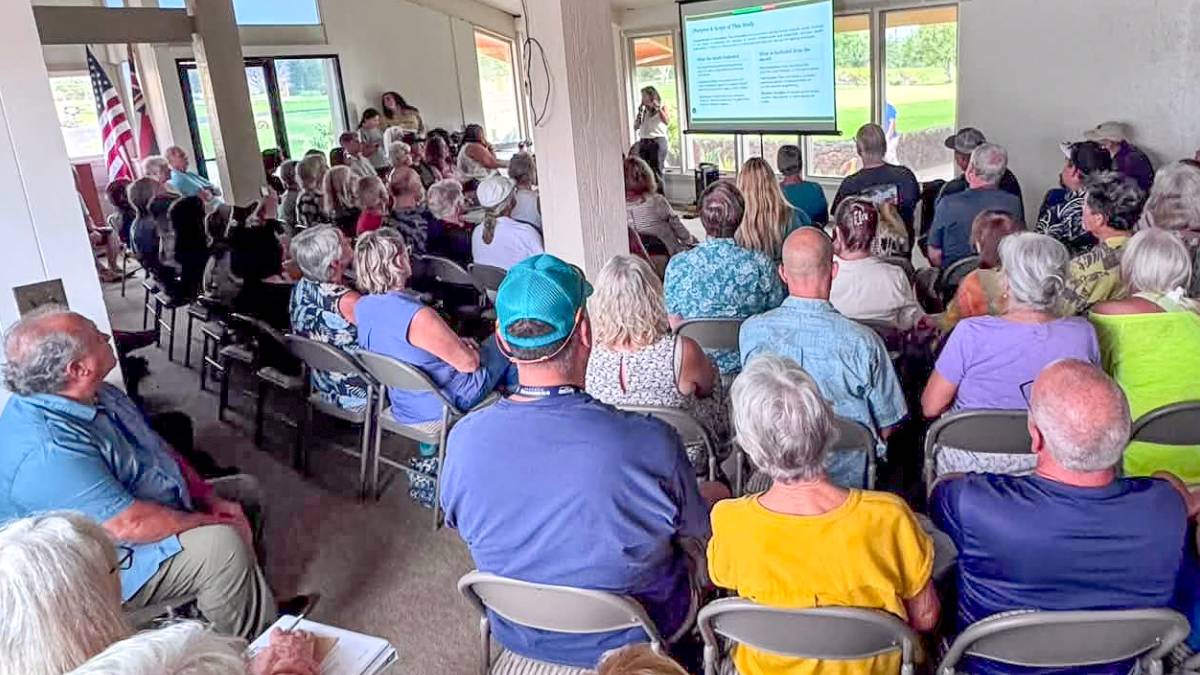
So on Tuesday, just three days after a 200-acre brush fire south of Waikōloa forced some evacuations, residents packed a Tuesday public meeting with about 60 also listening online to hear the results of a new evacuation study for the Waikōloa community.
The 151-page study said a “key finding” is the available roadway supply (evacuation routes and roadway network) is not sufficient to service the evacuation demand (number of evacuating vehicles) within the community in a timely fashion.
For those who had been stuck in gridlock in prior evacuations, this finding confirmed what they already knew.
“It’s a terrifying part of life,” one resident said during the meeting. “We are scared that we are going to burn to death by fire.”
On Tuesday at the Waikōloa Village Association Golf Banquet Room, the residents attended, wanting to hear about solutions. Many have pleaded for years for better access in and out of the community that now has only two evacuation routes: Waikōloa Road and privately owned Hulu Street, a single-lane road that remains locked behind a gate except for emergencies.

Other residents did not believe another key finding that it would take about 4 hours and 15 minutes to evacuate the entire village of about 7,100 evacuating vehicles that include residents, employees and visitors.
Cliff Victorine, who was representing the mayor’s office with Hawai‘i County, told the community members that Tuesday’s meeting was specifically about the results of the study and they were not there to answer questions about fires.
“We didn’t model fire, we didn’t model roadways being blocked by fire, we didn’t model visibility being obstructed due to fire,” said Rebecca Cullen with consulting firm KLD Associates, which was hired by Hawai‘i County to perform the study. “It’s just to simulate what the evacuation would look like.”
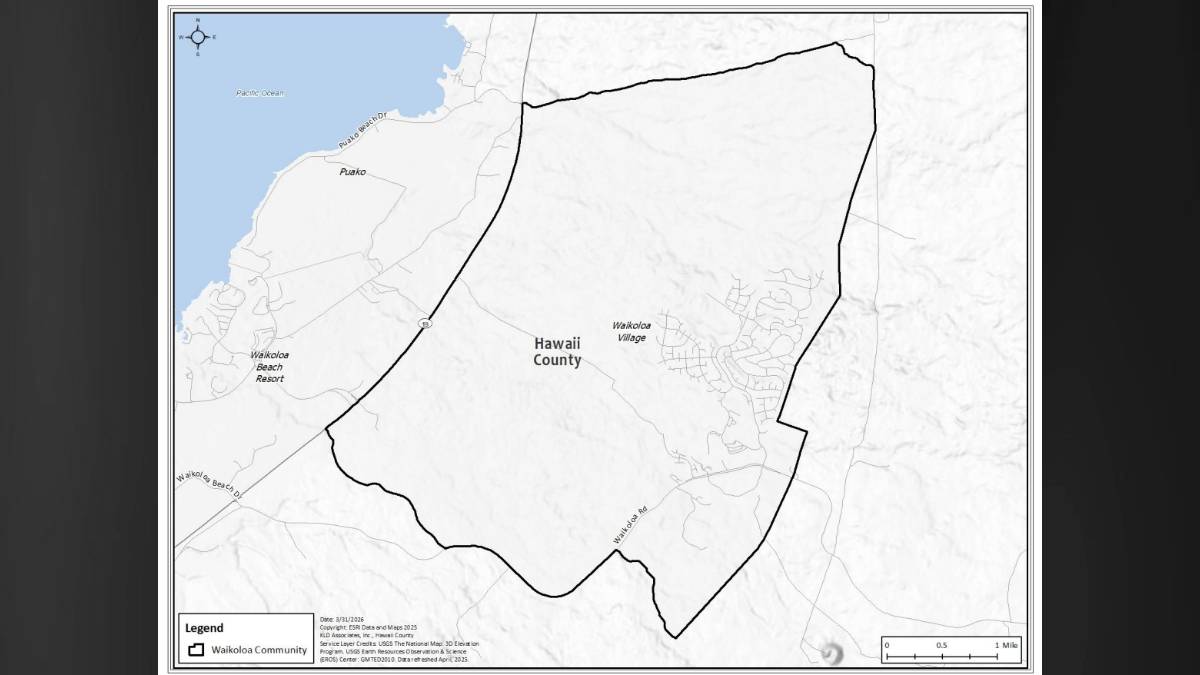
But with the development of the 139-unit workforce housing project, Nā Hale Makoa, a third emergency route at the north end of the community from Kamakoa Drive to Queen Kaʻahumanu Highway started to be built on Wednesday, Hawai‘i County Mayor Kimo Alameda said.
In May 2024 during Mayor Mitch Roth’s administration, a groundbreaking on Kamakoa Drive was held for the evacuation route. It was such a big deal that Hawaiʻi Gov. Josh Green and Hawai‘i Department of Transportation Director Ed Sniffen attended. They met with community members and the land developer, Charles Sommers, to celebrate.
But no work was done on the road until a few days ago, when the final permits were secured, Alameda said.
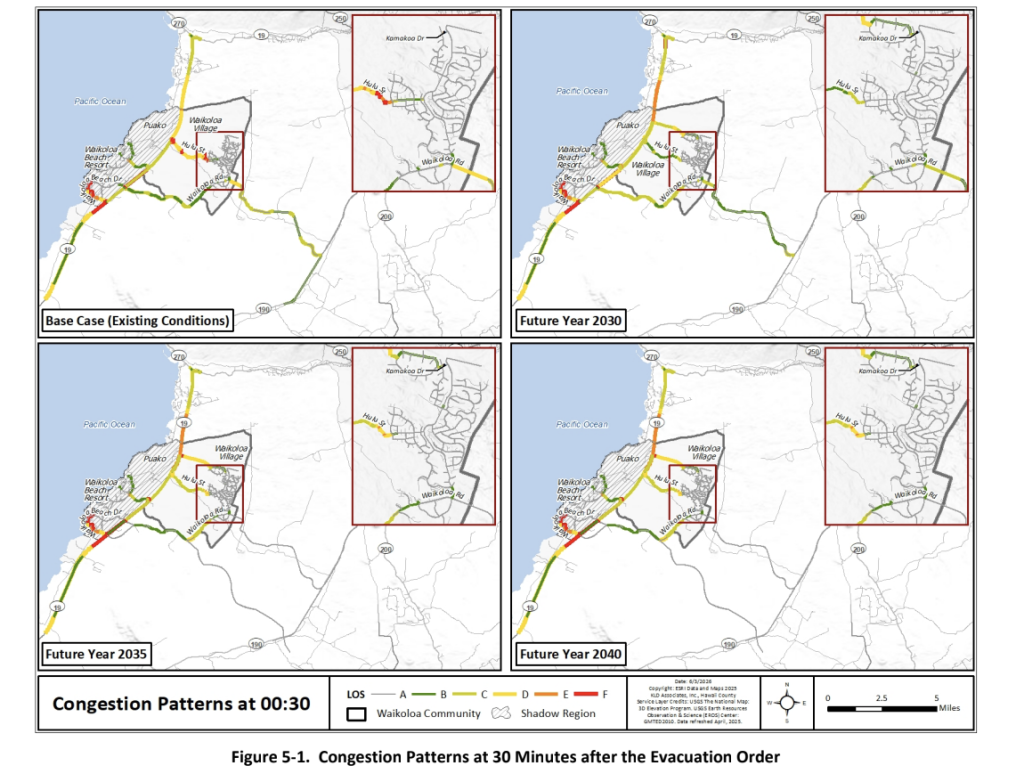
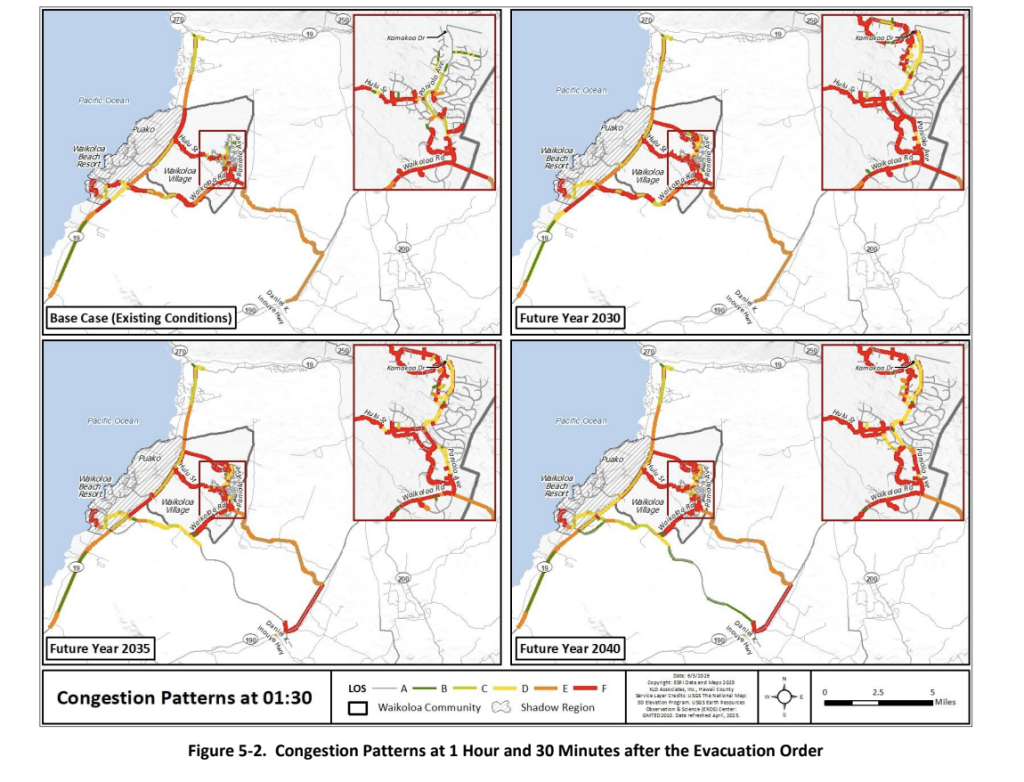
According to the study, Hulu Street experienced slightly less congestion in 2030 with the development of Kamakoa Drive as an additional evacuation route. However, the additional vehicles associated with population growth caused a significant increase in evacuation times, the study states.
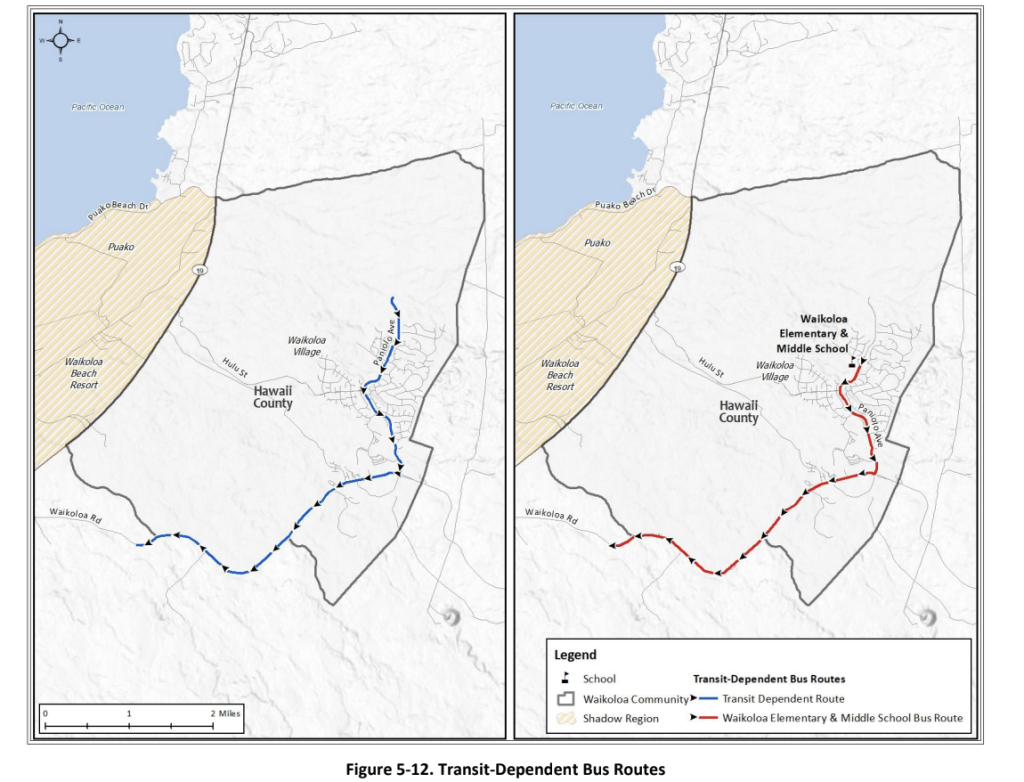
 Evacuation routes at 30 minutes.
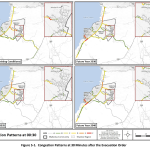
- Evacuation routes at 1 hour and 30 minutes
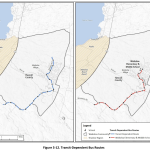
- Bus route only evacuation is on Waikōloa Road.
The evacuation study took into account results of a survey completed by 501 households in Waikōloa.
Cullen said the study analyzed the community’s current infrastructure, existing and planned routes, evacuation demands and estimated evacuation times, as well as future growth projections.
The study also was informed by traffic resources in the area provided by Hawai‘i County, which included the number of buses and wheelchair capable vehicles or ambulances needed to evacuate Waikōloa Elementary and Middle School, and the transit-dependent population.
Even though wildfires were the primary premise for the study, Talmadge Magno, administrator for Hawai‘i County Civil Defense, said there were too many variables, like wind conditions and the amount of overgrowth for a fire, to consider to include them in the parameters for this study.
Magno said they decided to focus on what evacuations have looked like in the past as well as what roads are currently in use.
“What we learned is we need early notification to the community because it’s going to take at least an hour for people to (begin to) evacuate,” Magno said.
Cullen said because the road system creates a bottleneck with people trying to get onto Queen Ka‘ahumanu Highway, it is about 4 hours and 15 minutes for the entire village to be evacuated, although individuals would not be sitting in their cars for four hours.
“Generally speaking, traffic condenses in the middle of the evacuation,” Cullen said. “If you get in your car fairly early, you can probably get out fairly quickly.”

Some people at the meeting disagreed with this assessment, although they cited that it took them at least two hours to evacuate the village in 2021 when the Mana Road Fire scorched more than 40,000 acres of state and private land.
Cullen said Hawai‘i County Civil Defense asked the agency to incorporate evacuation models for future years in 2030, 2035 and 2040. Those models included new buildouts, including the Kamakoa Nui housing development, the Kamakoa Road evacuation route and a school.
“That introduced 2,000 additional vehicles, which is really a 28% load increase,” Cullen said, adding that the evacuation time for the entire village goes up to six hours.
Cullen said a second lane on Waikōloa Road could be used as an egress during an emergency, reducing evacuation time by 45 minutes.
Cullen said the study also looked at what a second daily commuter route to Queen Ka‘ahumanu Highway would look like.
“And what we found is that it actually increases evacuation time by 25 minutes, which was also a shock to myself,” Cullen said. “What we found was that it’s funneling even more traffic to Queen K, which is already significantly congested.”
Residents at the meeting also had a hard time believing that aspect of the study.
Cullen based that data on input received from Civil Defense on what traffic control would be like at the end of those roads going onto the highway.
“One of the problems is finding that allowable gap, because of the tremendous traffic on Queen K, really in both directions,” she said.
Kayla Tano, who has lived in the village for 15 years, said the energy at the meeting was tense and felt like the county representatives weren’t taking what they were saying seriously.
“People are very scared and worried about their lives,” she said on Wednesday.
Tano, a mother to a 2-year-old and a 7-year-old, asked Cullen about evacuating kids from Waikōloa Elementary School, because according to the study, it indicates that 177 students would need to be bused out in the event of an emergency.
According to the study, the only evacuation route shown for a bus is Waikōloa Road.
Tano said Hulu Street can’t accommodate a bus. Also, Waikōloa doesn’t even have buses, they all come from Hilo.
“That whole meeting yesterday showed me that Waikōloa is not prepared for a fire, nor is Waikōloa Elementary School, and that is scary,” Tano said.
Alameda said it’s true they haven’t tested a bus down Hulu Street, but it would be used as a one-way road out of the village with five pullouts for an emergency. He doesn’t see why it wouldn’t be able to handle a bus.
Alameda said the county and its departments can dive into emergency scenario planning and what evacuation routes look like for those specific scenarios.
Funding for the evacuation traffic study was provided by the U.S. Department of Housing and Urban Development through a Community Development Block Grant for hazard mitigation.
Magno also said Waikōloa Village is certified through the FireWise USA program, which actively takes steps to reduce wildfire risk. He encouraged residents to check their properties to ensure they are fire-resistant.
There is a practice evacuation run coming up for Hulu Street on Aug. 15, and Magno encourages residents to participate.