


Kona family searching for pet cat they claim was trapped, removed from neighborhood 11 weeks ago
The Hawaiʻi Police Department has forwarded to county prosecutors a rare criminal case of animal desertion, the unlawful taking of an animal without the intention of returning it.
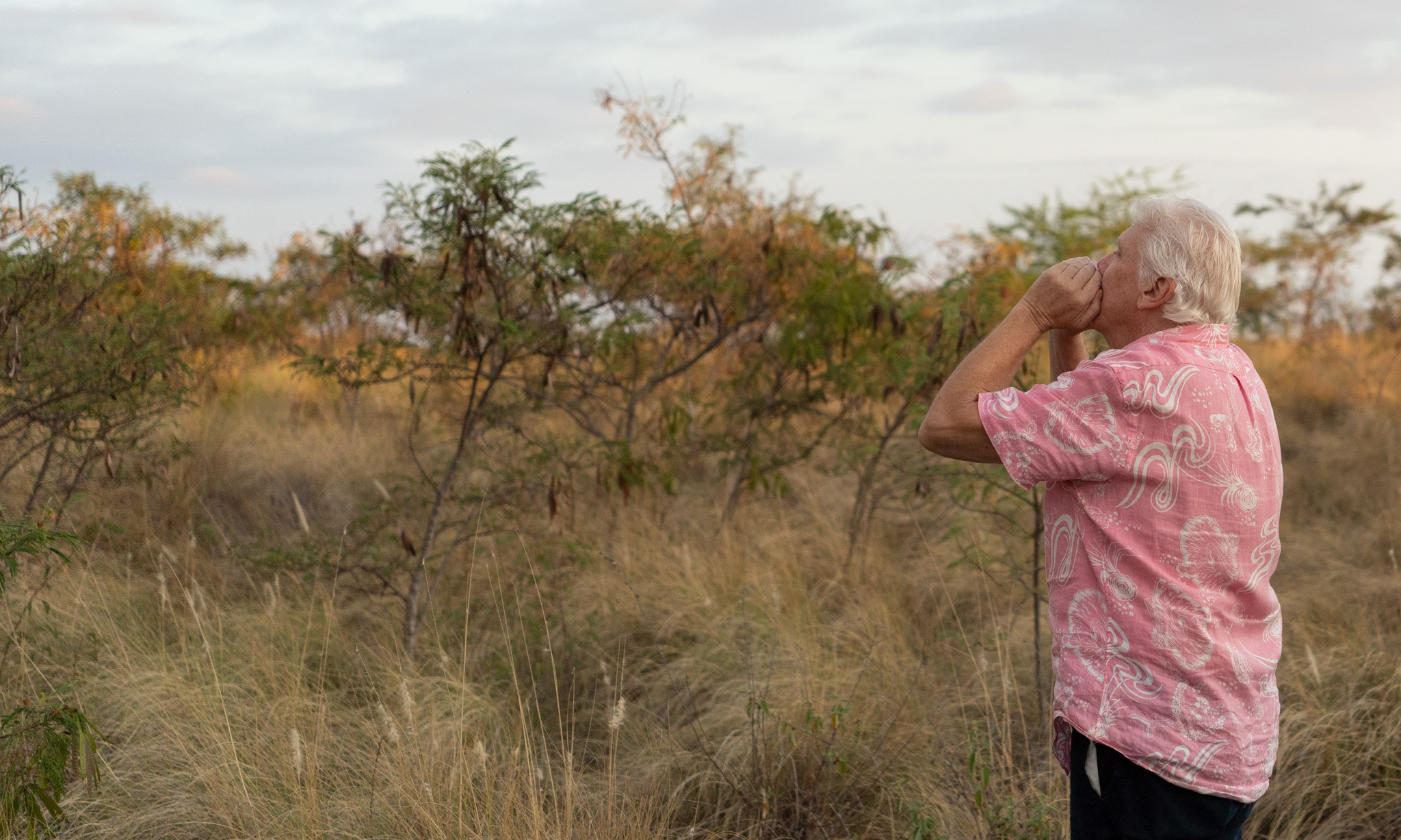
For about 11 weeks, Leigh Ann Conway and her husband, Craig Moody, have been searching morning and night, through empty lots overgrown with brush and areas around Old Kona Airport Beach Park and Kona Commons, for their 10-month-old cat named Squatter.
The couple says a member of their homeowners association at the Pines at Kailua-Kona II trapped Squatter, along with two feral cats, and illegally dumped them in another section of the town.
The couple contacted Hawaiʻi County Animal Control. Interim director Charyse Emmons told them to contact the police, saying: “This is outside the scope of just asking for information. It needs to be thoroughly documented, followed up on and reported appropriately.”
Emmons said it would be up to the police department to file a charge if its investigation found violations of state law or county codes.
And the Hawai’i Island Police did. It recently forwarded a criminal case of animal desertion, a state violation, to the Hawaiʻi County Prosecuting Attorney’s Office, Assistant Chief Rio Amon-Wilkins said on Monday.
Animal desertion is when someone unlawfully takes an animal with no intention of returning it. The charge is a petty misdemeanor, which has a maximum penalty of 30 days in jail and a $1,000 fine.
Amon-Wilkins said this was the first time in his career that he’s seen a case like this made.
Lori Luchette, vice president of Aloha Animal Oasis, said people’s pet cats, whether knowingly or unknowingly, are trapped often on the Big Island.
She used to manage the cat colony at Old Kona Airport, where at least once a week a cat would be dumped. She scanned the felines for microchips, discovering many were pets that she helped return to their owners.
And, she said, some people capture cats to take them to nonprofit animal clinics to be spayed or neutered: “People are trapping cats thinking they’re doing the right thing for their neighborhood.”
Pines II, like many places on the Big Island, has a colony of feral cats. Before Squatter went missing in April, Conway said one member of the HOA board led a discussion during a meeting about setting out traps and relocating the feral cats.
After that meeting, Moody and Conway contacted Animal Control and worked with Emmons on a nearly 40-page document about the damage that trapping and relocating could do to the neighborhood’s cat colony and the risk it posed to people’s pets. That document was presented to the homeowners association.
A representative of Hawaiiana Management Company, which oversees Pines II, said the company was not aware of the accusation that a pet cat was trapped and removed from the neighborhood.
Squatter had been a member of the feral colony. But when he was probably about 6 or 8 weeks old he followed Conway to her front door one day and wouldn’t leave.
“We started calling him squatter as a joke, thinking we would get him adopted by one of the rescues,” Conway said. “But then the name kind of stuck.”
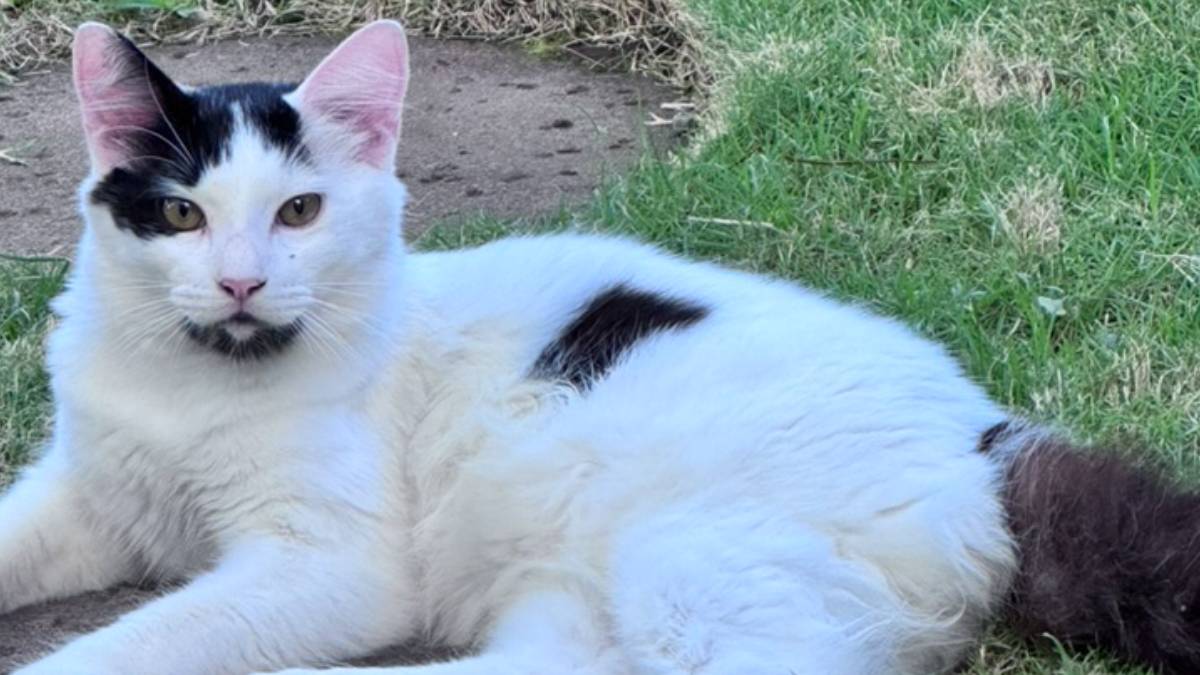
Squatter, a white cat with black spots and black fluffy tail, became their pet. He is microchipped, neutered, ear-tipped and registered as a pet cat with the HOA.
“They had all of his information, including a photo of him, and she (the board member) trapped him and took him anyway, rather than returning him to us, or even make an attempt to return him,” Conway said.
On April 24 and 25, Conway and Moody said the board member also trapped and removed two of the community’s feral cats who live in the cat colony: 1-year-old Junior (Squatter’s brother) and 4-month-old Whitey.
Big Island Now listened to a recording that Moody made of a conversation he had with the HOA board member, who admitted to trapping three cats, all matching the descriptions of the felines that went missing.
On the recording, the board member said she left the cats at Old Kona Airport Park past the walking path. Squatter hasn’t been found there. But his brother, Junior, was seen by the nearby Target.
Hawai‘i County Prosecuting Attorney Kelden Waltjen said Tuesday the case is not yet in their system.
Multiple attempts to reach the board member for comment were unsuccessful. And since no one has been officially charged, Big Island Now is not identifying the board member.
Emmons said the HOA board member could potentially be violating Hawai‘i County code 434, which states that a person commits cruelty to animals when knowingly or recklessly abandoning any animal, dog or cat. Those found violating the code face up to a $500 fine per offense.
Squatter was not the only pet cat caught up in the trapping. Pines II resident Jackie Cox said her indoor/outdoor cat Pearl came home one day dragging its tail.
“I didn’t realize it was broken,” Cox said. “We waited a few days, and her tail swelled up at the base, and she, of course, hid under a table for a few days, refusing to eat, so we took her to the vet.”
Cox said the vet told her Pearl’s injury was consistent with something vertical dropping down on her tail.
“I said: ‘Would that be a trap door cage coming down?’ And he said: ‘Yes, that’s conducive to the injury.'”
The vet bill was $302. Pearl’s tail took a few weeks to heal. Cox said there’s still a bump on it.
After the cats went missing and at the request of Conway, Emmons attended an HOA board meeting in June to provide details about Hawai‘i County codes regarding feeding, trapping and relocating cats.
Emmons clarified that a trap, neuter and release program is permissible. It allows animal groups to humanely trap feral cats to fix them so they can’t repopulate. But they have to be returned to where they came from, or adopted.
Based on her own observations, Emmons said: “It does seem likely that there are people deliberately trapping unwanted cats from their neighborhoods or their properties and relocating them because in managed colonies, the whole point is to control that population.”
Sometimes, Emmons said people assume incorrectly that an outdoor cat is unowned or unwanted.
“There’s an assumption that if a cat is in a trap and it’s hissing or growling, it must therefore be feral,” she said. “But that’s not the case either, because even an owned cat caught in a trap is going to behave potentially in a fractious manner because it’s scared. It feels threatened. It doesn’t know who the person is and now it’s stuck in a tiny cage.”
And nearly two years ago, Conway started working with Aloha Animal Oasis to address their community’s feral population through neutering and spay clinics, and adoptions. She said the trapping in April was not necessary because the colony had gone from about 20 cats to just seven.
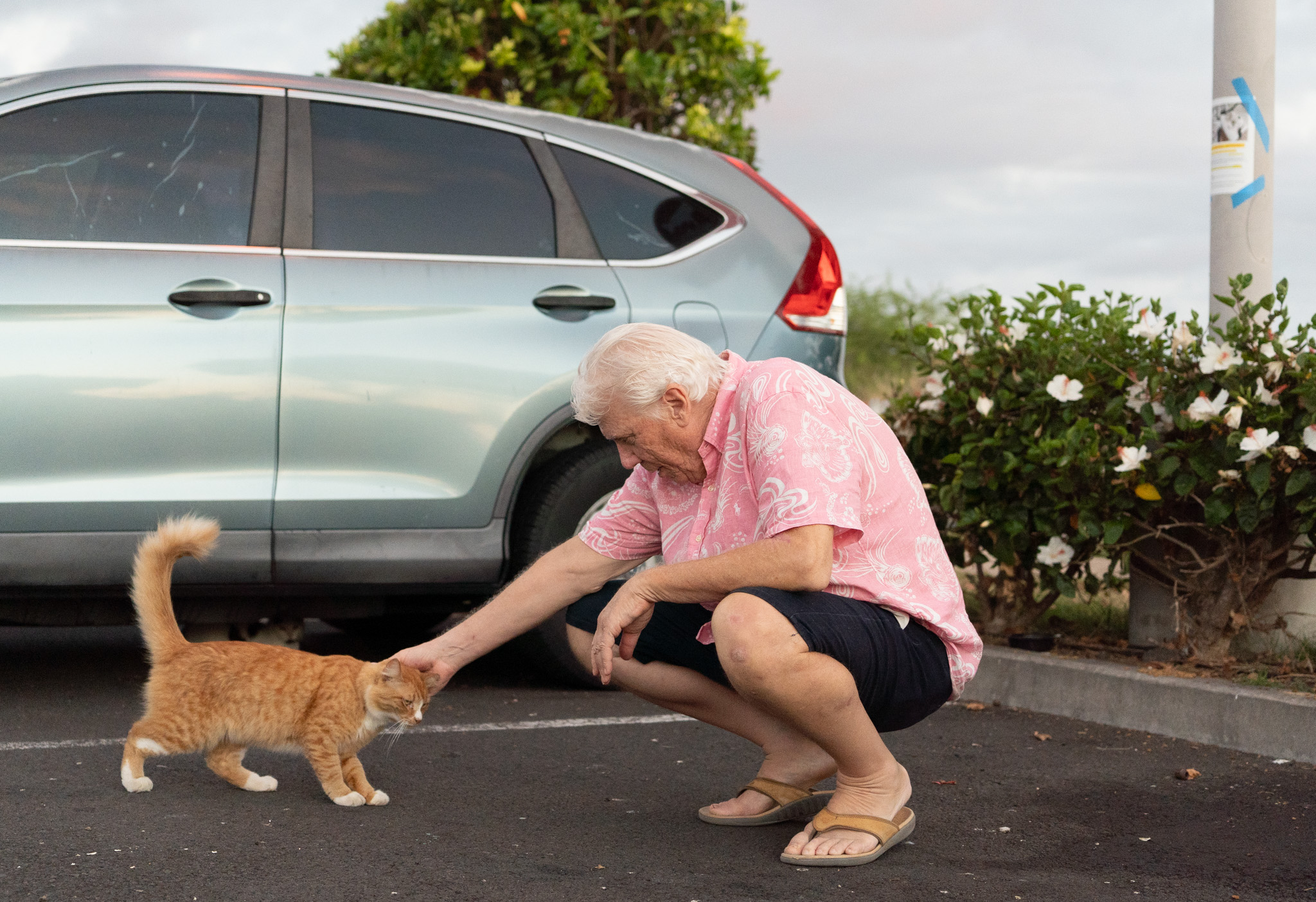
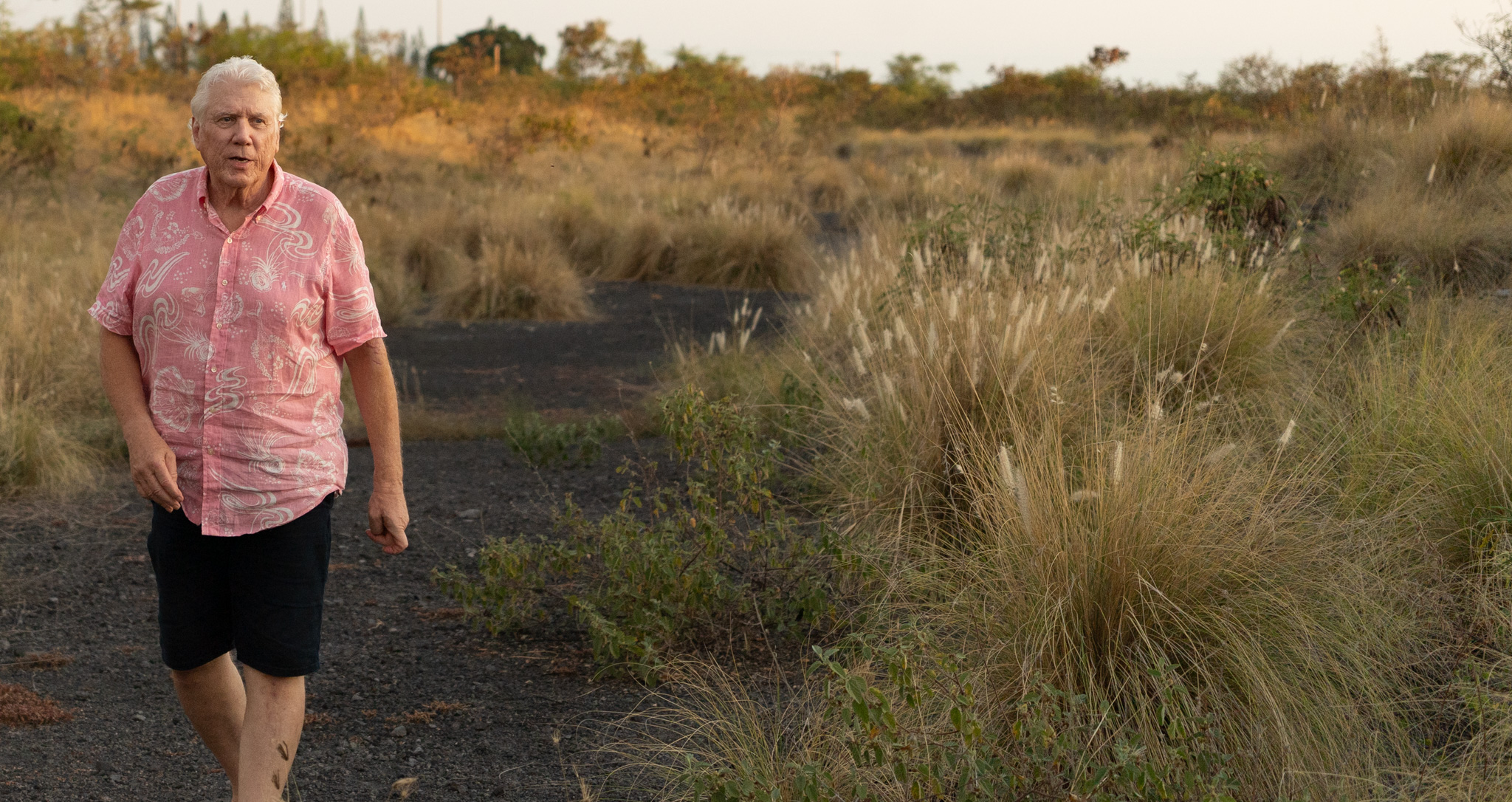
Conway and Moody have not given up on finding Squatter. Conway goes to the Target parking lot and behind Petco every morning, while Moody takes Old Kona Airport Park, a known dumping ground for unwanted cats, and where there is another cat colony.
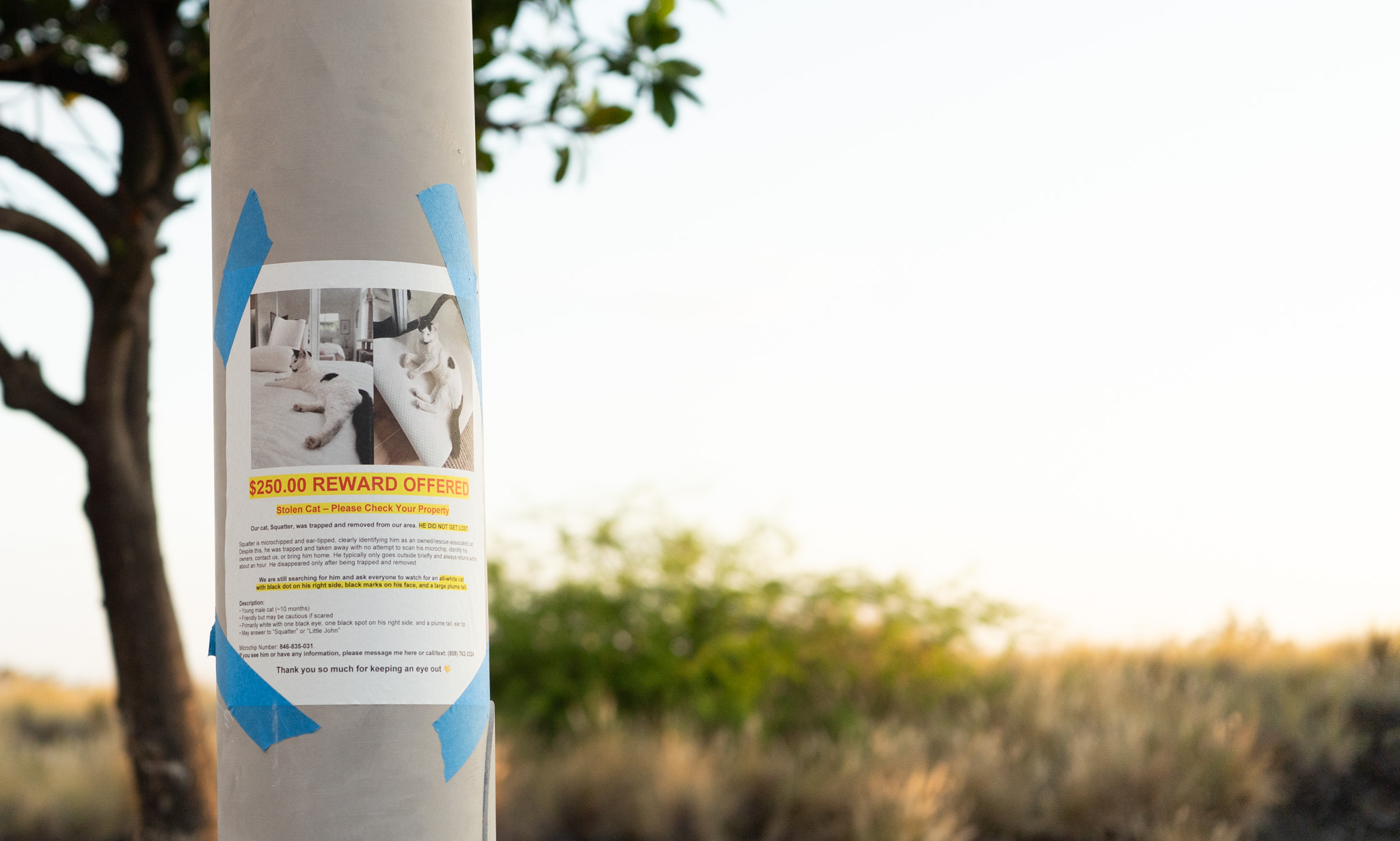
Conway and Moody also have posted 200 fliers, some as far as Palisades, with a reward for his return of $1,550. It is funded by contributions from various community members.
“We’re not giving up yet,” Conway said. “Until somebody tells me it’s hopeless, I’m going to keep looking.”
There has been some hope. Moody said someone took a picture of Squatter 3 1/2 weeks ago around the Kona Commons area.
With this proof of life, Moody continues to make the rounds every night from Kona Commons down to Old Kona Airport Park. After the sun goes down, he will sit in a beach chair in the middle of a field next to Target and call out his cat’s name for about half an hour.
“It’s just sad,” Moody said.
Emmons said Animal Control struggles with these types of reporters because it is damaging to a family unit to lose a pet.
“It’s really heartbreaking, but proving it enough to issue a citation is always the most challenging piece,” she said.
Emmons said what she can do is provide education about the county and state codes.
“I really hope their cat comes back,” Emmons said. “I can’t imagine how they must be feeling right now.”