


Episode 51 eruption of Kīlauea expected to begin any day now
Kīlauea's alert level has been elevated to "watch" as preliminary volcanic activity at the summit suggests a new lava fountaining episode is likely now through Thursday.
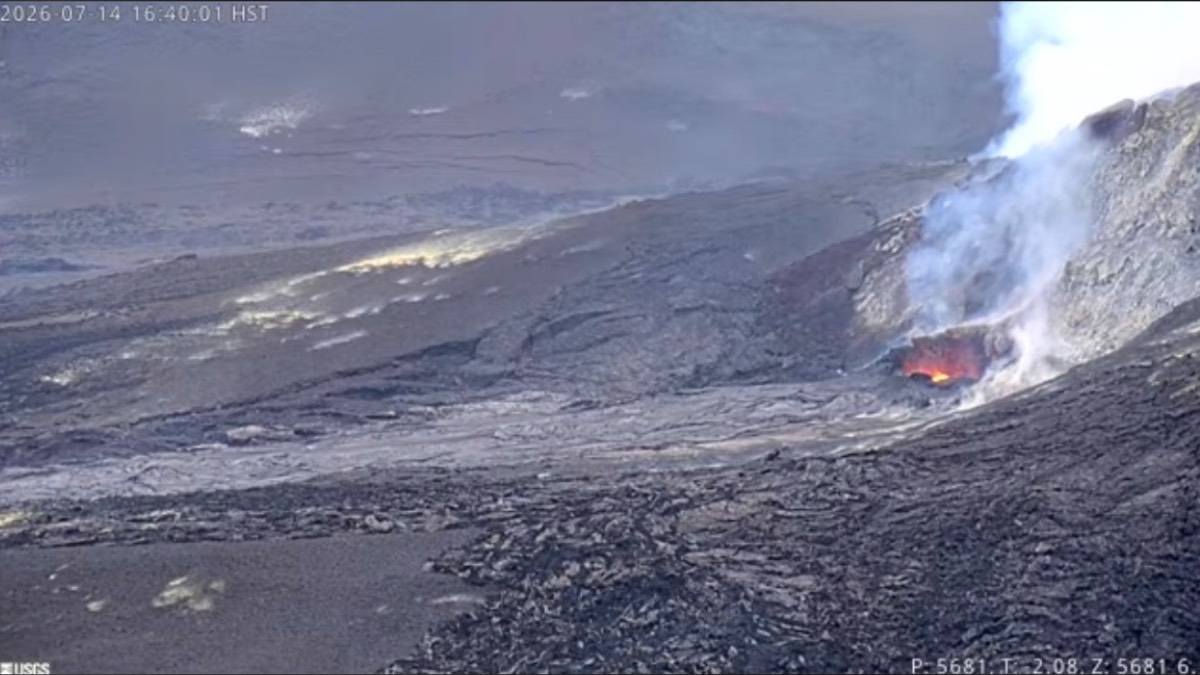
Kīlauea’s volcano alert level was raised after precursory activity began at the summit, signaling that a new episode of lava fountaining could soon begin.
The U.S. Geological Survey’s Hawaiian Volcano Observatory said low-level eruptive activity associated with Episode 51 of the ongoing Halemaʻumaʻu eruption began at about 2:51 p.m. Tuesday with a lava overflow from the north vent inside Kīlauea’s summit caldera.
In response, the observatory raised the volcano’s alert level from Advisory to Watch and increased the aviation color code from Yellow to Orange, indicating heightened volcanic unrest and an increased potential hazard to aircraft.
Scientists said the precursory activity could continue for hours or even days before lava fountains begin between Tuesday and Thursday.
If lava fountaining occurs, it is expected to be episodic, with individual fountain episodes typically lasting less than 12 hours. Ash, however, may remain suspended in the atmosphere longer depending on wind and weather conditions.
The eruption could produce ash and tephra that may fall in communities downwind of the summit. Smaller particles can travel farther from the eruption site than larger material.
The observatory said low-level winds Tuesday afternoon were blowing from the northeast, creating the possibility that ash and tephra could be carried toward Pāhala and Nāʻālehu.
Higher-level winds were variable, meaning volcanic material could also be dispersed into communities surrounding Hawaiʻi Volcanoes National Park. If an eruption is strong enough to send ash above the trade wind inversion, material could be carried north or northwest of the summit.
Officials also advised residents living downwind of Kīlauea and anyone planning to visit the summit area to monitor volcanic activity and weather updates, prepare to protect water catchment systems if necessary, and follow guidance from Hawaiʻi Volcanoes National Park and Hawaiʻi County officials.
Temporary road and park closures may occur depending on conditions.
The Hawaiian Volcano Observatory said it will issue updated status reports daily or as conditions change.
For further information, click the following links:
- Hawaiʻi Volcanoes National Park visitor information: https://www.nps.gov/havo/index.htm
- Kīlauea activity summary also available by phone: (808) 967-8862
- Kīlauea webcam images: https://www.usgs.gov/volcanoes/kilauea/webcams
- Kīlauea photos/video: https://www.usgs.gov/volcanoes/kilauea/photo-and-video-chronology
- Kīlauea lava-flow maps: https://www.usgs.gov/volcanoes/kilauea/maps
- Kīlauea FAQs: https://www.usgs.gov/volcanoes/kilauea/faqs