


3 Big Island men in race to unseat Hawaiʻi Gov. Green. Who else from the island is running for state, U.S. seats?
In Hawaiʻi for the 2026 elections, the primary will be held on Aug. 8 and the general election on Nov. 3.

For the 2026 county and state elections in Hawaiʻi, there is not a lack of candidates, including nine people who have filed to try to unseat Gov. Josh Green.
Three are from the Big Island, and all from East Hawaiʻi: Democrat George “Teva” Lucas-Tadeo, Republian Ken Fujiyama and nonpartisan John “Raghu” Giuffre.
No one from Hawaiʻi Island is running for Lt. Governor seat, which is an open seat with the resignation of Sylvia Luke earlier in the year due to her connection with a criminal fraud investigation.
For the U.S. House District 2 seat, Greg Guithues of Ocean View and Steven King of Pāhoa are challenging incumbent Jill Tokuda.
On Hawaiʻi Island, only one of the four Senate districts, District 2 representing Puna, is up for re-election.
During the primary, people vote by political party to select a nominee to represent their party in the Nov. 3 general election. Candidates who do not belong to a political party are nominated to the general election.
Click here for the full candidate report. And to learn about the candidates running for the nine County Council seats on the Big Island, click here.
Below is a look at the races and the Hawai‘i Island candidates for state and federal offices.
Governor
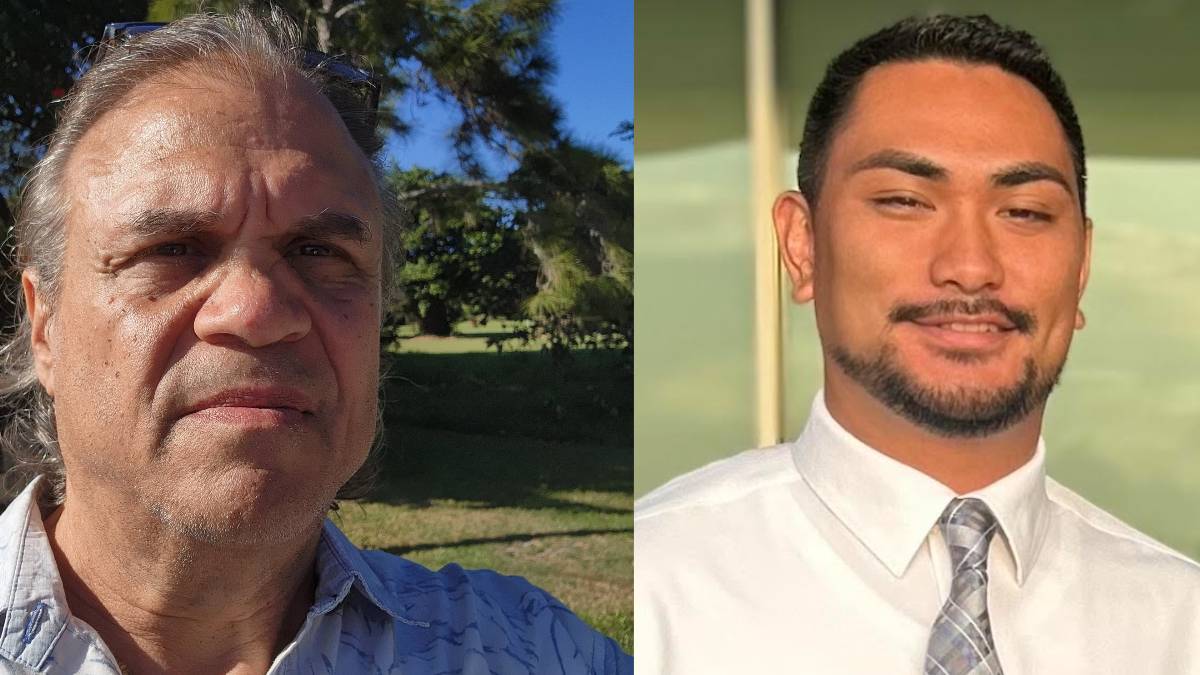
Green is the frontrunner and will be challenged by three relatively unknown candidates: Lucas-Tadeo, Duke Bourgoin and Lauren Kapoliahiʻiaka Shim in the primary.
While Green previously lived on the Big Island, working as a doctor, Lucas-Tadeo is the only Democrat for governor current resident, living in Pāhoa. He is a high school graduate from Kea‘au High School and earned his Bachelor of Science degree in Criminal Justice from Liberty University.
If elected as governor, some of his priorities include inspiring other Polynesians to rise and lead in government, restoring balance and righteousness by placing the power of the land back into the hands of the Native Hawaiian people, increasing affordability by removing state income tax for anyone earning less than $500,000 per year, and addressing food and housing shortages.
Going for the Republican nomination is Hilo resident Fujiyama and Gary Cordery, from Oʻahu. They will try to become the first Republicans to win a gubernatorial election since Linda Lingle was triumphant in 2006.
Cordery, a builder and contractor on Oʻahu, is better known. Fujiyama did not responded to Big Island Now’s requests for his positions or background.
Giuffre, a Hilo resident, said hewants to focus a portion of the state funding on helping farmers. Bu Laia Hill, Clyde McClain “Mac” Lewman and Calvert A. Williamson also are running as nonpartisan and will be on the general election ballot.
Green was first elected to office in 2022, after having served as lieutenant governor for former Gov. David Ige. His medical background was a bonus during the COVID-19 pandemic.
During his time in office, he has supported tax cuts for families, included funding for a new health care facility in West Hawai‘i in his latest budget and has worked to establish more housing for those experiencing homelessness throughout the state through the kauhale initiative, where his administration has led the work in building 20 new homes, communal facilities and common area spaces on state land on O‘ahu.
U.S. Representative District 2
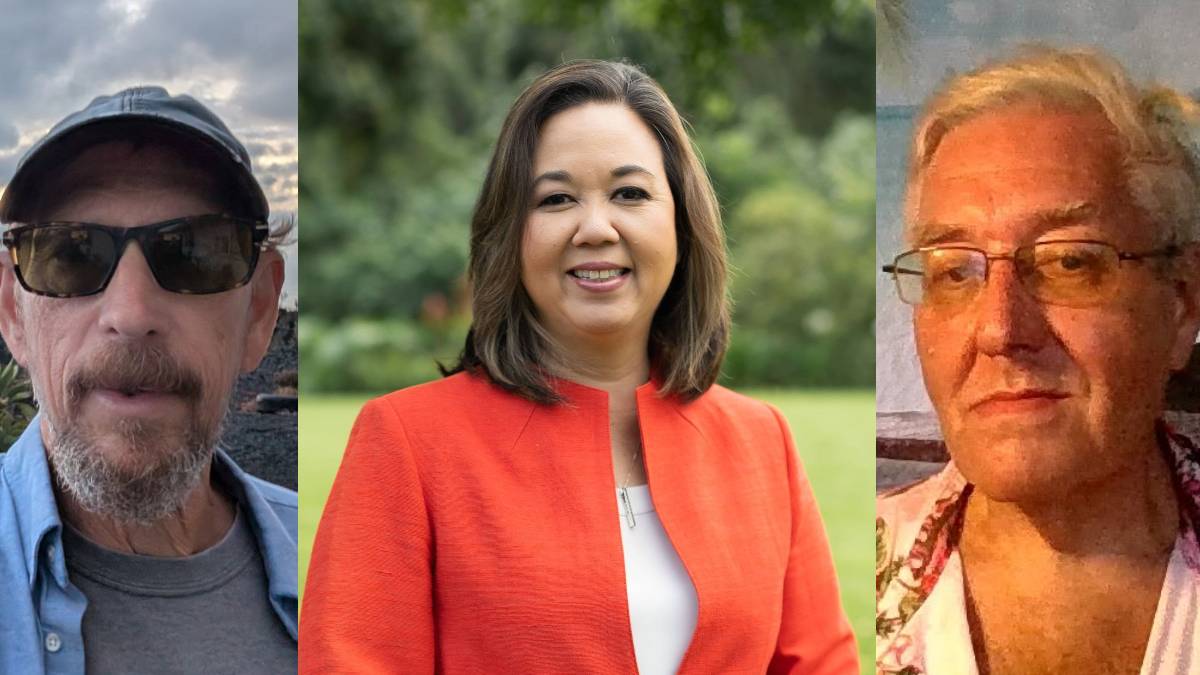
Tokuda, a Democrat, is seeking a third two-year term in the U.S. House. She was first elected in 2022 and currently serves on the House Committee on Armed Services, Select Committee on the Chinese Communist Party, and as Ranking Member on the Subcommittee on Conservation, Research, and Biotechnology, and on the Committee on Agriculture. Tokuda recently co-introduced a bill that cracks down on the interstate trafficking of illegal fireworks ahead of the Fourth of July.
In the primary, Tokuda has three challengers for the Democratic nomination, two from the Big Island: Guithues and King.
Guithues retired in 2014. He said he’s running for the congressional seat because the institutionalized progressives are not aggressively removing Fascism from the highest office in the country. According to his campaign website, Guithues is not headed to Washington, D.C. with a pre-packaged legislative agenda written by lobbyists and consultants. He said he would come with a willingness to listen and will stand for the dignity of every human being and every living thing.
King wants to bring aloha to the U.S. Congress. He calls his vision “Aloha Utopia, built on the true meaning of aloha: love, respect, compassion, responsibility and unity. King plans to move America toward a society where innovation thrives, essential needs are guaranteed, families are secure, technology serves humanity, peace is pursued with strength and wisdom, and no one is left behind. His plan blends capitalist innovation with socialist equity that encourages entrepreneurship and creativity, while ensuring healthcare, education, housing, clean water, and food are secure for every citizen.
Also running for the Democratic nomination is Kirill Basin, who on May 29 was placed under arrest for first degree terroristic threatening after he brandished a firearm and engaged in a verbal altercation with a Maui councilmember and his staff two days earlier.
Also in the race is the lone Republican candidate, Brenton Awa, and nonpartisan candidates Edward A. Codelia and Randall A. Terry.
State Senator District 2: Puna
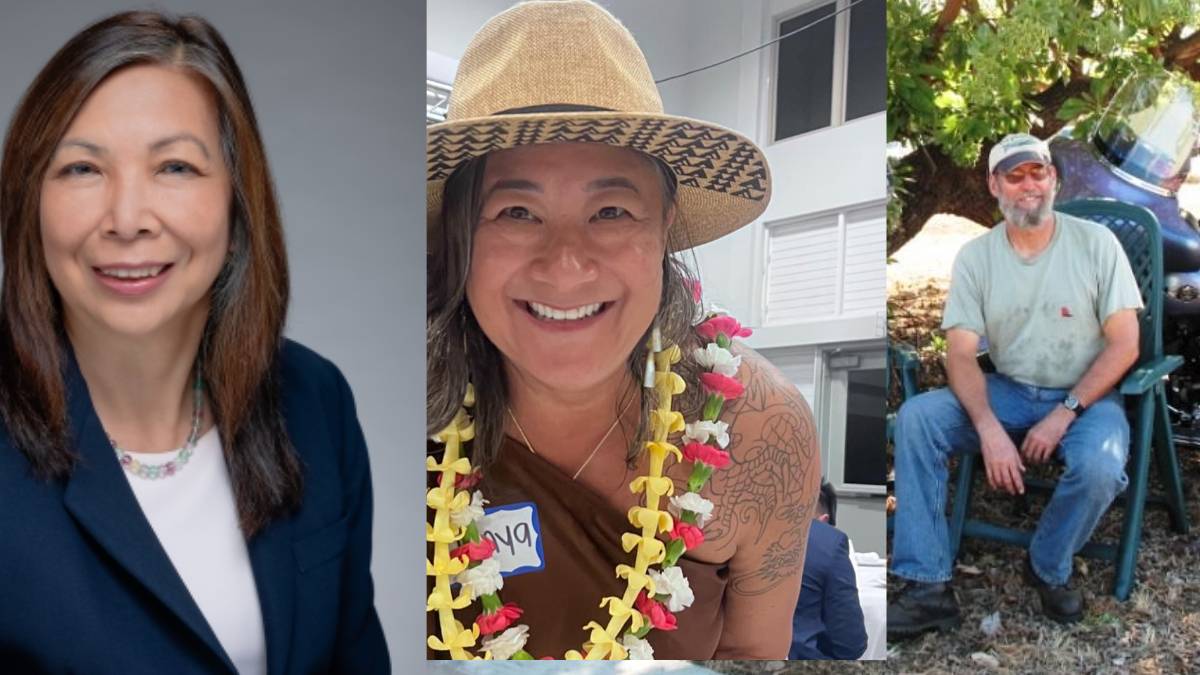
Incumbent Joy San Buenaventura, a Democrat of Kea‘au, is seeking re-election for a second six-year term as senator of District 2. She was first elected to office as the Hawai‘i State Representative of District 4 in 2014. She was then elected to the Hawaii State Senate, District 2 seat in 2020. She is the Chair of the Senate Committee on Health and Human Services and a member of the Government Operations and Judiciary committees.
In the primary, she faces Pāhoa resident Tanya Yamanaka Aynessazian, who describes herself as a mother, grandmother, author, healer and advocate for 20 plus years for Hawaiʻi Island communities. She has led nonprofits and cared for kūpuna. Her goal is to champion a regenerative economy in the state House that serves people and ʻāina, not the other way around.
The only other candidate for the seat is Frederick Fogel, a Libertarian from Volcano. He has been running in various elections every two years since moving to the Big Island in 1972. He is a retired Marine and Hawai‘i Air National Guard aviator and vice president of the Hawaiian Orchard Isles Estates Community Association.
He’s also served in various volunteer groups including O Ka‘u Kakou, and former member of the Volcano Community Emergency Response Team. His priorities include extending Hawai‘i’s legislative session, establishing a flat income tax for people earning above poverty level, increase locally grown produce and legalize the production and sale of marijuana.
Hawai‘i State Representative, District 1: Hāmākua, portion of Hilo, Kaūmana
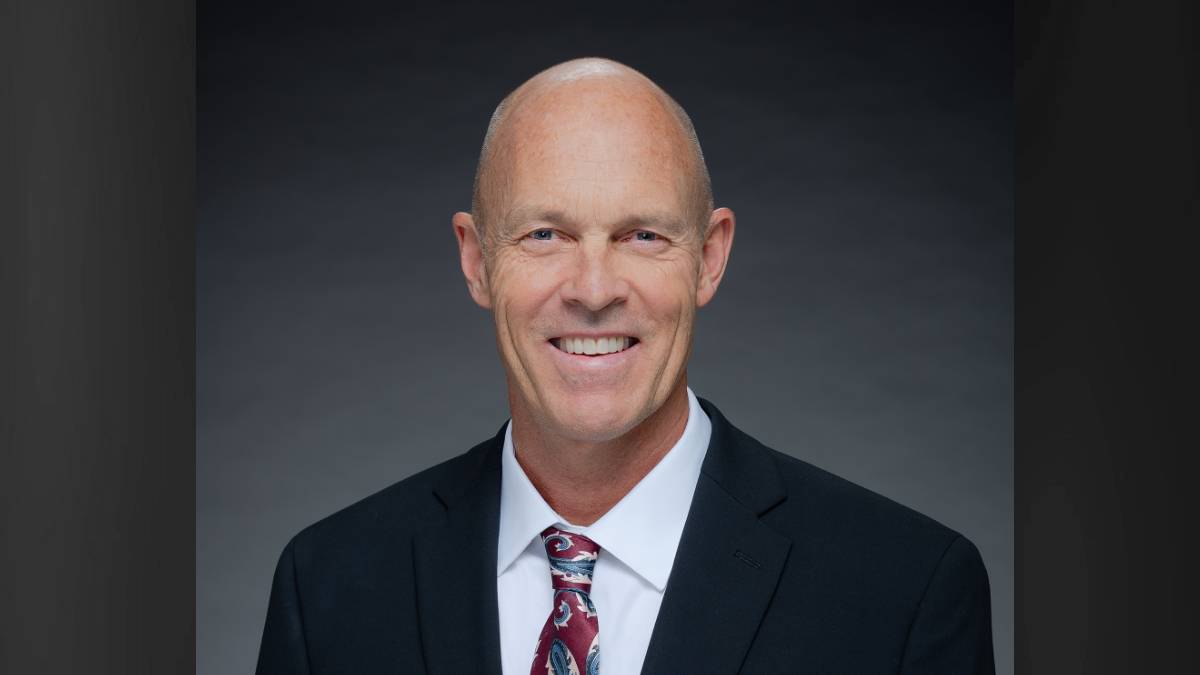
Incumbent Matthias Kusch, a Democrat from Hilo, will win the seat due to no opposition.
He was appointed to the seat on Aug. 30, 2024, to fill the House District 1 vacancy created upon the passing of Rep. Mark M. Nakashima. During this past legislative session, he’s successfully been part of providing income tax relief for working families, funding for local schools and hospitals as well as stronger livestock protections against dog attacks in agricultural districts.
Hawai‘i State Representative District 2: Hilo
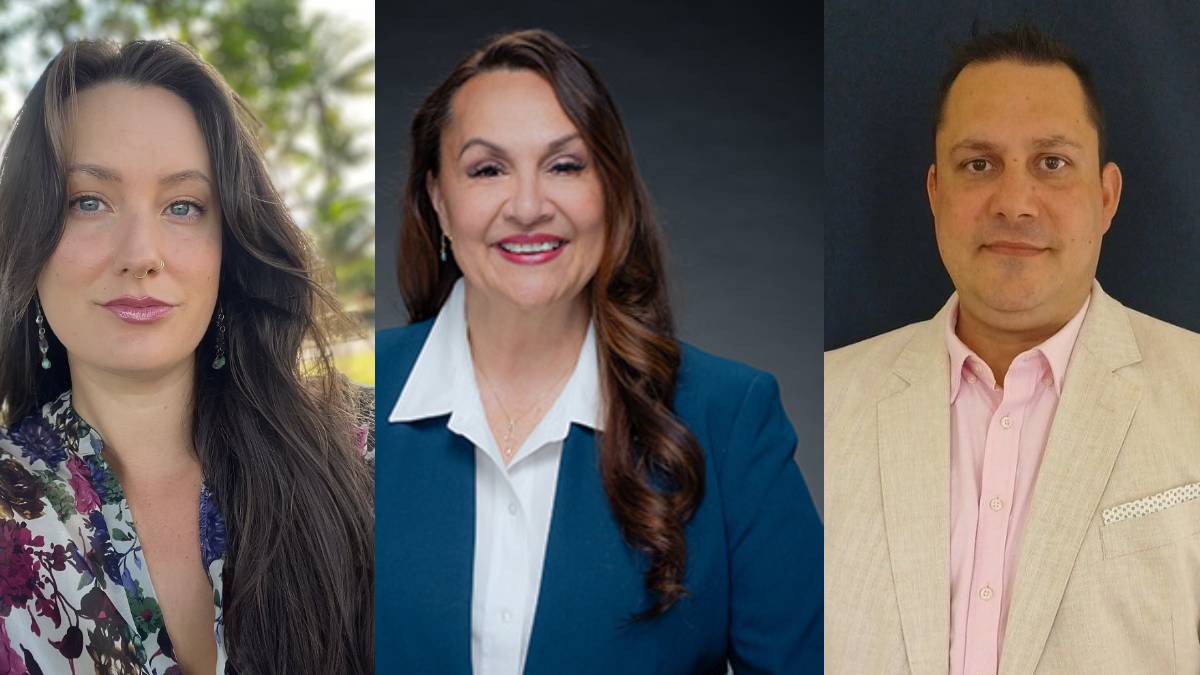
Incumbent Sue Keohokapu-Lee Loy, a Democrat from Hilo, is seeking re-election for a second term. She was elected to office in 2024 and currently serves as the Vice-Chair of the Committee on Health and is a member on the Committees on Finance and Health and Human Services. She has been working to secure funding for the feasibility study and redevelopment of Banyan Drive.
In the primary, she is being challenged by Cristina “Tina” Holt from Papa‘ikou. Holt is a member of the Hawaii County Committee on People with Disabilities. She also introduced eight resolutions for the County of Hawai’i Democrats’ consideration, which ranged from condemning the war in Iran to urging sanctuary protections for immigrants. Her priorities include homes and health care in Hilo, fighting against the extension of military leases on state lands and taxing the ultra-rich.
The lone Republican candidate for the seat is Jonathan Kennealy, who was born and raised in Hilo and is a graduate of Waiakea High School. He’s an Army veteran with 20 years of law enforcement experience. He believes strong communities are built on principles of integrity, responsible stewardship, and genuine care for the people of Hawaiʻi. His priorities include self-sustainability, lowering taxes and implementing tax exemptions for kūpuna care facilities, rehabilitation centers and special needs programs.
Hawai‘i State Representative District 3: Portion of Hilo, Keaukaha, Orchidlands Estate, Ainaloa, Hawaiian Acres, Fern Acres, portions of Kurtistown and Kea‘au

Incumbent Democrat Chris Todd of Hilo is seeking re-election. He first came to the House when he was appointed by former Hawai‘i Gov. David Ige on Jan. 5, 2017, to fill the vacancy caused by the passing of the late representative Clift Tsuji. Todd, as chair of the finance committee this past session, helped secure funding for a number of Capital Improvement Projects in East Hawai‘i, including $2 million for the purchase of land for a new Pāhoa library, $7 million for improvements to the Hilo International Airport and $2 million for Highway 130 improvements into Kea‘au Transfer Station.
He is being challenged in the primary by Ku‘ulei Keawekane, who was born and raised in Hilo with generations from Panaʻewa. In the realm of civic duty, Keawekane said she has stood strong to fight for the health and well-being of every generation and the natural resources, undeterred by the pull of money or political favor. She said she is prepared with the knowledge, wisdom and strength to prioritize the radical improvement of the state’s collective space.
The only other person running for the seat is Libertarian Austin Martin of Kurtistown. In a two-way race, Martin wants voters to have a Libertarian option. He currently serves as chair of the Libertarian Party of Hawaiʻi and as an elected member of the Libertarian National Committee. Priorities include lowering the cost of living, cutting red tape that blocks affordable housing, reducing crime and state weaponization, holding government accountable to the Constitution, and making sure every dollar in the state budget is accounted for and serves the district.
Hawai‘i State Representative District 4: Black Sands Beach Subdivision, Hawaiian Paradise Park, Hawaiian Beaches, Kalapana, Koa‘e, Leilani Estates, Nānāwale Estates, Pāhoa, Pohoiki, Seaview Estates
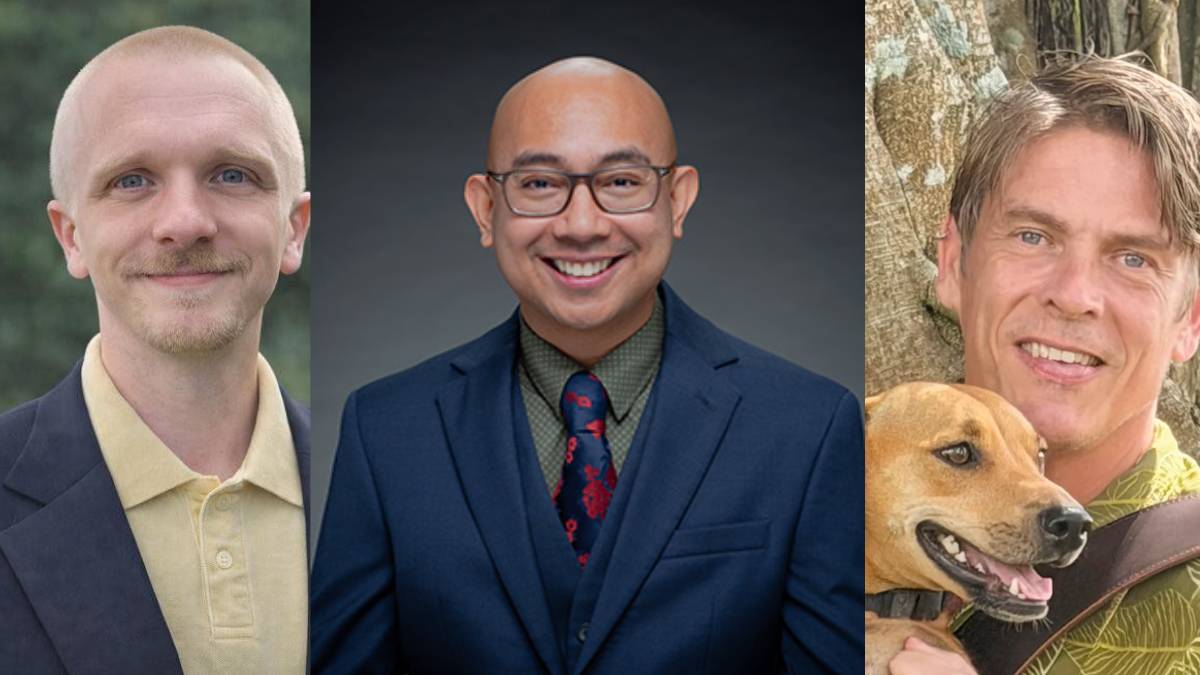
Incumbent Greggor Ilagan, a Democrat from Kea‘au, was first elected in 2020. This past session, he chaired the House committee on Economic Development and Technology. Ilagan has helped secure funding for a Puna alternate route study. He’s also pushed for more permanent solutions to repair the Pohoiki Boat Ramp after it was inundated by lava in the 2018 eruption, rendering it unusable for local fishermen.
He is being challenged in the primary by Tamlyn “Tam” Hunt from Kea‘au, who has lived in the Puna District for years. An Army veteran, writer, activist and policy attorney, Hunt co-founded Think BIG, a nonprofit focused on the Big Island’s food security, energy independence, equity and sustainability. He serves on the board of the Hawaiʻi Electric Vehicle Association. His priorities include pushing for local food sovereignty, building out clean and locally generated power, affordable housing built with local green materials, and better transportation options.
The lone Republican in the race is Zak Wittenhagen from Pāhoa. He moved to the Big Island in 2007 and has lived in Puna since 2011. Wittenhagen volunteers throughout the district by sanitizing local bus stops, buying food for those experiencing homelessness and offering free yard services. Admitting his lack of traditional political experience, Wittenhagen said he makes up for it in compassion, hard work, aloha and dedication to the people of Puna. His priorities include infrastructure and emergency access, a long-term solution for reopening the Pohoiki Boat Ramp and ensuring reliable and nutritional meals for keiki.
Hawai‘i State Representative District 5: Portions of Kea‘au and Kurtistown, Mountain View, Glenwood, Fern Forest, Volcano, Pāhala, Punalu‘u, Nā‘ālehu, Wai‘ōhinu, Hawaiian Ocean View, Ho‘okena
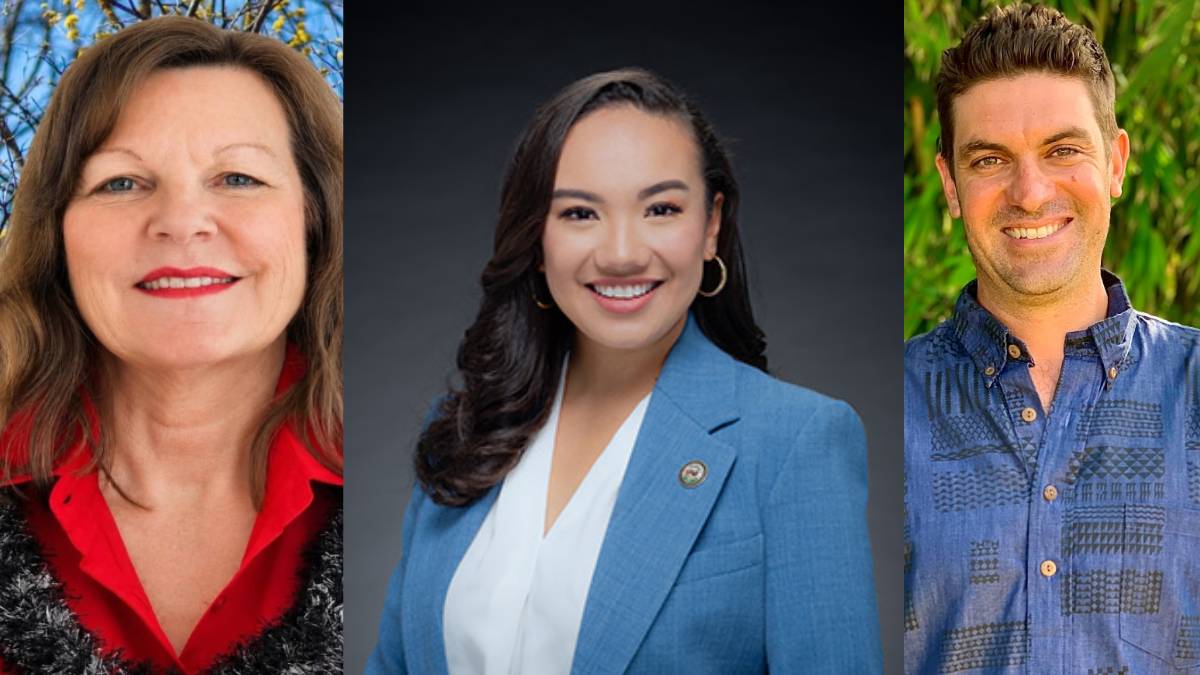
Incumbent Jeanné Kapela, a Democrat from Captain Cook, was elected to Hawai‘i’s House of Representatives in 2020. She serves as the prevention education coordinator for Imua Alliance, a nonprofit service provider for victims of sex trafficking. She currently serves as Vice Chair of the House Education Committee, where she strives to deliver the schools keiki deserve.
She is being challenged in the primary by Matt Kaneali‘i-Kleinfelder from Hilo. He currently is finishing his fourth and final two-year term with the Hawai‘i County Council, where he represents the upper portions of Puna and Kea‘au. He said he is running because of the complete lack of response to the deaths on the state highways and the lack of infrastructure coming out of Puna and Ka‘ū. Kaneali‘i-Kleinfelder said highways are in bad shape and have been for decades. He also plans to address teacher pay and improving schools.
The lone Republican running for the seat is Dalene McCormick, who moved to the Big Island in 2016 and lives in Captain Cook. A member of the West Hawai‘i Republican Party, she currently serves as a disaster services volunteer with the American Red Cross. Following the damaging 6.0-magnitude earthquake in South Kona, one of McCormick’s issues is addressing ways to strengthen emergency preparedness, improve building resilience, and ensure residents have access to timely assistance and resources when disaster strikes. McCormick also wants to hear from the public about their concerns.
Hawai‘i State Representative District 6: Honaunau, Napo‘opo‘o, Captain Cook, Kealakekua, Keauhou, Hōlualoa, Kailua-Kona
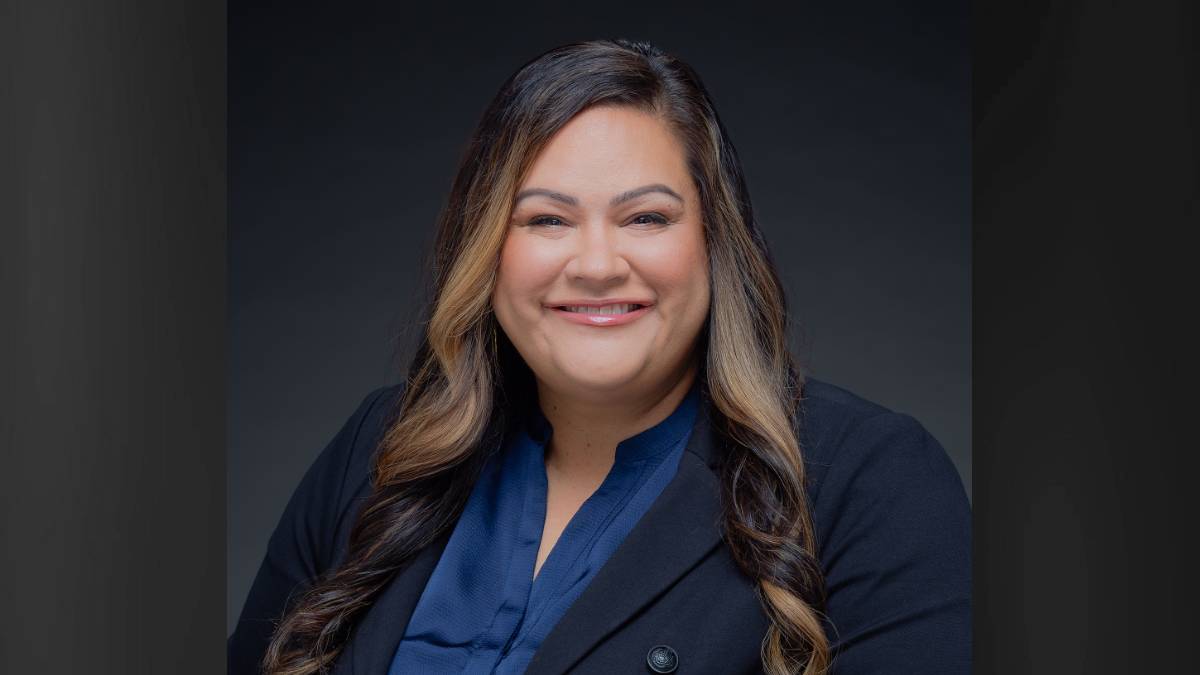
Incumbent Kirstin Kahaloa, a Democrat from Kealakekua, is running unopposed. She was first elected to the State House in 2022. She currently serves as the Majority Caucus Leader. Kahaloa has been part of the Hawai‘i Island delegation responsible for advocating and securing funding to improve Kona Community Hospital.
Hawai‘i State Representative District 7: Kailua-Kona, Honokōhau, Kalaoa, Pu‘uanahulu, Puakō, portion of Waikōloa
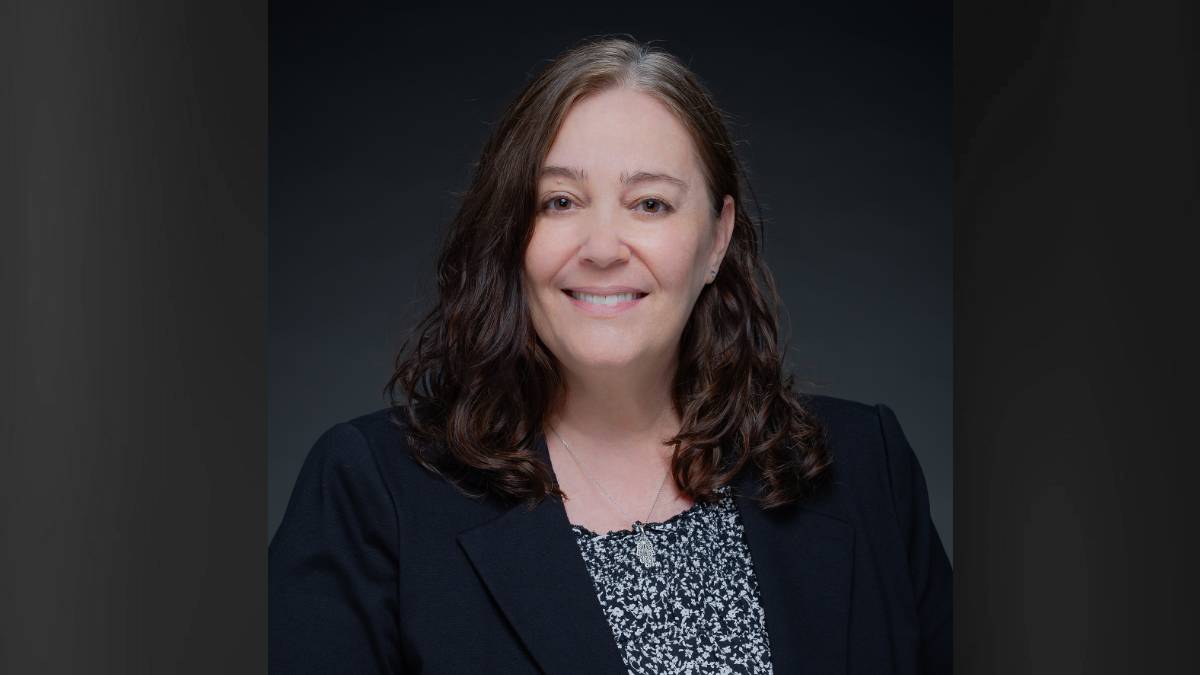
Incumbent Nicole Lowen, a Democrat from Kailua Kona, is running unopposed. Lowen was first elected in 2012. She is the Chair of the House Committee on Energy and Environmental Protection, the Co-Chair of the House Special Committee on Red Hill, and a is member of the Committee on Agriculture and the Committee on Consumer Protection and Commerce. Like Kahaloa, she has also championed funding for Kona Community Hospital and funding for expanded health care facilities in West Hawai‘i.
Hawai‘i State Representative District 8: Hāwī, Hala‘ula, Waimea, Makahālau, Waiki‘i, Waikoloa, Kawaihae, Māhukona
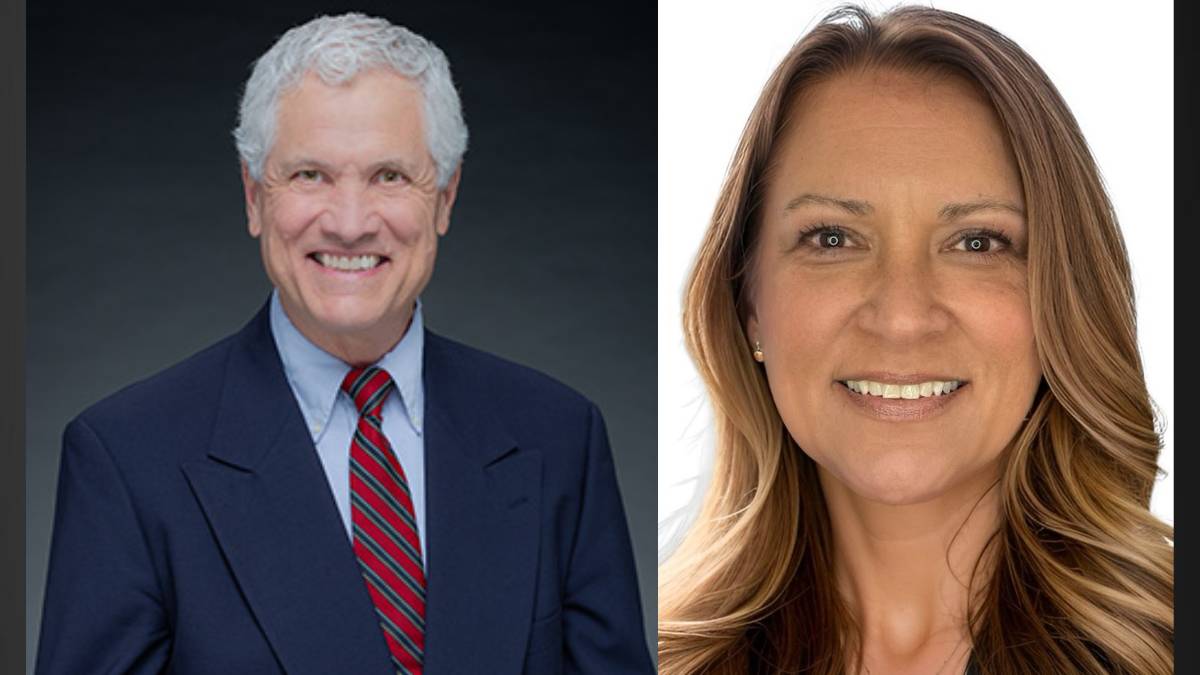
Incumbent David Tarnas, a Democrat of Kamuela, is seeking re-election for a fourth term after being elected in 2018. This is his second stint serving in the State House, previously serving from 1994-98, representing Kohala and Kona. He currently serves as the Chair of the Hawai’i State House Committee on Judiciary and Hawaiian Affairs. Tarnas has been pushing to legalize cannabis for years.
In the Republican primary, Hope Alohalani Cermelj from Kapa‘au is running against Monique Perrereira from Kamuela.
Perrereira is a Native Hawaiian, a U.S. Navy veteran and a small business owner who is the chair of the West Hawai‘i Republican Party. She believes in limiting government overreach. She wants to eliminate tax on food, medicine and hygiene products. She wants to build more processing facilities to increase local meat production. She also wants to get tough on crime by ensuring sufficient prison capacity.
Cermelj did not respond to Big Island Now to provide her platform or background information.