


Ala Kahakai National Historic Trail seeks community input for 95-acre Kona section
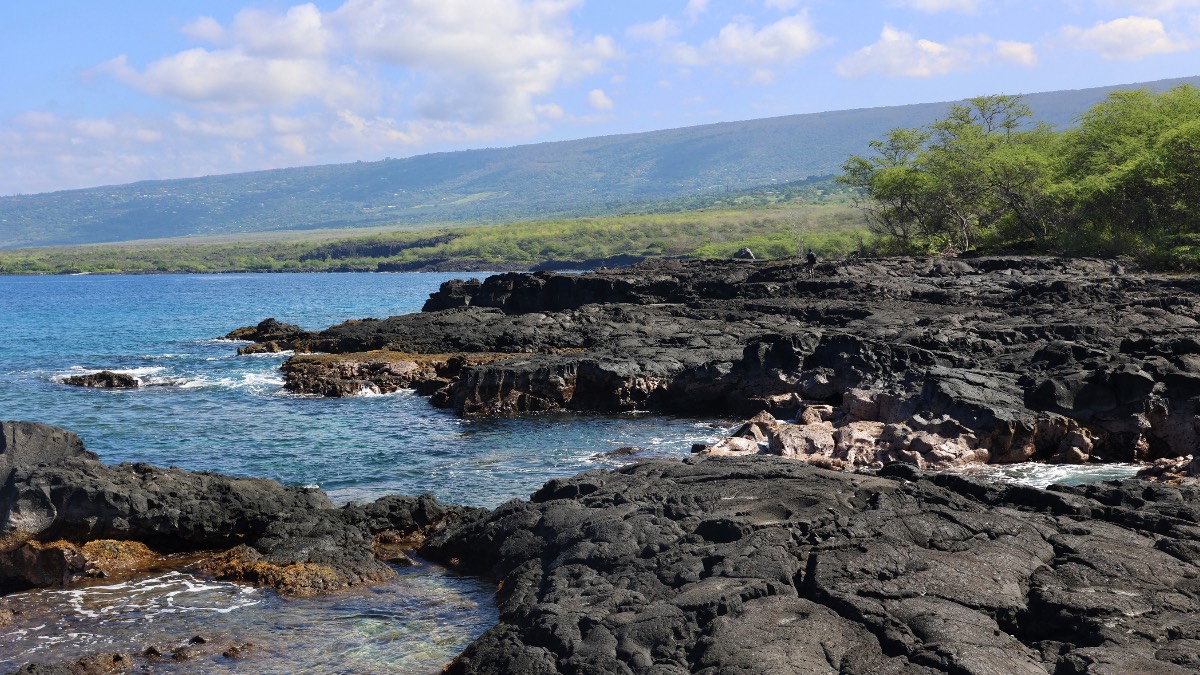
The National Park Service is asking for community knowledge and ideas to help shape the management of Kauleolī, a 95-acre shoreline parcel acquired by the Ala Kahakai National Historic Trail on the Big Island.
The “trail by the sea” is a 175-mile corridor encompassing a network of culturally and historically significant trails. It spans wahi pana (storied landscapes), ancient Hawaiian sites and more than 200 ahupuaʻa (traditional land divisions).
The National Park Service acquired 63 acres of Kauleolī in 2016. It worked with the Trust for Public Land and local families to protect the heritage site that features the remains of the ancient fishing village of Kauleolī, which is located just south of Pu‘uhonua o Hōnaunau National Historic Park on the Kona Coast.
This part of the trail is rich with historic sites and artifacts, including house foundations of traditional Hawaiian drystack masonry, a canoe shed, heritage agriculture areas and salt-making ponds.
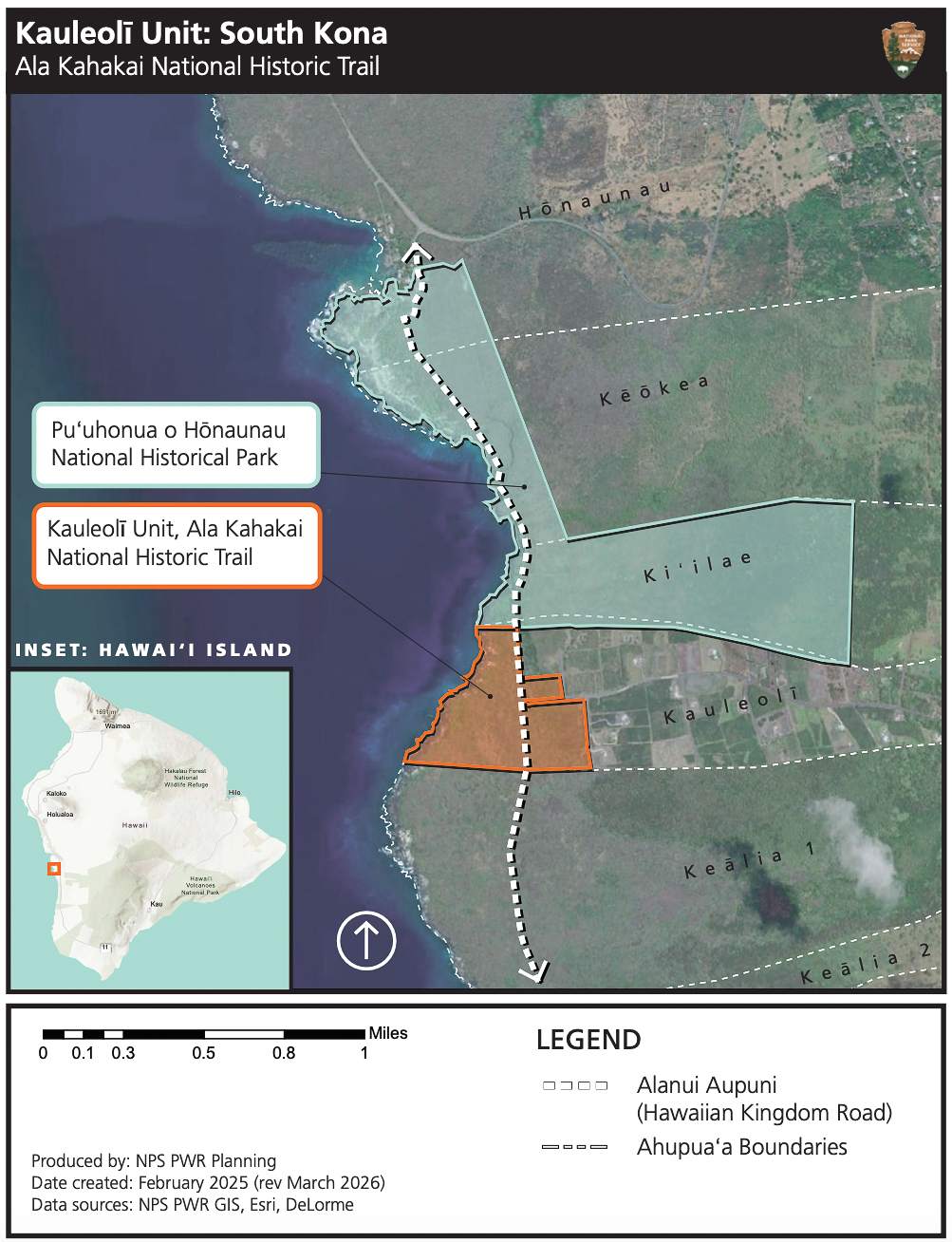
Another 32 acres of continguous land was acquired in 2021 for the historic trail.
“Prior to acquisition, Ala Kahakai received community support, particularly from descendants, on the acquisition of the property,” said Aric Arakaki, superintendent of the trail. “The National Park Service has heard initial ideas to address needs from community and staff members.”
Now, the National Park Service is developing a Kauleolī Unit Management Plan and soliciting feedback from the community, starting with a public meeting that was held April 18.
“This is the kickoff of the public engagement; no broad public engagement has occurred before now,” Arakaki said.
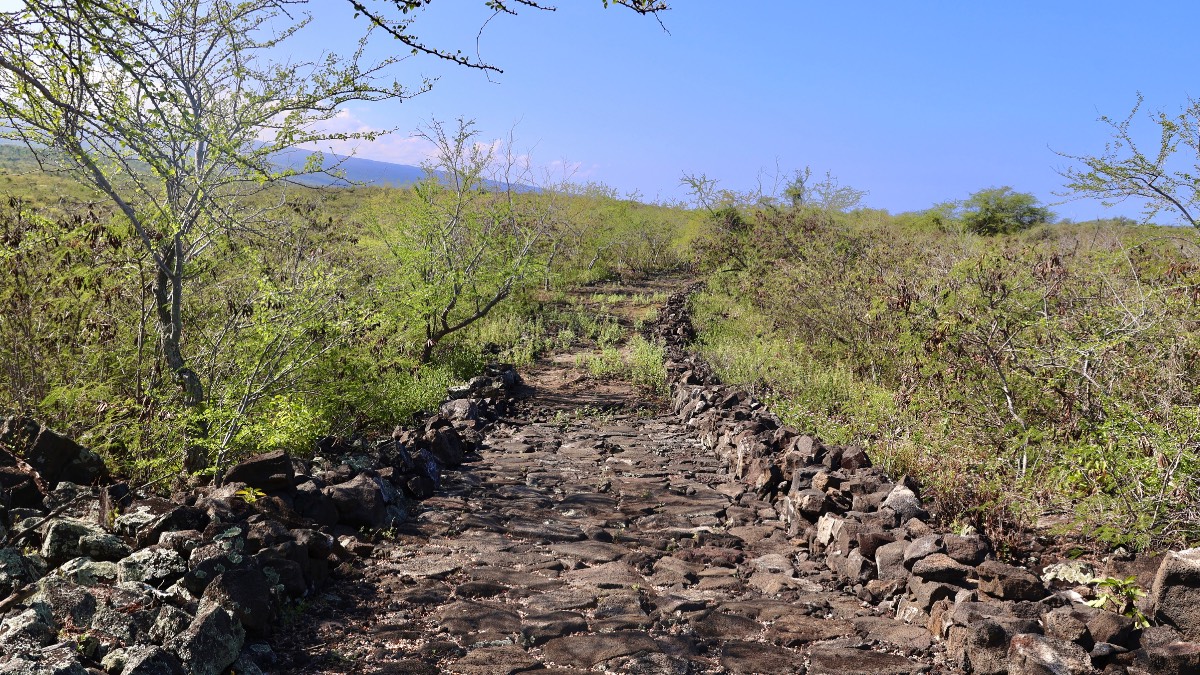
Lands in the state conservation district allow for the construction of one dwelling, and Kauleolī was acquired to protect ala loa (Kingdom Road), which is why the acquisition was supported by the community, Arakaki said.
The park officials are looking for guidance about protecting resources, responding to environmental changes, and identifying appropriate activities and experiences. They also are asking the public to evaluate the facilities and infrastructure that will be needed in the future.
There is a 2009 Comprehensive Management Plan for the entire trail.
During the public meeting on April 18, trail managers shared preliminary ideas for Kauleolī, answered questions, and recorded ideas from attendees. Some of the National Park Service’s initial ideas include:
- Amenities: Drinking water, a small shelter using traditional thatched construction, and a restroom located near the Alanui Aupuni ((Hawaiian Kingdom Government Road) for work crews, community groups and people hiking through Kauleolī.
- Operations: A small maintenance and storage yard located outside of the trail’s view, away from the coast, and on previously disturbed land that would help serve the needs of Kauleolī and Ala Kahakai National Historic Trail on the South Kona coast.
- Trails: A designated interior coastal trail that follows an ancient trail, providing pedestrian access along with limited all-terrain vehicle use for emergency evacuations, maintenance and transporting elders to community events.
- Community: A day-use hālau (cultural center) located close to the coast for more opportunities to engage in community events, traditional practices and on-site interpretation.
- Natural, biocultural and cultural resources: Creation of a native plant restoration program and more opportunities to work hands-on with community groups and trail staff on natural, biocultural and cultural resource protection projects.
“Preliminary ideas have been offered to spark conversation,” Arakaki said. “We want to hear new ideas from the community, especially those with ancestral and historic ties to the area. Community knowledge, stories and ideas will directly shape the plan before any alternatives are developed.”
Interested parties can submit comments virtually until May 15 on the Kauleolī Unit Management Plan website.
Before the comment period ends, one more virtual meeting is scheduled from noon to 1 p.m. on Wednesday, May 13, on the Microsoft Teams platform. Links and updates from meetings can be found here.
After the public comment period, the next major phase of the process will include identifying and drafting documents about environmental impacts.