


Community pushing to stop 36 large trees from being cut down at Honokaʻa County Park
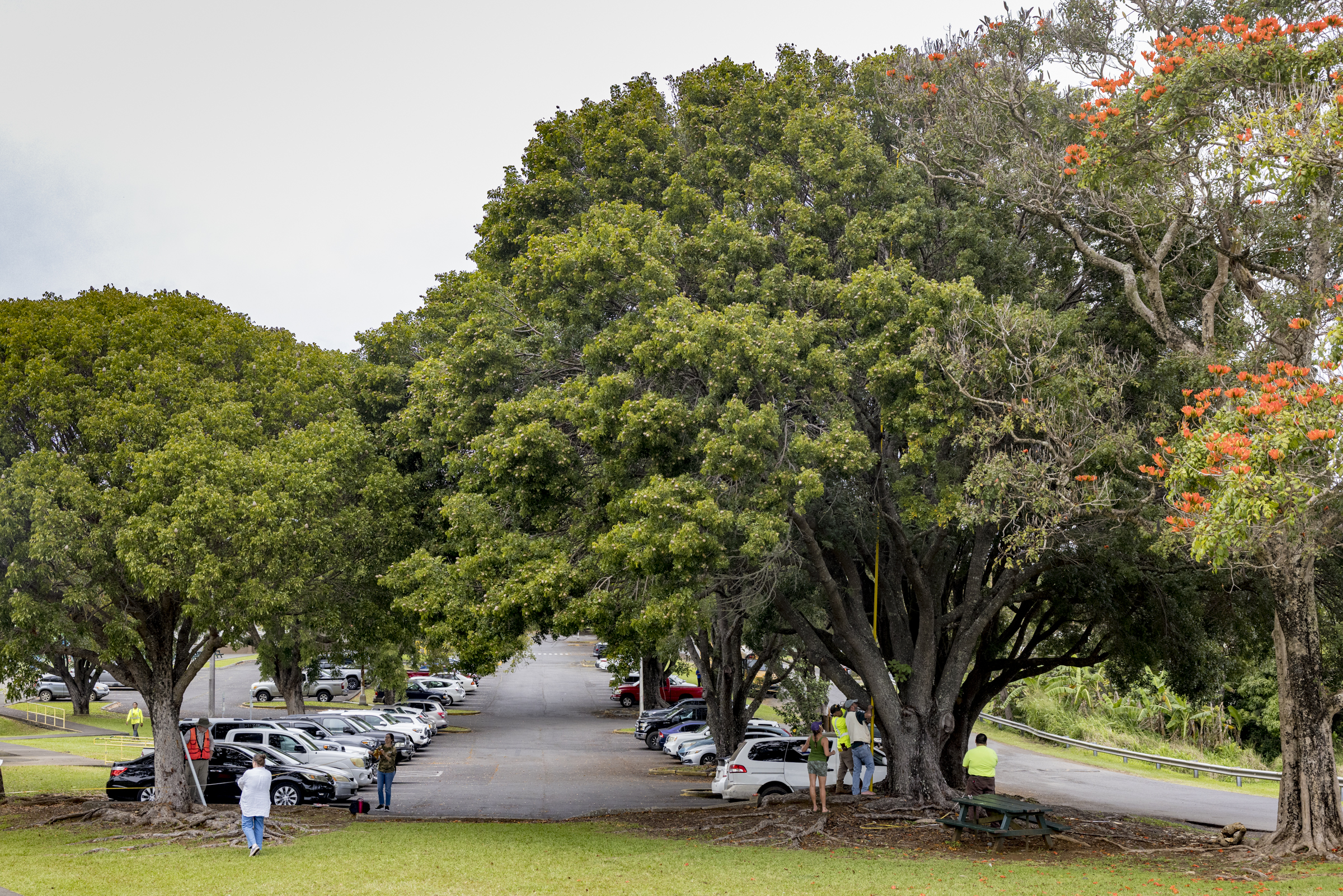
Late last fall, Alison Higgins and other community members noticed bright pink painted markings on trees at the Honokaʻa Sports Complex and Skate Park and wondered about their purpose.
“We reached out to our Council Member Heather Kimball, who also did not know what was going on,” Higgins said.
They discovered that the county had initiated a project to remove 36 mature Cuban mahogany trees because the roots were damaging two parking lots at the park.
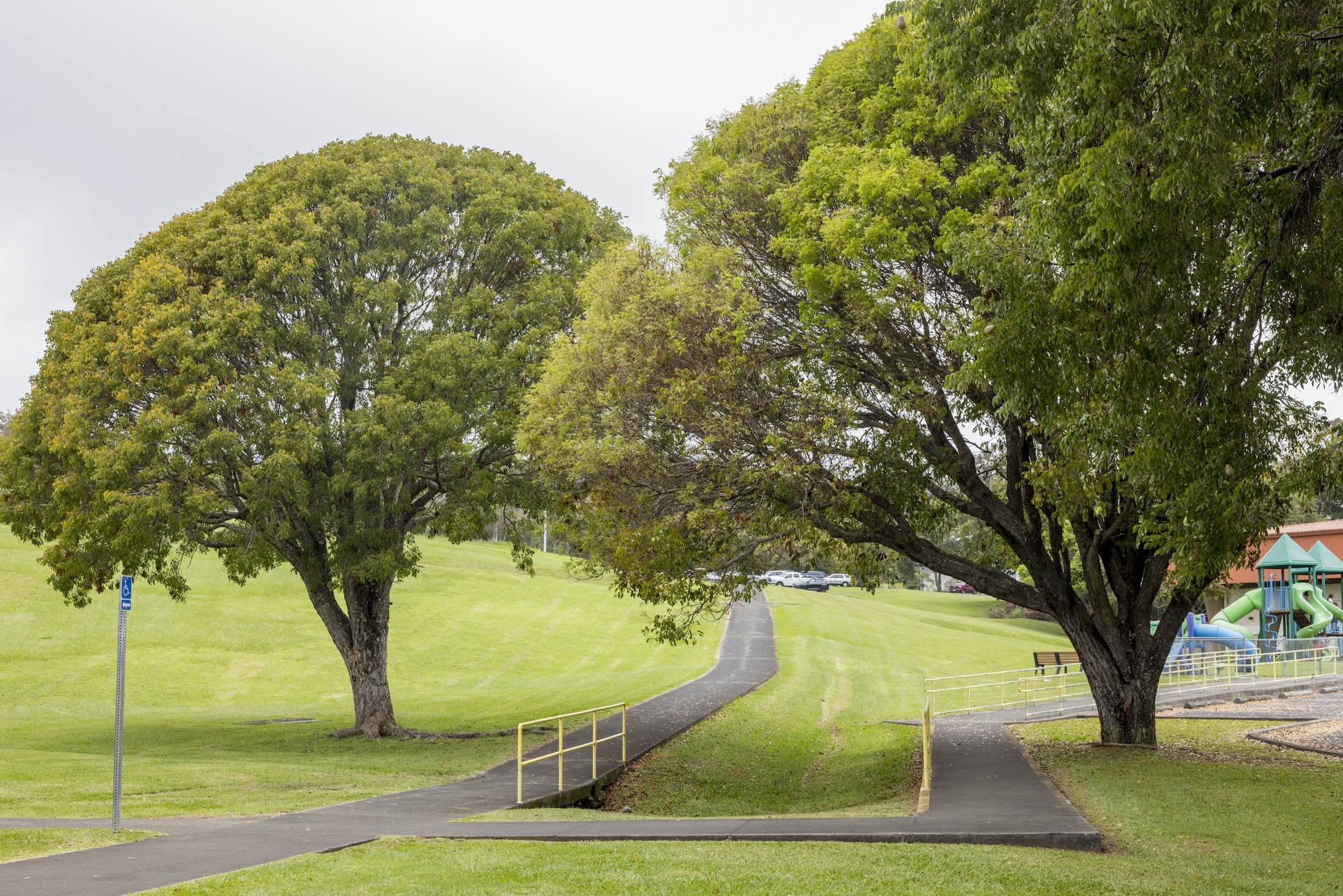
The news upset some Honokaʻa community members because the tree removal would significantly reduce the much-needed shade at the park, which is a main gathering place for events, family gatherings, sports and everyday activities.
“The mature canopy is a major reason why people stay and use the park,” community member Nicole Garcia said. “There is necessary shade for keiki, kūpuna, athletes and families that makes it comfortable and usable any time of year.”
Higgins and Garcia said as soon as the community found out about the county’s plans, a meeting was requested with Parks and Recreation.
In February, 65 community members met with Kimball and Parks and Recreation Director Clayton Honma to discuss preserving the trees and finding a new solution to the parking lot problem.
Parks and Recreation planner James Komata told them the long-term lack of maintenance and the original selection of tree species contributed to the damage.
Cuban mahogany is a premier hardwood native to South Florida and the Caribbean. It is highly prized for its rich reddish-brown color and its durability and stability, which can be attributed to the wide-spreading root system and lateral roots that extend up to 30 feet from the trunk.
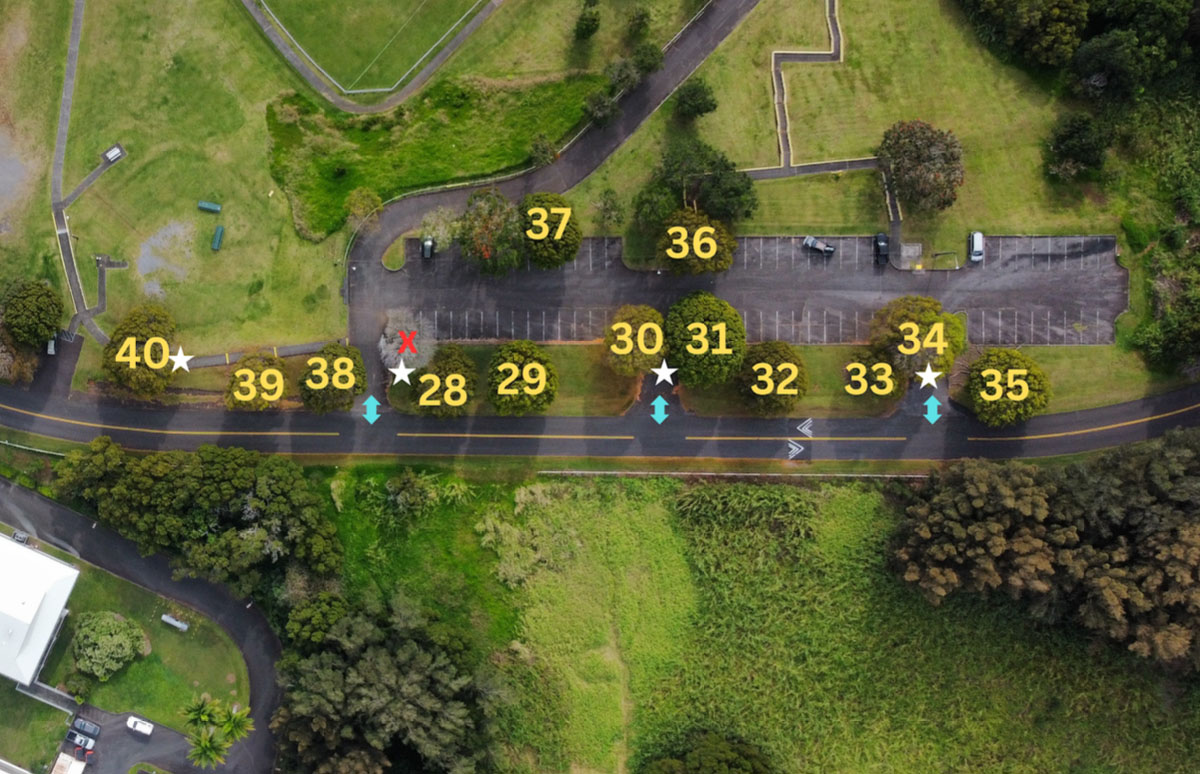
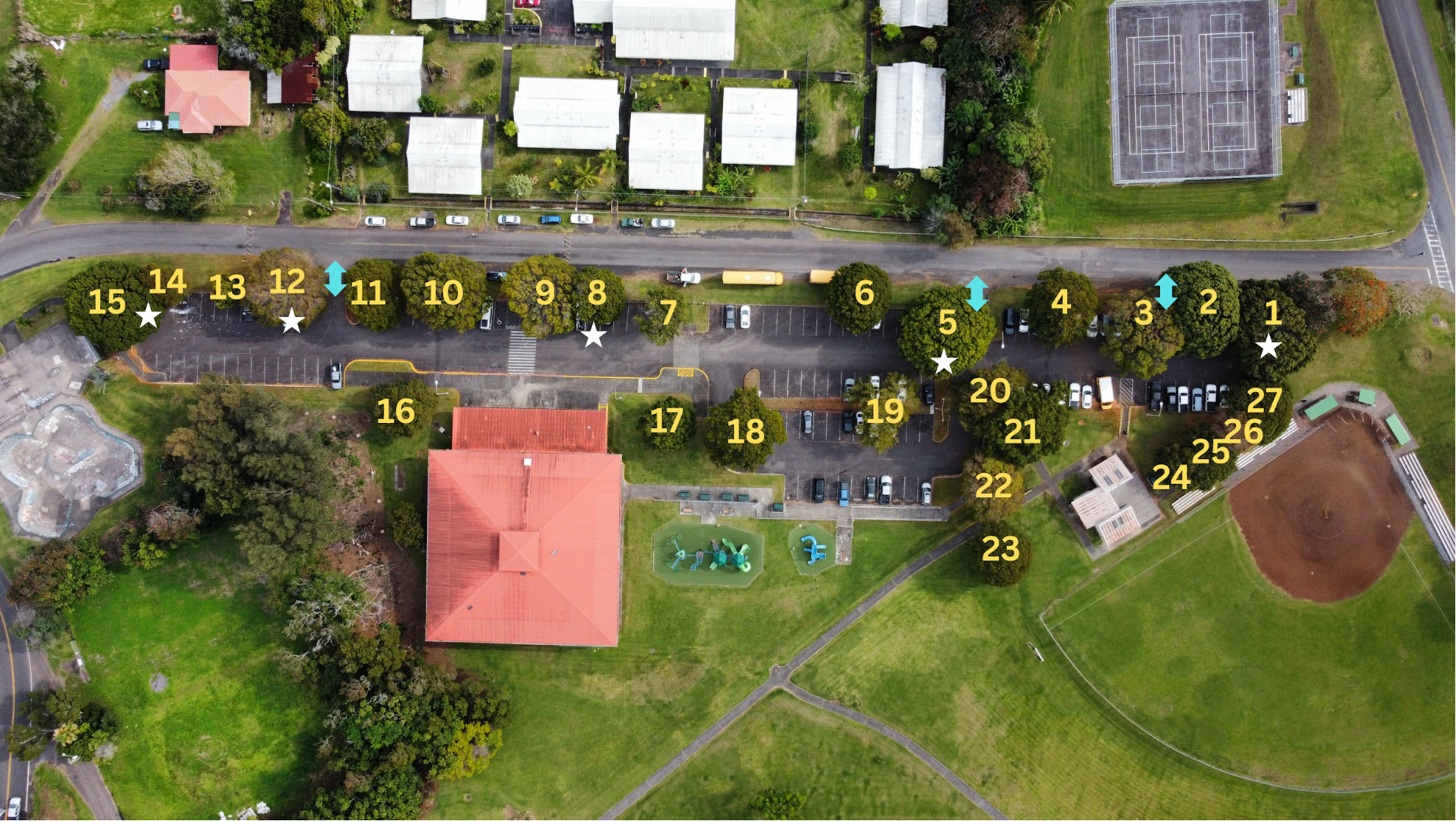
The first parking lot has 125 stalls and 26 trees marked for removal. The second parking lot has 80 stalls and 10 trees marked for removal.
“By the time many people learned what was happening, the RFP (request for proposal) for the work had already gone out,” Higgins said. “The public did not have a fair chance to ask questions, understand the plan, or share concerns.”
Garcia added: “I wish we could have worked with them to come up with other plans like root mitigation or another parking lot, but we didn’t get the chance. Residents want to be included before major decisions are made about a park that means so much to the town, and these trees have become part of the town’s memories and identity.”
Due to the wide-spreading roots, Garcia and Higgins said residents understand that mahogany may not have been the best species choice when these trees were planted decades ago. However, the community is concerned about how long it would take to regrow a canopy from native species if all the trees are removed.
“We are not opposed to removing a few trees that created parking lot damage which ultimately caused accessibility issues and/or hazards,” Garcia said. “We believe those should be individually reviewed and part of a thoughtful plan that also looks at saving as many healthy trees as possible.”
While Honma was open to the community members’ ideas to repair or redesign parts of the parking lot while keeping the existing canopy, or to just remove the most problematic trees, there haven’t been any changes to the current plans or further discussions facilitated by the county.
“We were told that the contractor may be able to evaluate whether some trees that are not absolutely required to be removed could remain,” Higgins said. “But there have been no official changes to the plan, so we don’t know if that will be something that the county or the contractor will follow through on.”
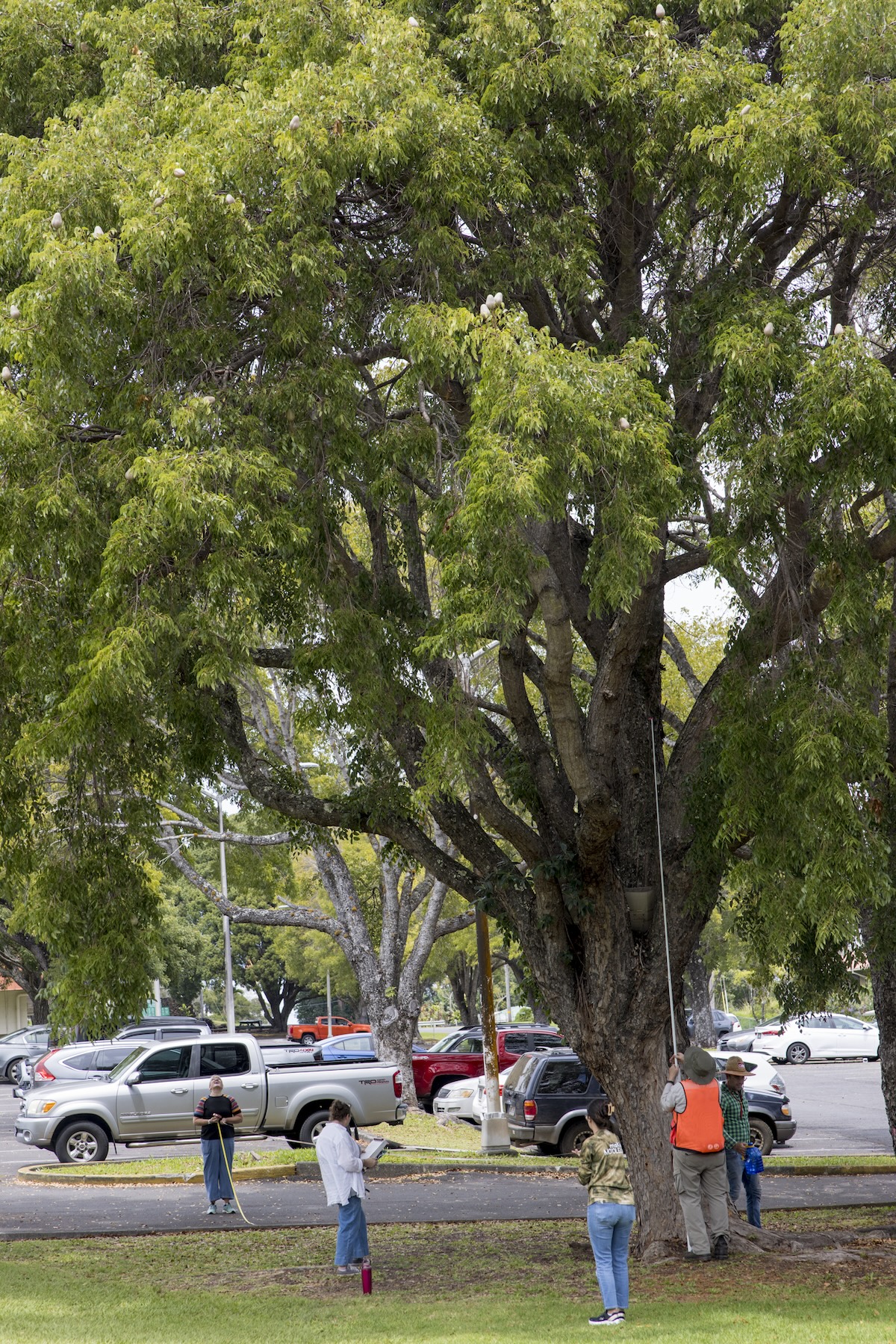
So Garcia and Higgins began organizing an Exceptional Tree application for the grove of Cuban mahogany trees for the Arborist Advisory Committee. Volunteers gathered to measure the trees and document their significance for the nomination.
They also had arborists and experts from the University of Hawaiʻi at Hilo come to the park to assess the trees.
“There was only one tree that was identified as dead and could be a safety issue,” Garcia said. “The rest of them have reached a mature, healthy status. They easily survived the recent drought followed by the inundation of rain. They pose no problem to the public at this time, and only a couple of the trees are causing damage to the parking lot.”
The grove was nominated under several of the county’s Exceptional Tree criteria, which include environmental benefits, historic value, cultural value, and aesthetic and landmark value.
“There are generations of memories at the park, because it is one of the town’s main gathering places,” Garcia said. “The trees make that possible, shading and cooling one of the busiest public spaces. The grove’s mature canopy gives the park much of its character and they are instantly recognizable to anyone from Honokaʻa.”
The Exceptional Tree application is set to be reviewed and evaluated by the Arborist Advisory Committee during a public meeting at 2 p.m. on Wednesday, April 29. The meeting is open to the public over Zoom. The Zoom link is zoomgov.com/j/1618102742, and the webinar ID is 161 810 2742.
The community also has created a petition asking Hawaiʻi County to preserve the 36 Cuban mahogany trees at Honokaʻa County Park and pursue practical management options before removal.
According to Garcia and Higgins, the petition and Exceptional Tree nomination are the only ways they knew about to at least slow down the project. If the Arborist Advisory Committee grants the nomination, they hope to work with the county to protect the trees and look at less destructive options to address the parking lot.
As of Monday, 453 people have signed the petition with hundreds commenting.