



Big Island’s Rhoda Magbitang tests her creativity on national TV’s ‘Top Chef’
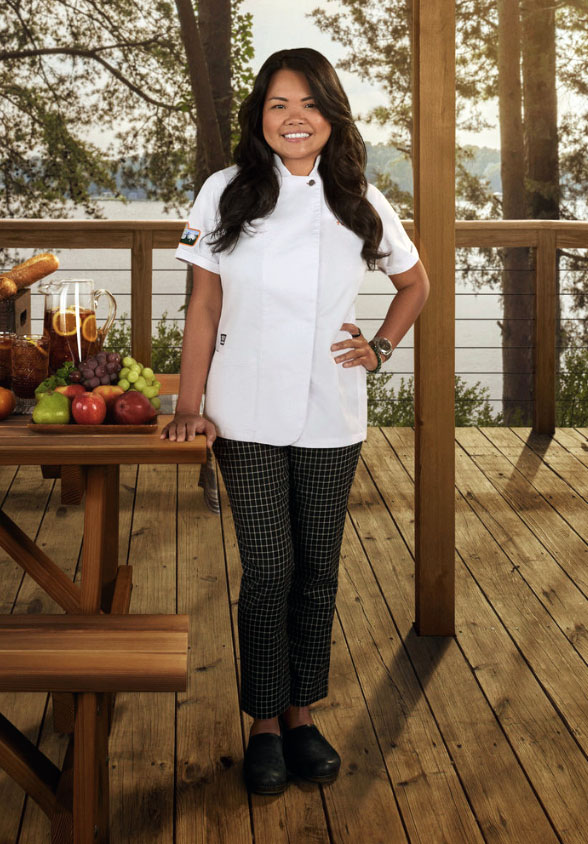
Rhoda Magbitang grew up the eldest of six children in the foothills above Manila in the Philippines, where she learned to make traditional Filipino dishes in the family kitchen and from her grandmother, who had a food stall.
“Cooking was my chore and my duty,” Magbitang said. “I liked doing it, but it honestly never occurred to me that I could make a living just cooking.”
But in her 20s, she randomly decided to go to culinary school, it led to working in top restaurants in Los Angeles and Hollywood, and then on the Big Island, where she became the first female executive chef at the Mauna Lani resort’s CanoeHouse, an oceanfront restaurant on the Kohala Coast.
Now, she is showing what she can do in the kitchen as one of 16 contestants on the 23rd season of the popular reality competition show “Top Chef.”
“If ‘Top Chef’ knocks on your door, you answer,” said Magbitang, who was invited on the show by a producer last year. “I’ve worked with multiple chefs that have been on the show. I’ve seen what it did for their careers.”
The series features high-level chefs competing against each other in culinary challenges for $250,000, the title “Top Chef” and a big magazine feature. Season 23, which is set in the Carolinas, now is airing on Bravo at 3:30 p.m. Hawaiian Time on Mondays. Episodes also are available for streaming on Peacock the following Tuesday.
It only took two episodes for Magbitang to make “Top Chef” history by winning the first two challenges in a row, giving her immunity from elimination for three episodes.
In the first episode, she won the challenge after turning Covington sweet potato into a soy-glazed ode to the Filipino street food of her upbringing.
In the second episode, the contestants were tasked with using Carolina Reaper in their dishes. She had the spiciest dish on her team and won with a pepper-braised short rib, chili pickled pearl onions and a blistered cayenne pepper on top.
Her performance diminished slightly on the third and fourth episodes and unfortunately on the fifth episode that aired last Monday, she was eliminated after serving the judges a spongey monkfish she made during a difficult challenge.
But “Top Chef” has a companion show, “Top Chef: Last Chance Kitchen,” which is a digital series that features eliminated chefs cooking for a chance to earn back their aprons to rejoin the main competition.
Magtibang and contestant Nana Araba Wilmot had to put their own spins on a Myrtle Beach classic, she-crab soup.
Magtibang decided to make a Singaporean chili crab that was based on a meal her father would make her and her siblings and won the head-to-head competition. She will be returning to “Top Chef” for the sixth episode on Monday night.
“My father traveled a lot when we were kids and he loved Singapore, so he would make this for us every time he returned,” Magtibang said in the episode. “Thank you, Dad!”
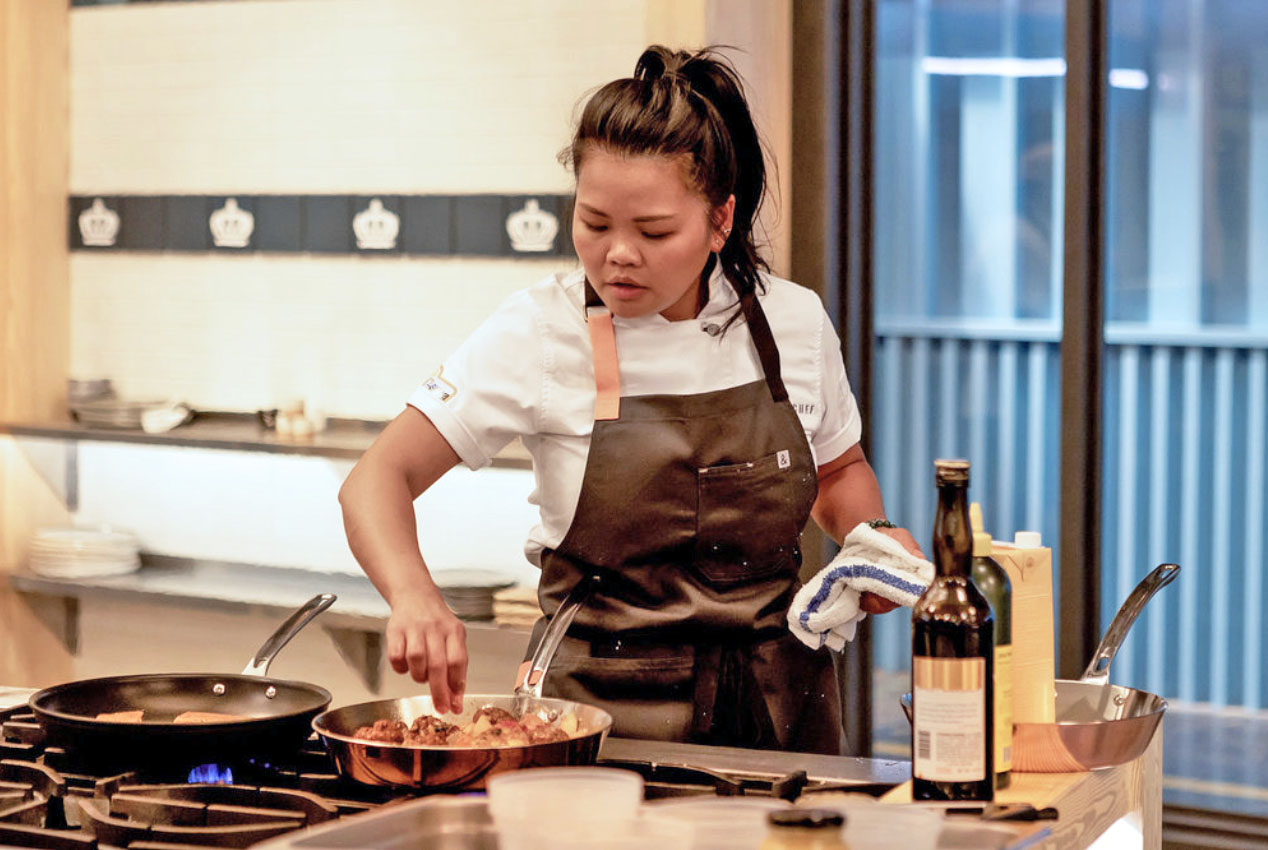
When looking back, Magtibang said that doing very well early in the competition and then being eliminated a few challenges later helped bring her back to her roots and remember the importance of staying true to who she is as a chef.
“I peaked a little early and got ahead of myself and I think that happens to a lot of the chefs on the show,” she said. “I’m very grateful I even had the chance at redemption. It’s interesting to think about the fact that Top Chef has been around for 20 years at this point. The show has shaped our industry in lot of ways that I don’t think anyone could have imagined.”
Magtibang moved to Southern California when she was 17 and started teaching preschool. During an extracurricular after-school program, she taught the kids how to make a fun snack and realized that she had forgotten about this skill that was once an obligation.
“I thought that if I went to cooking school, I could come back and teach kids of all ages how to cook,” she said. “I never pictured myself working in fine dining.”
In the mid-2000s, Magbitang enrolled in Le Cordon Bleu College of Culinary Arts in Pasadena and found herself in classes led by chefs who would soon become icons. By the time she entered the professional kitchen scene, Los Angeles was emerging as a culinary force.
Magbitang quietly became a leader in some of the most pivotal kitchens in Los Angeles. She worked at two Michelin-starred Mélisse, Suzanne Goin’s A.O.C., République and Bazaar by José Andrés. She also was executive chef at the famed Chateau Marmont in West Hollywood.
She was scouted by the Auberge Collection, which manages the Mauna Lani. When she was offered the job as executive chef for the CanoeHouse, Magbitang was ready for a smaller city and a quieter existence.
Since taking the reins in 2024, she has strengthened the menu by advancing Hawaiian cuisine through her Japanese-inspired technique and commitment to local ingredients.
“When this opportunity came up, I decided to go for it and I have never looked back,” Magbitang said. “Many people told me that I would miss certain conveniences of the city, but the Big Island has everything you need. It felt good to be stripped of all the extraneous stuff and I’ve found that I love a quieter, more peaceful life.”
After learning the rhythms of the island, the ingredients and the kitchen itself, Magbitang began taking charge with confident menus that were entirely her own, yet honored the past.
Magbitang works with Adaptations in Kona, which is an aggregate of many small farms from the Big Island, Maui, Oʻahu and Kauaʻi, to ensure she has fresh produce every day. She has become known for her refined, but sustainability-driven cooking and her dedication to using a lot of local ingredients.
“In California, you are spoiled with everything at your disposal and it is a completely different ball game here,” Magbitang said. “The produce grows easily, but not always consistently. It becomes a creative challenge to preserve things we love to use in our food.”
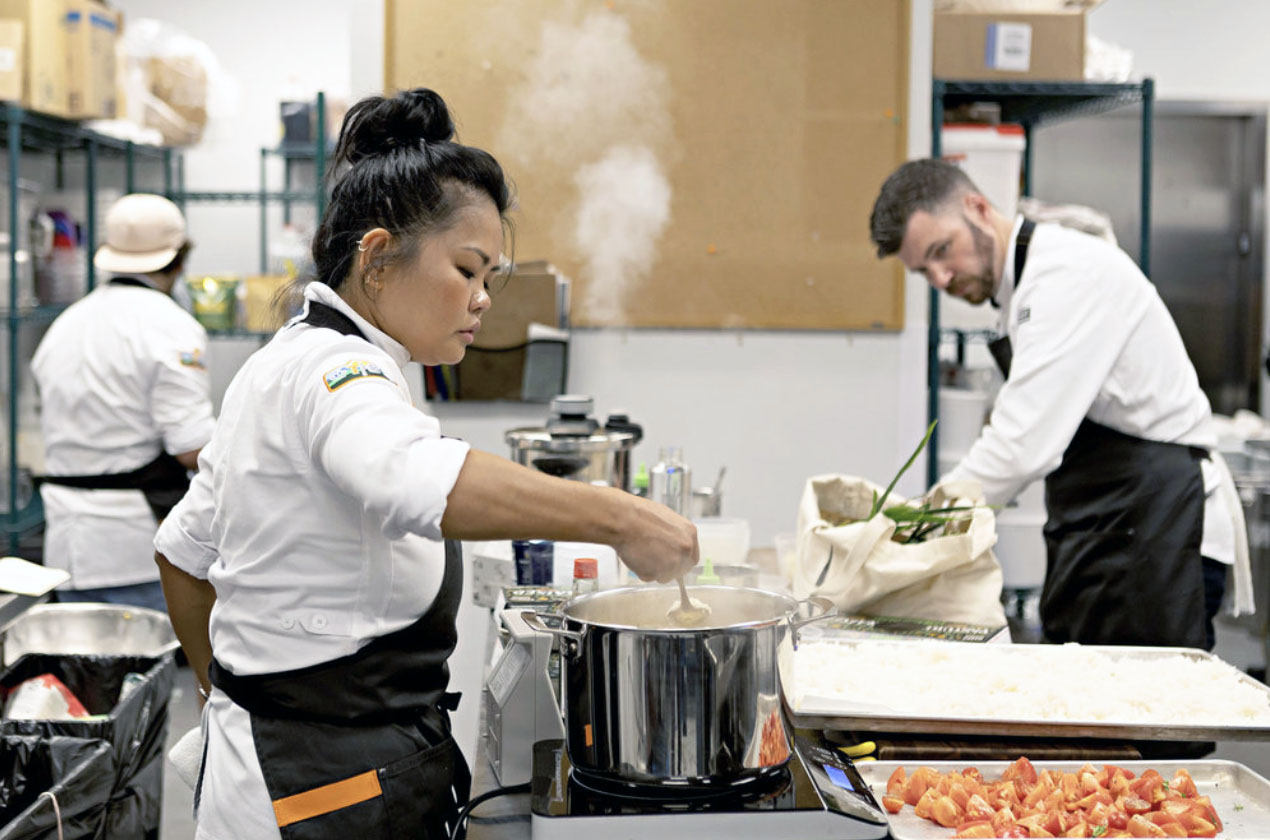
While Magbitang did not know much about her fellow Top Chef castmates, it did not take long for her to connect and bond with them as they worked together in team challenges and also competed against one another in front of a camera crew and legendary judges.
“As I learned more and more about the group of chefs, I realized they had all done so much,” she said. “While that gave me a sense of pride to be invited, that feeling was also paired with a level of terror.”
She explained she was. competing against people who are extremely talented and also had become your good friends.
“It was unnerving, but I would quickly get lost in the cooking and stop thinking about the cameras,” she said.
After the competitions, the contestants have their dishes critiqued by permanent judges: Chef Tom Colicchio, Gail Simmons and Kristen Kish, who is also the host, and a celebrity guest judge, who is sometimes a culinary legend.
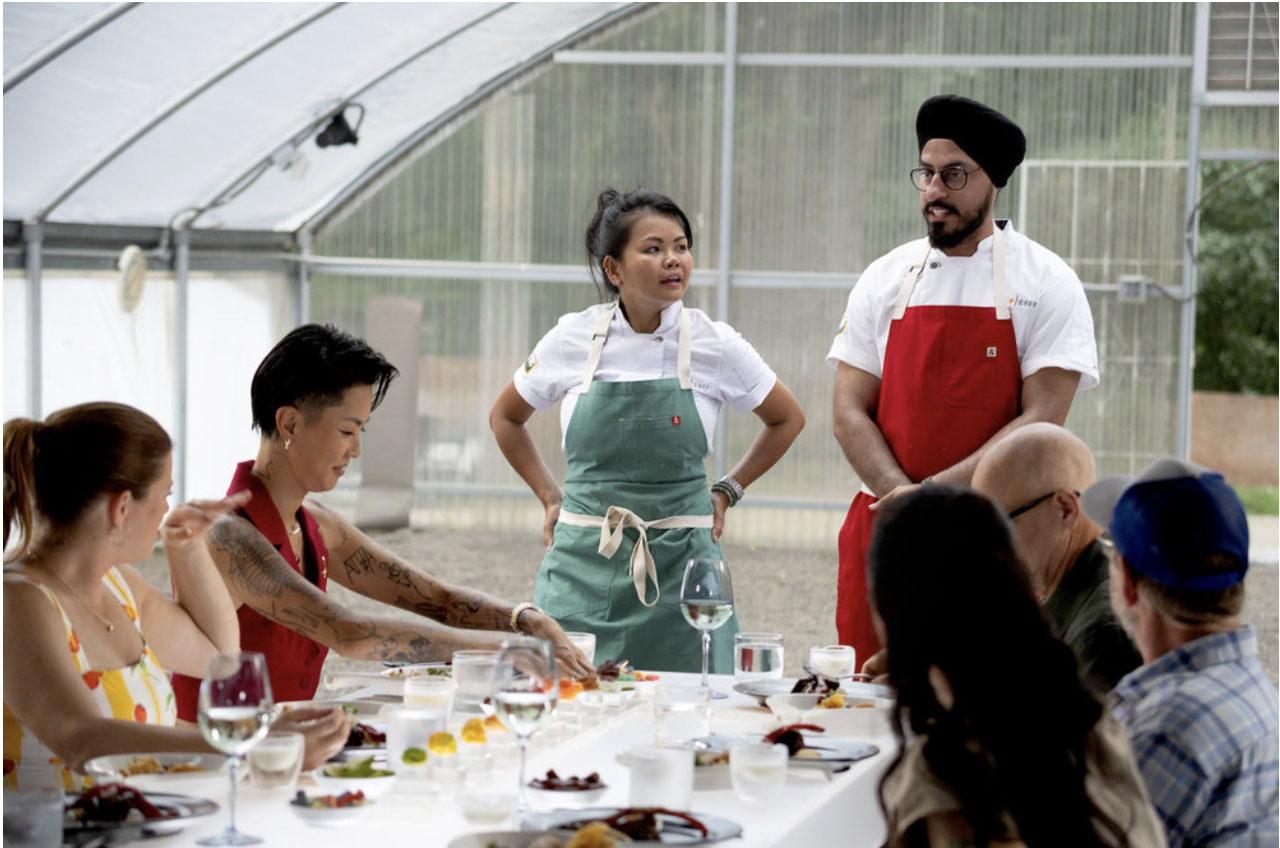
While Magbitang is used to seeing people judge her food on Yelp and social media, she said it was an honor to be critiqued by culinary experts and to receive feedback that isn’t contrived and only makes her a better chef.
“No matter what it is, to hear all of the judges’ feedback is an honor and I’m thankful for it,” Magbitang said. “There is a tendency for me to live in my head a lot and I was reminded that I have worked hard to get here and am deserving of the experience.
“The show taught me the importance of getting a different vantage point, to be kinder to myself, and to give myself grace, so it can spill out into everything I do. Cooking is personal. It’s an intimate act where you are sharing a part of yourself and it’s important for me to remember that.”
When thinking about the impact of the show, she hopes that her representation can put some shine on the Big Island and inspire the young, local cooks here who may dream to be in the same position one day.
For those interested in trying Magbitang’s food, CanoeHouse is open from 5 p.m. to 9 p.m. every day.
Sponsored Content


Subscribe to our Newsletter
Comments