




Hālau Kalaʻakeakauikawēkiu sole Hawai‘i Island hula group takes to Merrie Monarch competition stage this year
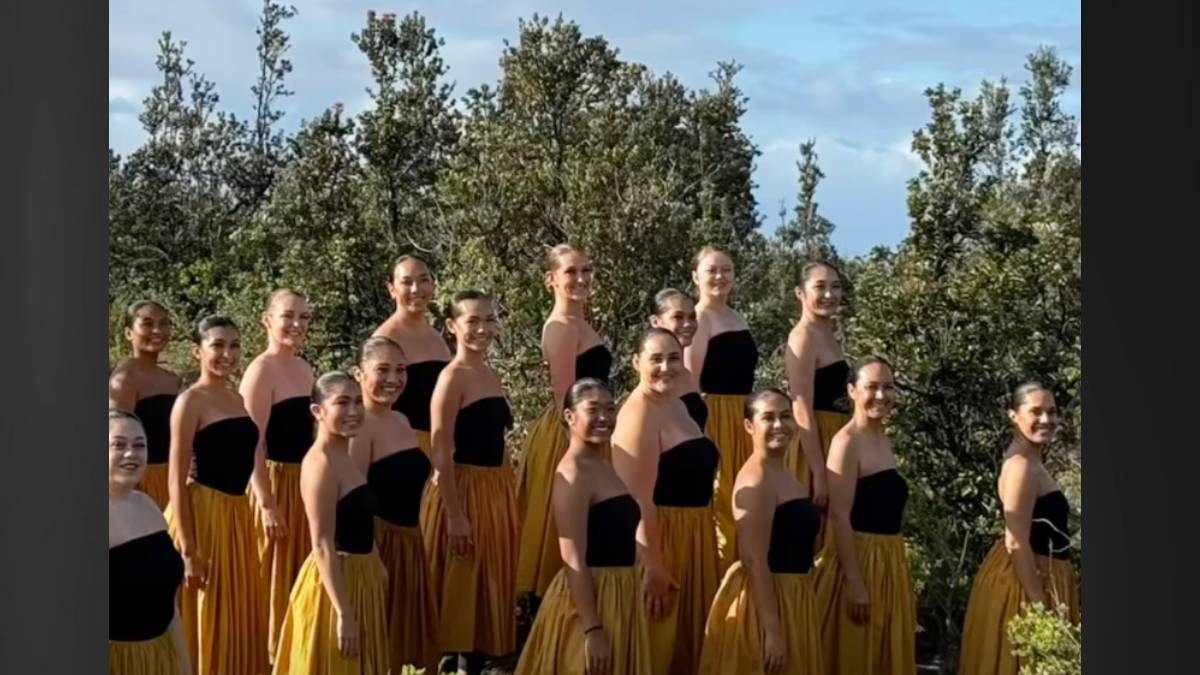
It was around March 8 when Līlianani Pi, along with her hula sisters from Hālau Kalaʻakeakauikawēkiu, took a trip to visit Kīlauea.
Pi, 24, said they took the route to Hawai‘i Volcanoes National Park from Kona through the Ka‘ū District, where they walked through the Ka‘ū Desert Trail within the park before visiting the Kīlauea summit.
It was a beautiful day. And when they arrived at the crater, it was sunny with blue skies.
“We were there to observe people’s reactions, who was there and what they were there for,” said Pi’s Kumu Hula Kenneth Dean Alohapumehanaokalā Victor. “We just held space and did our hula, and we did our offering.”
After performing a hula in honor of the fire goddess, the girls left the crater. Two days later, Kīlauea erupted, with lava fountaining hundreds of feet in the air for nine hours, raining ash and volcanic debris miles around the area.
“It was like we awoke her,” Pi said.
On kahiko (ancient) night of the 63rd annual Merrie Monarch Festival’s hula competition, Friday, Hālau Kalaʻakeakauikawēkiu, the only group out of 19 competing from the Big Island this year, honored Pele with “Holo Mai Pele.”
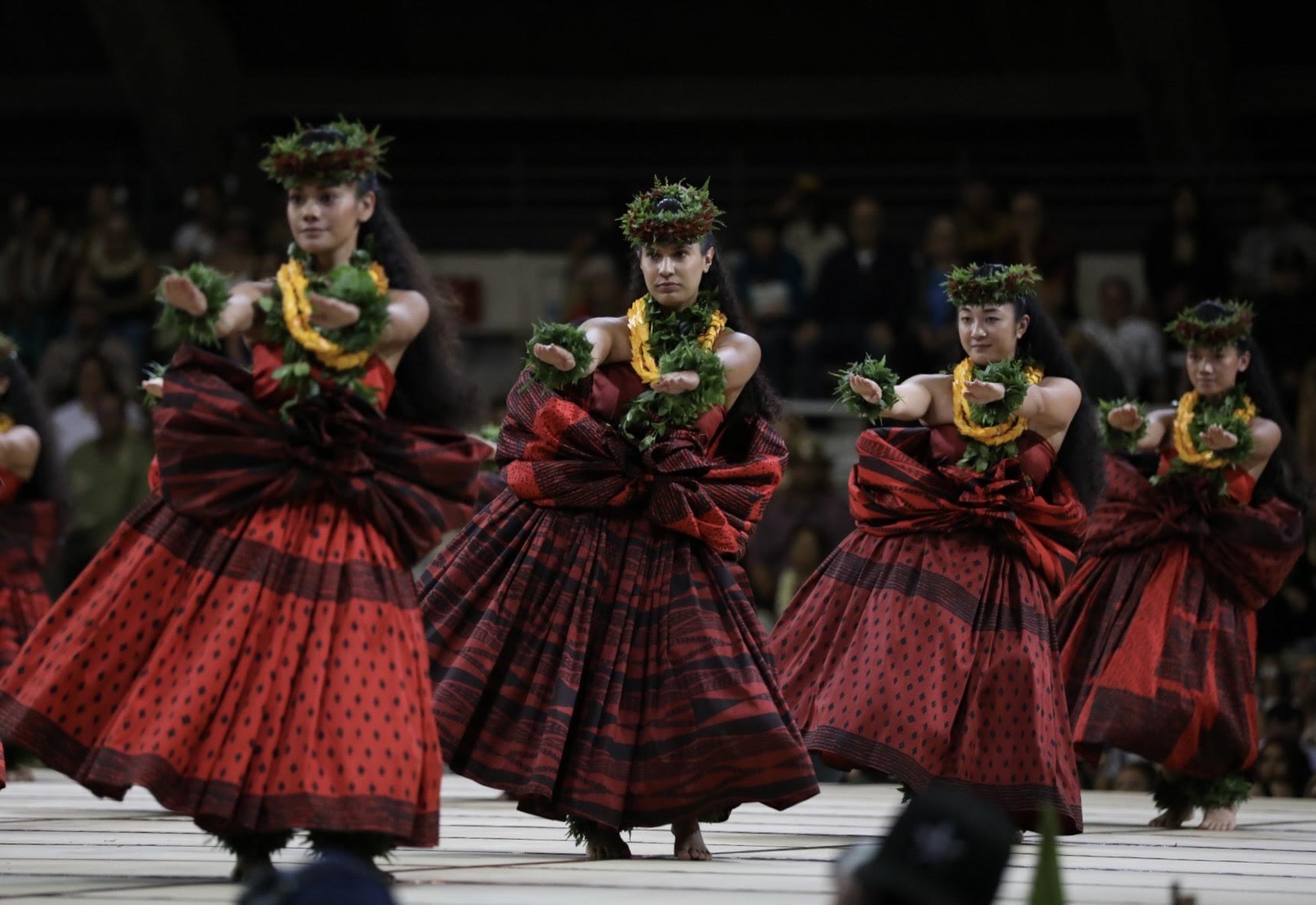
The chant was an invocation of reverence for the fire goddess, recognizing her as a central figure in Hawaiian cosmogony with a genealogy reaching to primordial pō.
Because Hawai‘i Island is currently the home of Pele, “We need to stand strong with her and portray that she’s here,” Pi said. “She is Hawaiʻi Island. She makes Hawaiʻi Island. We are from Hawaiʻi Island. And we need to be the ones to show that we are a part of her.”
This is Victor’s fifth year participating in Merrie Monarch after taking two years off, bringing with him 18 dancers to the competition stage, ranging in age from 14 years old to 35.
In the months leading up to the competition, Victor chose this mele for kahiko night to honor the fire goddess because of her episodic eruptive activity since December 2024.
For Victor, it was important that his women felt connected to the dances they’re performing on the Merrie Monarch stage.
“Everything has to have a connection,” Victor said. “If not, what are we doing? If it has no connection, you have nothing.”
In preparing for this year’s competition, Victor wanted his dancers to research everything about Pele, who she was, where she came from, who her parents were, and where her family line comes from. Following their research, he wanted them to share what they learned.
“They had to express themselves through art or literature or song or poetry or dance and tell us who Pele was to them,” Victor explained. “We had all kinds of interpretations, which I love to the max.”
The girls’ expressions of Pele took many forms. For Pi, she interpreted Pele with crochet, making a quilt with a snowflake and lehua, symbolizing the battle between Pele and her sister, Poliahu.
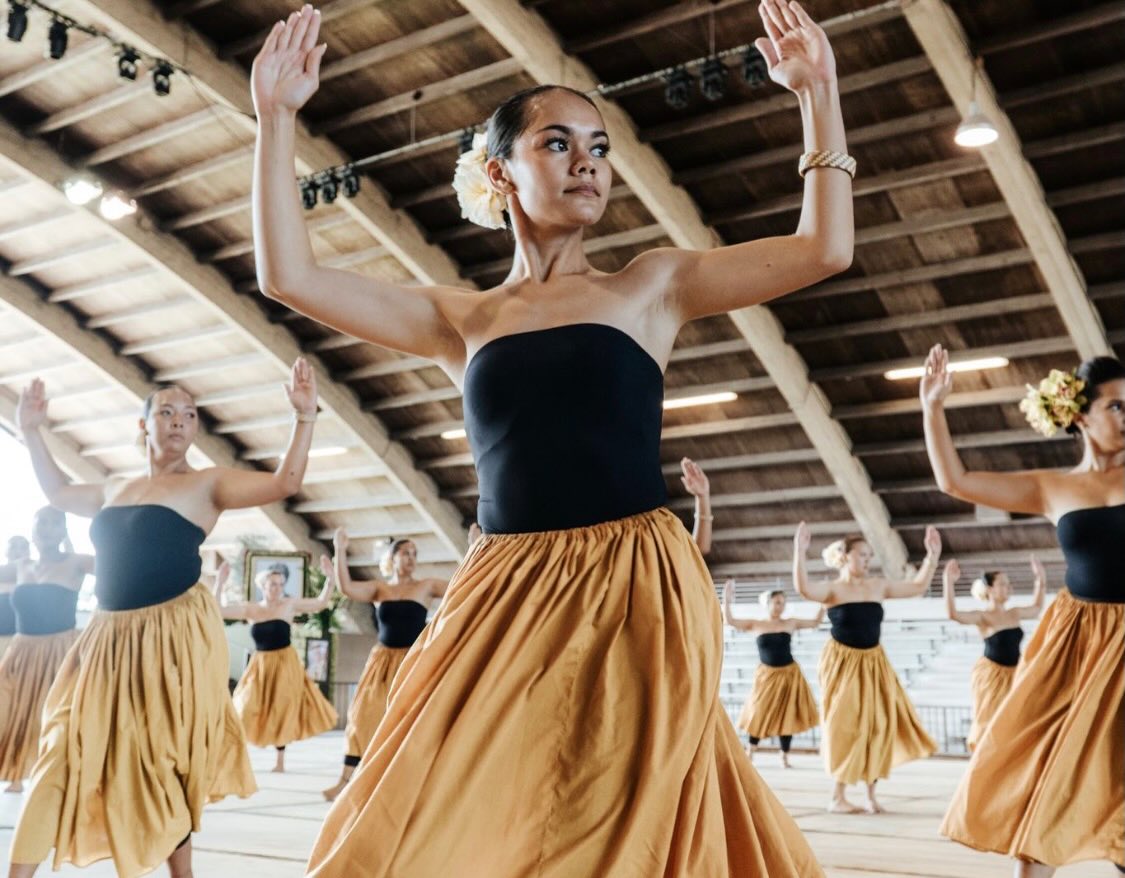
“Within that story, I got to know her (Pele’s) emotions and how I can take her emotions in that story and translate it into my face and my body and my emotions during our Pele set,” Pi said.
Among Victor’s younger dancers is Medison Collins, 16. This is her first Merrie Monarch.
“It’s just an honor to go,” Collins said, who has only been dancing hula for about two years.
In Collins’ research about Pele, she had a lot of questions. “Is she really a goddess? Is she a supernatural being? Is she a deity?”
Collins looked at the origin of Pele and how she was represented in different Polynesian cultures from Samoa to New Zealand to Tonga.
“I learned about their version of Pele, or I guess fire goddess in their culture, and I made a collage,” Collins said.
In doing that research, Collins felt it would help her and her hula sister better portray the strength of Pele when they performed their mele during kahiko night.
Tonight, the women will grace the stage for ‘auana (modern) night, where they will perform “Pua A‘ali’i.”
“It’s the last song that my mom watched my girls perform before she passed away,” Victor said.
Victor said “Pua A‘ali’i” talks about a girl who came from O’ahu, and she worked on Hawai’i Island, and she learned about the native flower, a‘ali’i, and how steadfast it was against the wind. In the song, the girl reflects on her life and how, like the flower, the Hawaiian people are strong.
“We identify that the a‘ali’i is to stand strong, and no matter what gale of force or wind comes through, you still stand, and you be your greatest self,” Victor said. And so that’s my girls. They’re a‘ali’i. They stand strong and with intention and purpose.”
Not only are the dancers practicing and perfecting an ancient and modern hula number, but Victor said they submit several pages of fact sheets to Merrie Monarch judges that go into detail about the song they chose, the research behind it, the flowers used in lei and the costumes.
Victor said the fact sheets decipher everything for the judges to review so they have a conceptual idea of what groups are presenting.
Victor said every year he competes in Merrie Monarch is different, however, the goal is the same: to be better than they were the day before.
At the end of the day, Victor said there are only going to be five winners, but his win is not a trophy.
“My win is what we create, what they walk away with, what they learned,” the kumu said. “The win for us is walking away as better humans, as better people who live in Hawai‘i, to understand nature and the connectivity of everything with hula and that alignment.”
Victor said part of putting on the best performance is bonding as dancers, where girls who have been to Merrie Monarch multiple times work with the newcomers.
“I don’t just teach hula,” Victor said. “We teach them how to talk, how to form sentences, how to do presentations, just constant building of who they are individually and then as a group.
On top of learning together, the girls are spending time together doing activities, from baking to hiking.
In preparing for the competition, Collins said she was surprised to see how far each of her hula sisters, including herself, could push themselves.
“We’re definitely learning a lot about our own capacities and how much we can handle and just pushing beyond that. So I think it’s been really amazing seeing how much each girl can progress.”
Victor is hopeful to go back to the competition stage for three more years.
“We were invited to the greatest stage on earth, and we’re going to present that in that manner,” Victor said.
Winners of the this year’s competition will be announced Saturday night after the ‘auana performances.
Sponsored Content


Subscribe to our Newsletter
Comments