



IRS issues tax relief for Hawaiʻi individuals, businesses affected by flooding, mudslides
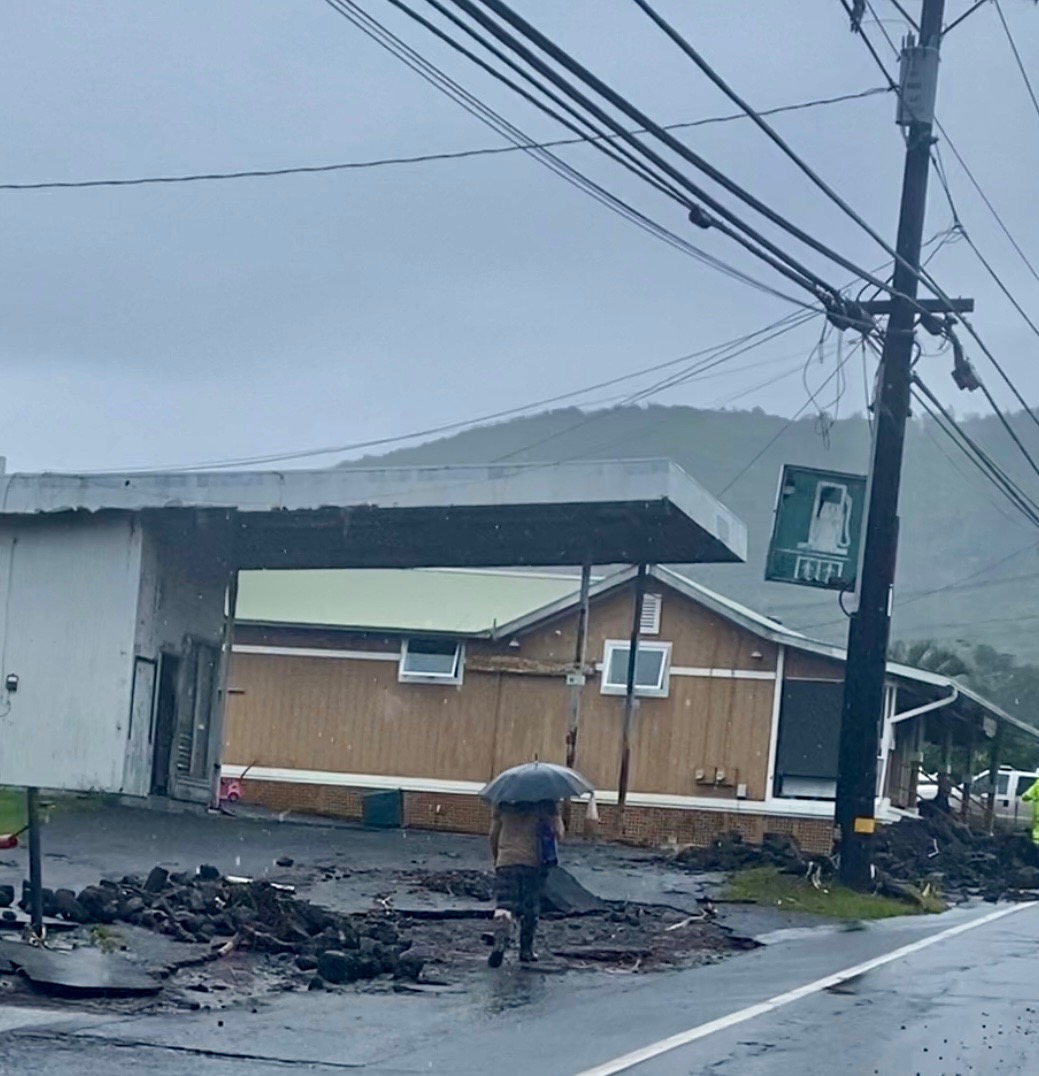
The Internal Revenue Service is offering tax relief for individuals and businesses in the State of Hawaii that have been affected by flooding and mudslides due to severe storms that began on March 10.
These taxpayers now have until July 8 to file various federal individual and business tax returns and make tax payments.
Following the federal disaster declaration issued for the state, individuals and households that reside or have business in Hawaiʻi, Honolulu, Kauaʻi and Maui counties and are in the disaster area qualify for tax relief.
The July 8 deadline applies to individual income tax returns and payments normally due on or after March 10. Penalties on payroll and excise tax deposits due on or after March 10 and before March 25 will be abated as long as the tax deposits are made by March 25.
The July 8, 2026, deadline also applies to affected quarterly payroll and certain excise tax returns normally due on April 30, 2026.
The IRS automatically identifies taxpayers located in the covered disaster area and applies filing and payment relief. But affected taxpayers who reside or have a business located outside the covered disaster area should call the IRS Special Services toll-free number at 866-562-5227 to request this tax relief.
Tax practitioners in the covered disaster area, who maintain records necessary to meet a filing or payment deadline for taxpayers located outside the disaster area, may contact the IRS Special Services; if the practitioner maintains the necessary records of 10 or more clients, please refer to Bulk requests from practitioners for disaster relief for additional guidance.
Other relief
The IRS will waive the usual fees for requests for copies of previously filed tax returns for affected taxpayers. Taxpayers should put “Hawaii, Severe Storms”, in bold letters at the top of Form 4506, Request for Copy of Tax Return, or Form 4506-T, Request for Transcript of Tax Return, as appropriate, and submit it to the IRS.
Qualified disaster relief payments are generally excluded from gross income. This means that affected taxpayers can exclude from their gross income amounts received from a government agency for reasonable and necessary personal, family, living or funeral expenses, as well as for the repair or rehabilitation of their home, or for the repair or replacement of its contents. See Publication 525 for details.
Additional relief may be available to affected taxpayers who participate in a retirement plan or individual retirement arrangement (IRA). For example, a taxpayer may be eligible to take a special disaster distribution that would not be subject to the additional 10% early distribution tax and that the taxpayer may take into income over three years. See Form 8915-F, Qualified Disaster Retirement Plan Distributions and Repayments and Disaster relief frequently asked questions: Retirement plans and IRAs under the SECURE 2.0 Act of 2022. Taxpayers may also be eligible to make a hardship withdrawal. Each plan or IRA has specific rules and guidance for their participants to follow.
The IRS may provide additional disaster relief in the future.
Taxpayers who do not qualify for disaster tax relief may qualify for reasonable cause penalty abatement. See Penalty relief for reasonable cause for additional information.
Affected taxpayers who are contacted by the IRS on a collection or examination matter should explain how the disaster impacts them so that the IRS can provide appropriate consideration to their case. Taxpayers may download forms and publications from the official IRS website, IRS.gov.
Reminder about tax return preparation options
- Eligible individuals or families can get free help preparing their tax return at Volunteer Income Tax Assistance (VITA) or Tax Counseling for the Elderly (TCE) sites. To find the closest free tax help site, use the VITA Locator Tool or call 800-906-9887. Note that normally, VITA sites cannot help claim disaster losses.
- To find an AARP Tax-Aide site, use the AARP Site Locator Tool or call 888-227-7669.
- Any individual or family whose adjusted gross income (AGI) was $89,000 or less in 2025 can use IRS Free File’s Guided Tax Software at no cost. There are products in English and Spanish.
- Another Free File option is Free File Fillable Forms. These are electronic federal tax forms, equivalent to a paper 1040 and are designed for taxpayers who are comfortable filling out IRS tax forms. Anyone, regardless of income, can use this option.
- MilTax, a Department of Defense program, offers free return preparation software and electronic filing for federal tax returns and up to three state income tax returns. It’s available for all military members and some veterans, with no income limit.
Sponsored Content


Subscribe to our Newsletter
Comments