


UPDATE: Episode 44 of lava fountaining at Kīlauea ended Thursday night; Highway 11 reopens
Update April 9 at 8 p.m.:
Episode 44 has ended after nine hours of continuous lava fountaining, prompting officials to lower alert levels due to reduced volcanic hazards.
The U.S. Geological Survey said Episode 44 of the ongoing eruption ended at 7:41 p.m. on Thursday, April 9.
In response, the agency downgraded the Volcano Alert Level from Watch to Advisory and lowered the Aviation Color Code from Red to Yellow.
The National Weather Service also canceled the ashfall warning.
This eruption was much smaller in size than episodes 41 through 43, but due to steady winds it produced a tephra fallout pattern similar to but not as thick as episode 43. The plume deposited tephra within Hawaiʻi Volcanoes National Park near Kīlauea Military Camp and into the adjacent Volcano Golf Course subdivision, according to Hawaiian Volcano Observatory.
April 9 at 6:45 p.m.: Highway 11 near Volcano Village is now open after being closed earlier Thursday due to volcanic tephra from eruption Episode 44 of Kīlauea.
As of 5 p.m., Hawaiian Volcano Observatory webcams show that lava fountains were reaching heights less than 500 feet, with significantly less tephra fall reported downwind to the north-northeast.
With the reduced ground hazard from tephra fall, the U.S. Geological Survey lowered the Volcano Alert Level for Kīlauea from Warning to Watch.
The National Weather Service reports that the plume from this eruption is currently reaching a maximum height of 10,000 feet above sea level. Accordingly, the Aviation Color Code for Kīlauea remains at RED.
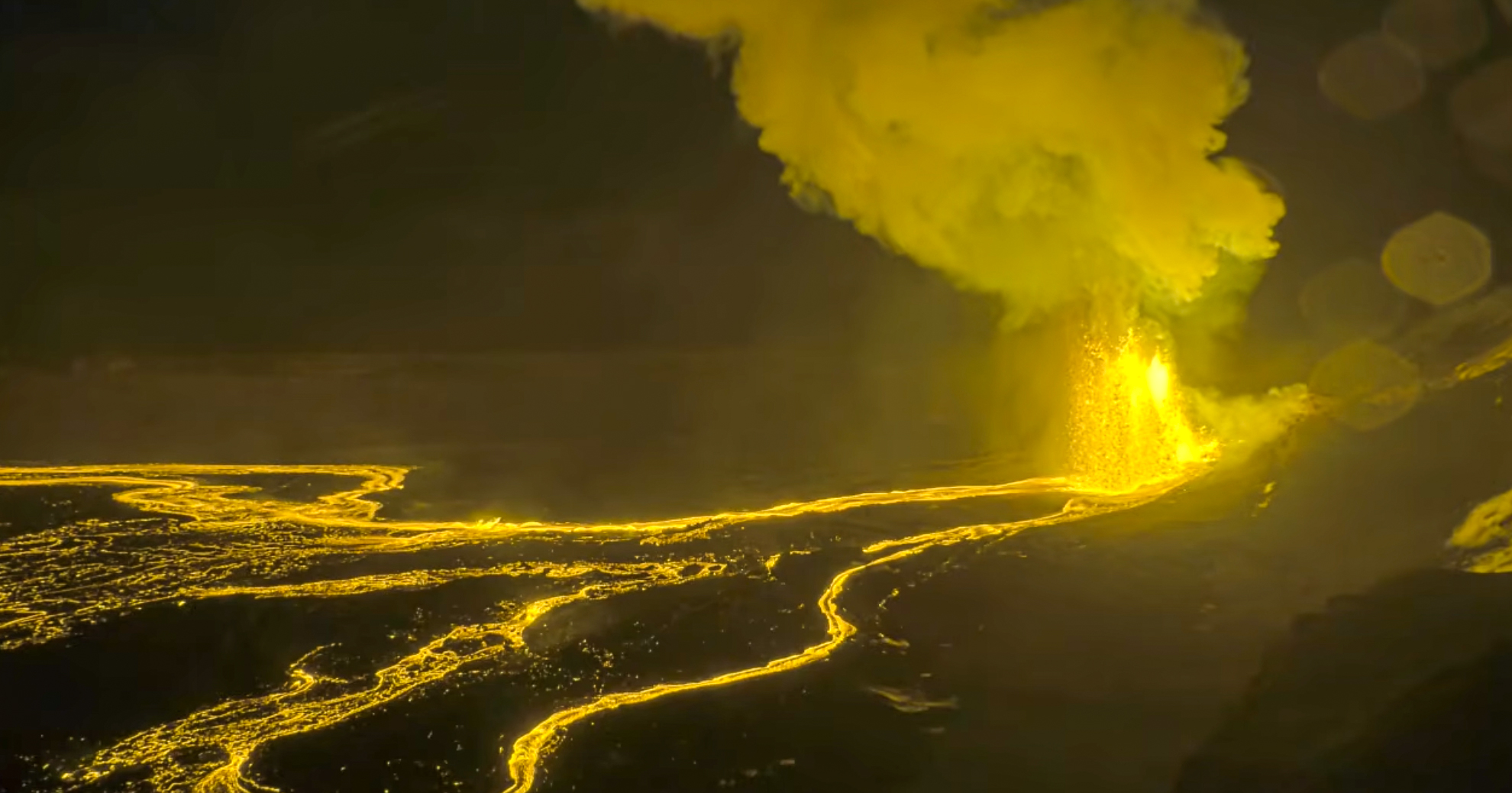
Updated on April 9 at 4 p.m:
Episode 44 of lava fountaining at Kīlauea within Hawai‘i Volcanoes National Park began at 11:10 a.m. with the north vent lava reaching peak heights of approximately 800 feet around 1 p.m.
The south vent has not been active so far during episode 44, although it produced significant precursory overflows that began on April 3.
At 2 p.m., the plume is hitting strong southerly winds about 3,000 feet above ground level, and these winds are transporting a narrow band of gas and tephra to the north-northeast of Halemaʻumaʻu.
Tephra fallout is strongest in the direction of Kīlauea Military Camp and the Volcano Golf Course subdivision, with pieces of lightweight reticulite up to 12 inches reported falling in these areas. Tephra fall has also been reported near Volcano House within Hawaiʻi Volcanoes National Park.
The volcanic plume is moving northward and widening over a large section of East Hawaiʻi. These areas may expect fine ashfall consisting of Peleʻs hair and small glassy particles.
The National Weather Service has issued an ashfall warning for much of east Hawaiʻi.
The Hawaiʻi County Civil Defense Agency has closed Highway 11 through Volcano and the National Park Service has closed Hawaiʻi Volcanoes National Park due to falling tephra and sulfur dioxide gas. Both agencies have encouraged residents to remain inside with windows closed and to disconnect water catchment tanks if possible.
Update at 11:26 a.m. April 9: Episode 44 of lava fountaining at Kīlauea within Hawai‘i Volcanoes National Park began at 11:10 a.m.
Fountaining episodes typically last less than 12 hours, but ash can remain in the air longer depending on wind and weather conditions, according to the National Weather Service in Honolulu.
Due to the eruption, Hawaii Volcanoes National Park and Highway 11 in Puna at the 25.5 Mile Marker at the intersection of Nahelenani Street and in Ka`u at the 40 Mile Marker are closed.
Varying levels of ash, Pele’s hair, and other lightweight tephra may fall downwind of the eruption. In the current weather pattern, “downwind” will be to the north and northeast of the summit, including the communities of Volcano and Mountain View.
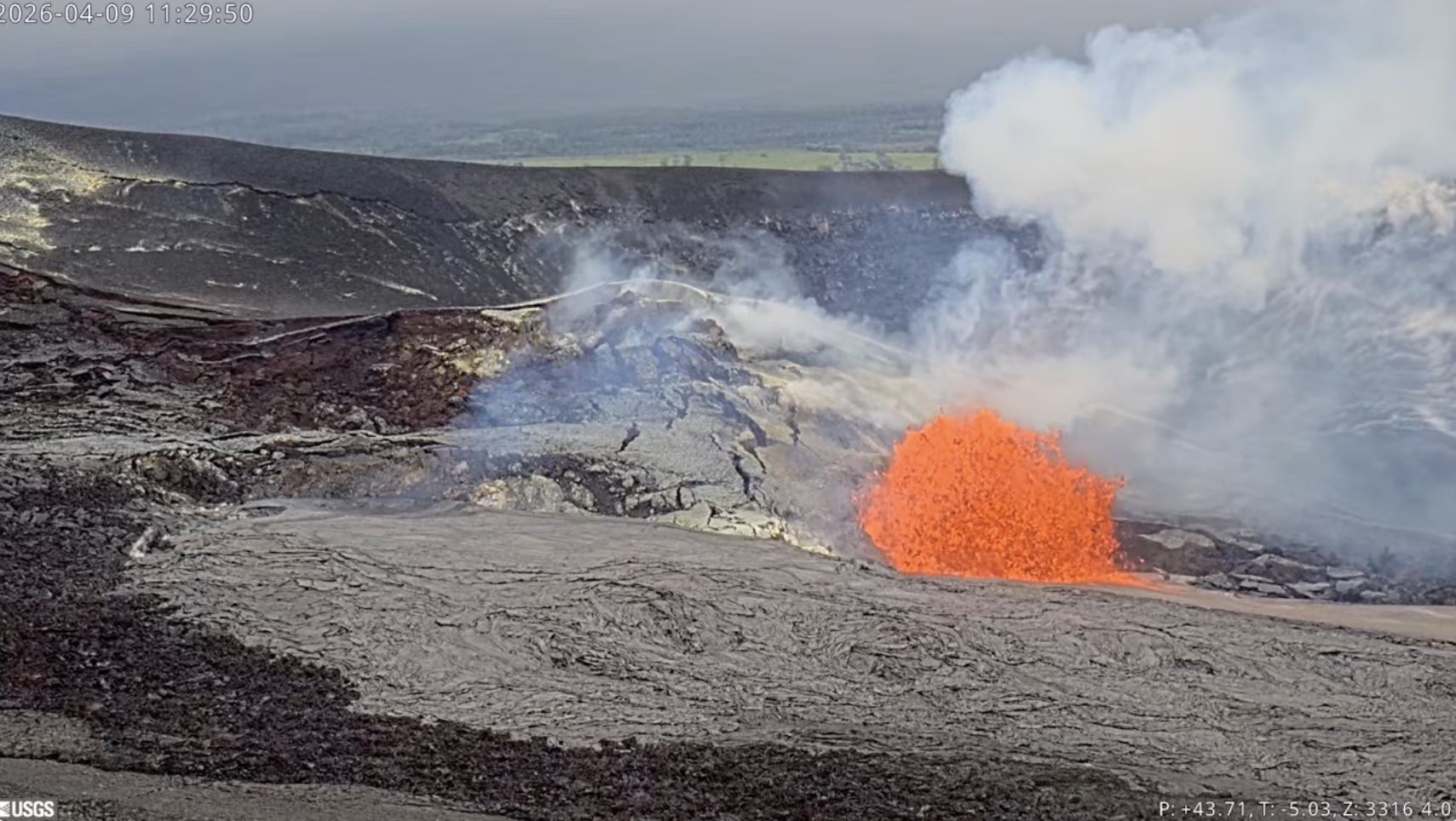
The National Weather Service has issued an Ashfall Information Statement. Elevated gas levels, ash, and tephra – fine glass particles that may irritate the skin and eyes – are present in the area and downwind of the eruption.
Smaller particles can travel farther from the eruption site and may affect communities at greater distances.
Residents in nearby communities have been urged to limit outdoor exposure. Ashfall is possible in Hilo and across the Hamakua District.
Residents who would like to learn more about ashfall can click here.
If you live downwind of the Kilauea summit, or plan to visit the summit area, stay informed about current volcanic activity and weather conditions. Winds from the south mean that tephra could fall in areas of Hawaii Volcanoes National Park, on Highway 11 nearby, and in communities near the Kilauea summit region.
For more information on the status of Kilauea Volcano, see
https://volcanoes.usgs.gov/volcanoes/kilauea/volcano-updates
For health and safety recommendations, visit the Hawai‘i Interagency Vog Information Dashboard at https://vog.ivhhn.org
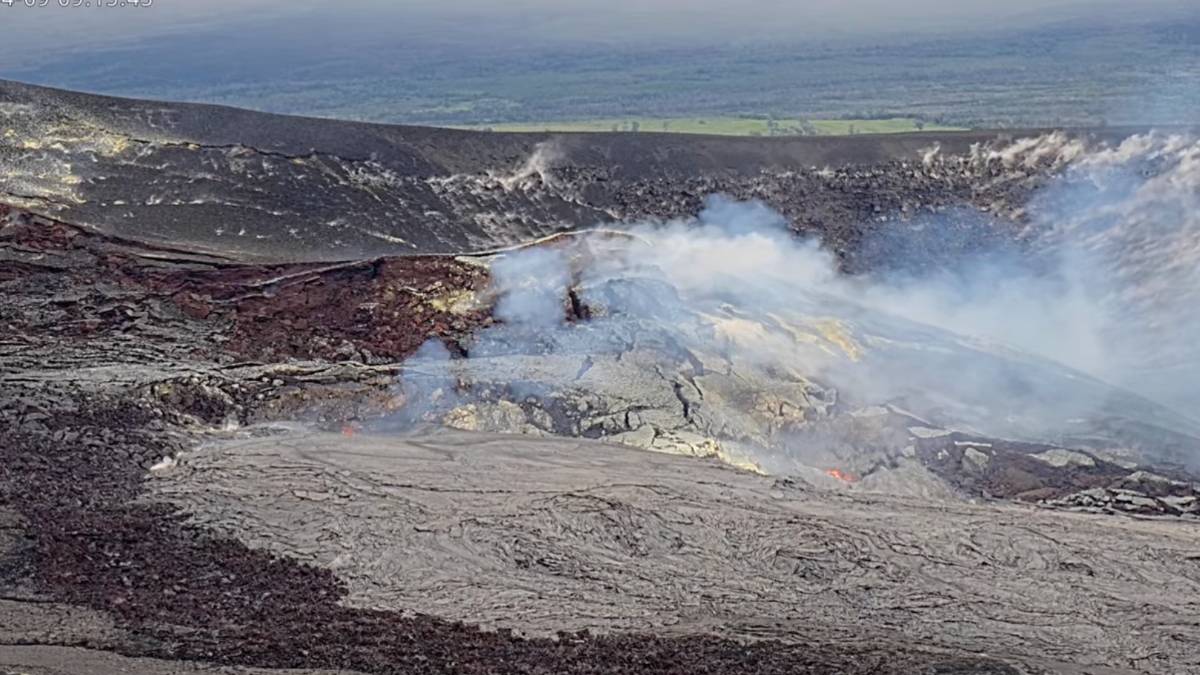
Original post: Small spatters of lava are visible this morning on the U.S. Geological Survey’s live stream of Kīlauea within Hawai‘i Volcanoes National Park.
The volcano has been edging closer to its next eruptive episode, which is expected between now and April 15. Over the past day, the Halemaʻumaʻu south vent has overflowed at least 20 times, with slightly increased vigor starting Wednesday afternoon, according to a daily update from the Hawaiian Volcano Observatory.
These overflows have been associated with gas piston tremor cycles in the south vent, with limited spattering and low dome fountaining. A single overflow from the north vent started around 2:25 a.m. this morning and lasted 10–20 minutes, though intermittent spattering has continued in the vent since then.
Seismic tremor is continuous with frequent small, poorly defined bursts possibly related to the rise and fall of magma within the vents.
Kīlauea has been erupting episodically since Dec. 23, 2024, from two vents (north and south) in Halema‘uma‘u. Lava fountaining episodes, which generally last for less than 12 hours, are separated by pauses that can be longer than three weeks.
Episode 43 ended at 6:21 p.m. on March 10 after lava fountaining continued for just over 9 hours.
Gradual summit inflation and low-level seismic tremor have persisted through the past 24 hours. Overflows and spattering may continue until lava fountaining episode 44 begins, but periods of deflation and reduced vent activity may still occur and delay the onset of the next episode.
No significant activity has been noted along Kīlauea’s East Rift Zone or Southwest Rift Zone.
The National Weather Service issued a Special Weather Statement on Wednesday about the potential for tephra fall from episode 44 in downwind communities, especially if the episode occurs in the next several days, when the NWS has forecast possible southerly winds.
Significant changes in activity between Daily Updates are posted here.