


Information you need to know about the 63rd annual Merrie Monarch Festival — and more
Hilo on the Big Island once again become the hula capital of the world this week with the return of the annual Merrie Monarch Festival.
The 63rd installment of the weeklong celebration of everything hula and Hawaiian runs from Easter Sunday, April 5, through April 11 this year.
Hula, of course, will be in the spotlight during the competition portion of the festival — beginning with the individual contest for the coveted title of Miss Aloha Hula on April 9 and then group nights featuring hula kahiko, or ancient hula, and hula ʻauana, or modern hula, on April 10-11 — at at Edith Kanaka‘ole Multi-Purpose Stadium.
If you didn’t get a ticket to the 3 days of competition, don’t fret. Hula also will be on display during the festival opening Hoʻolauleʻa on April 5 at Afook-Chinen Civic Auditorium and Hōʻike Night on April 8 at at Edith Kanaka‘ole Multi-Purpose Stadium, both of which are free to attend.
There’s also midday entertainment at the Grand Naniloa Hotel Hilo and Hilo Hawaiian Hotel throughout the week.
Here’s everything you need to know — and more — about this year’s festival.
Where is the festival?
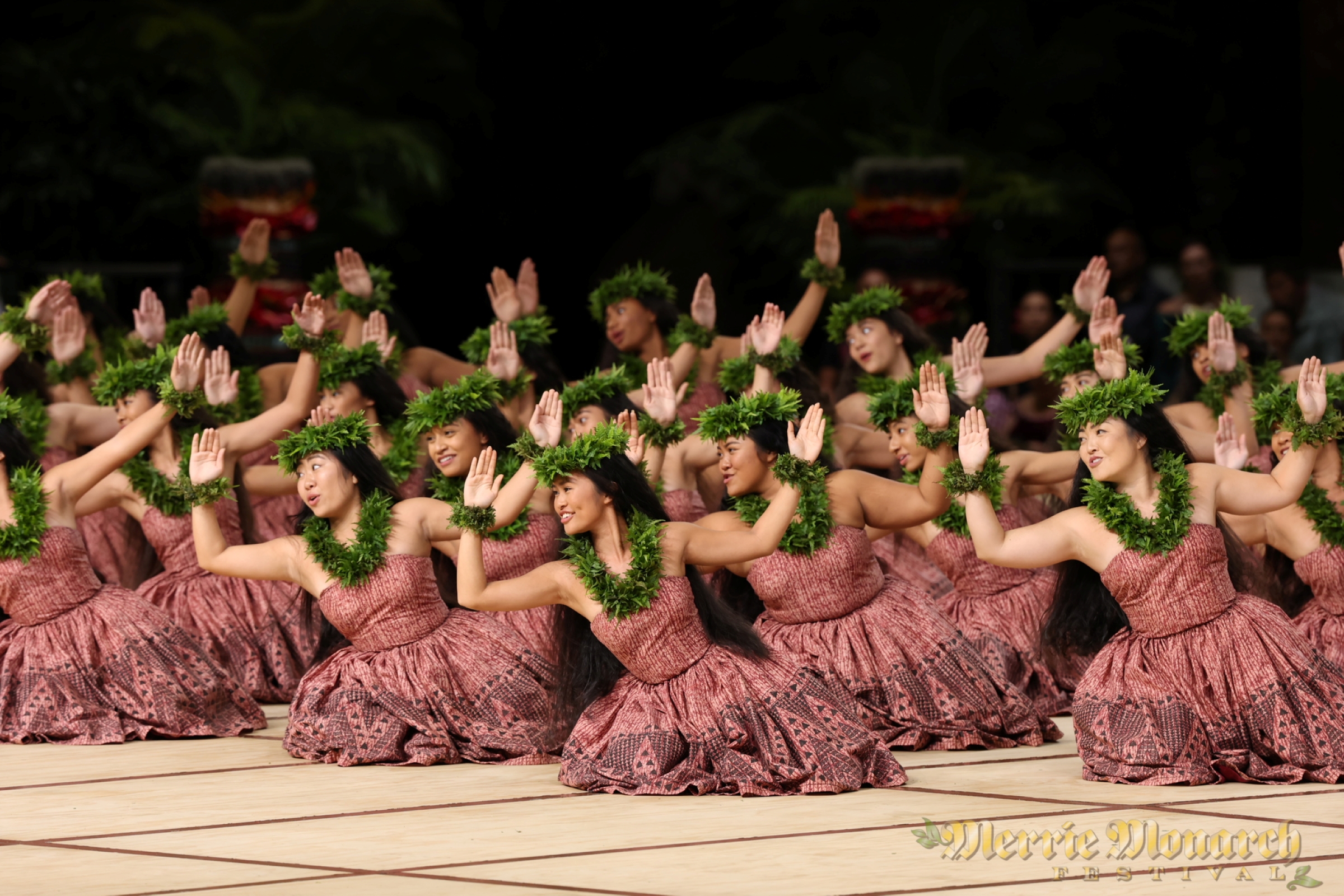
The Merrie Monarch Festival is hosted in a couple of venues at Ho‘olulu Complex in Hilo, a 56-acre park and recreation center managed by Hawai‘i County just off Mamo Street, east of Wailoa River State Recreation Area.
The Merrie Monarch Arts and Crafts Fair takes place at Afook-Chinen Civic Auditorium, located at 323 Manono St., and adjacent Butler Buildings.
Hōʻike Night and hula competitions are conducted at Edith Kanaka‘ole Multi-Purpose Stadium, located at 350 Kalanikoa St.
The Merrie Monarch Festival office is also located on the complex grounds, next to the stadium.
What is this year’s Merrie Monarch schedule?
The festival kicks off April 5 with the annual Hoʻolauleʻa. Here is a schedule of official events for the week.
Hoʻolauleʻa (celebration)
- 9 a.m. April 5 at Afook-Chinen Civic Auditorium.
- Free admission to watch performances by local hālau.
Free midday entertainment
- Noon April 6-10 at the Grand Naniloa Hotel, located at 93 Banyan Drive.
- 1 p.m. April 6-10 at the Hilo Hawaiian Hotel, located at 71 Banyan Drive.
Merrie Monarch Invitational Hawaiian Arts and Crafts Fair
- 9 a.m. to 5 p.m. April 8-10 and 9 a.m. to 4 p.m. April 11 at Afook-Chinen Civic Auditorium and adjacent Butler Buildings.
- An annual favorite, the event is free to enter and features local artists, crafters and entertainment. Official festival apparel, posters and programs will be available for purchase.
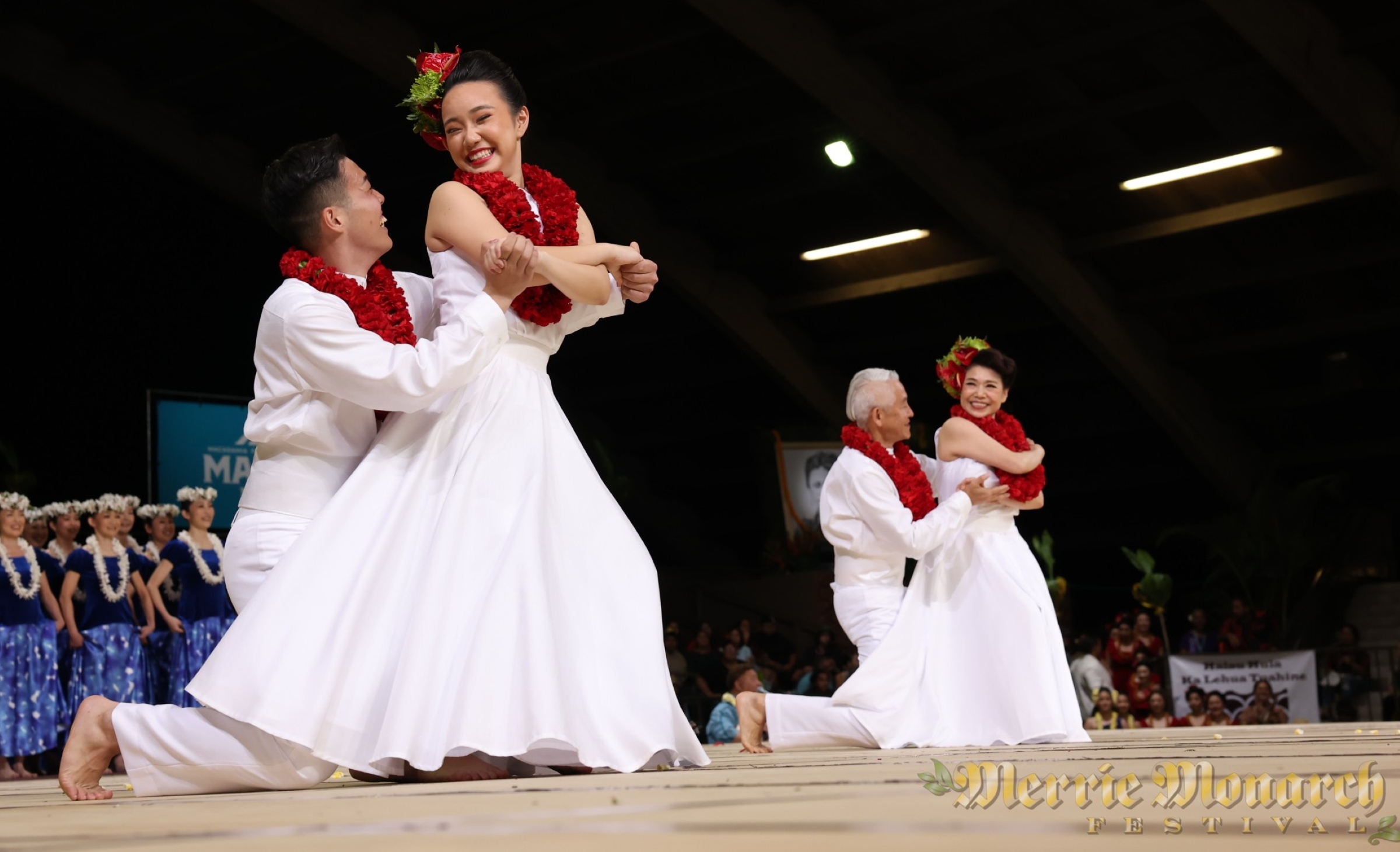
Hōʻike Night
- 6 p.m. April 8 at Edith Kanaka‘ole Multi-Purpose Stadium.
- This is an exhibition of hula and folk dance from around the Pacific. Free to attend; no tickets required.
Miss Aloha Hula
- 6 p.m. April 9 at Edith Kanaka‘ole Multi-Purpose Stadium.
- Individual competition, with contestants performing hula kahiko, hula ʻauana and oli (chant).
Group Hula Kahiko
- 6 p.m. April 10 at Edith Kanaka‘ole Multi-Purpose Stadium.
- Hālau hula perform ancient style dances.
Group Hula ʻAuana and Awards
- 6 p.m. April 11 at Edith Kanaka‘ole Multi-Purpose Stadium.
- Hālau hula perform modern style dances followed by an awards presentation for all group winners.
Merrie Monarch Royal Parade
- 10:30 a.m. April 11 through downtown Hilo.
- One of the festival’s most entertaining and fun events for the entire family, the parade begins and ends at Pauahi Street. The parade will wind along Kīlauea Avenue, Keawe Street, Waiānuenue Avenue and Kamehameha Avenue.
Road closures and traffic changes for Merrie Monarch Festival Royal Parade
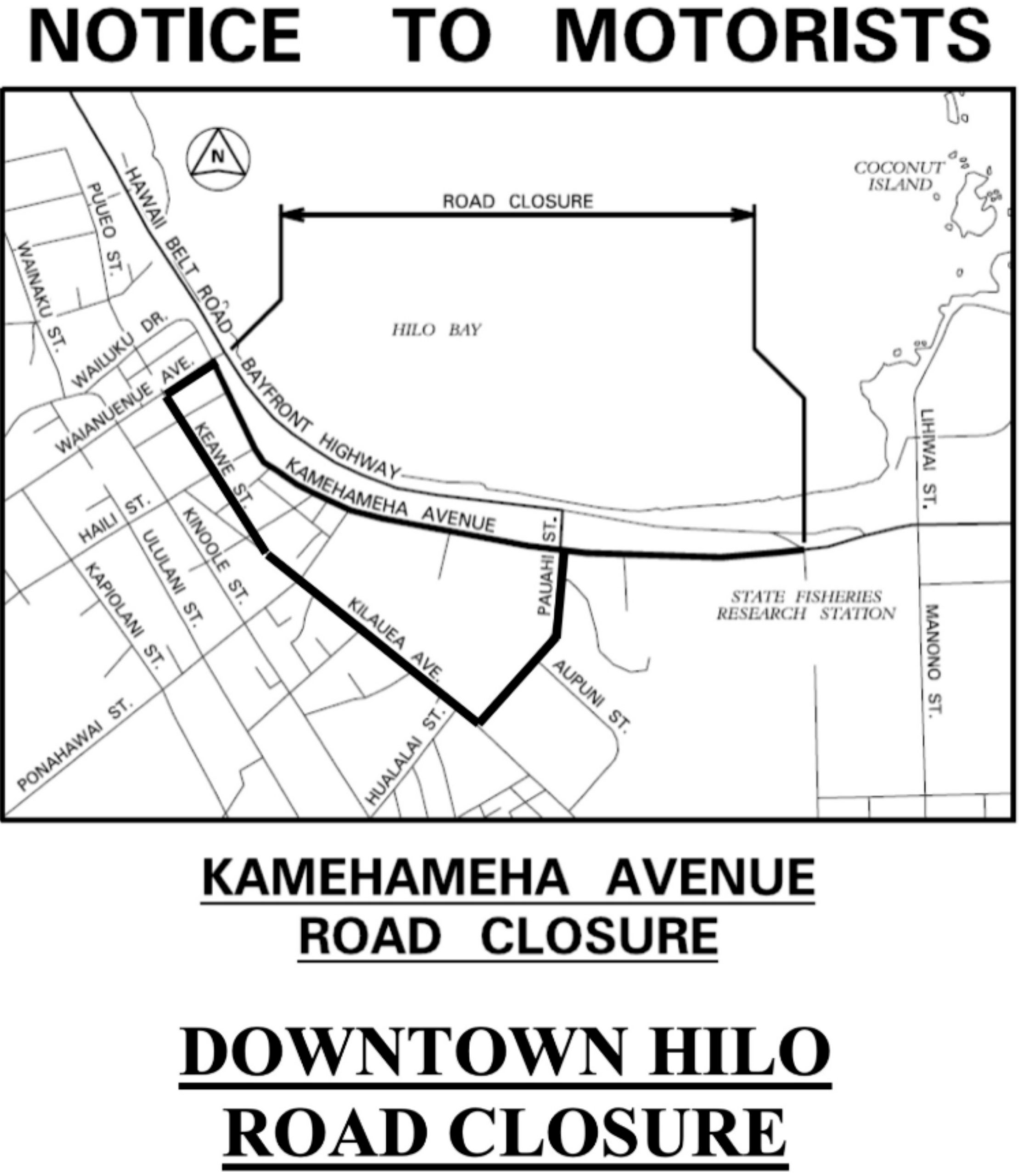
In support of the 63rd annual Merrie Monarch Festival Royal Parade, the following road closures and traffic impacts are scheduled for April 11. These measures are in place to ensure the safety of participants and spectators during the beloved community event.
ROAD CLOSURES
Kamehameha Avenue Closure
When: 10 a.m. to 3 p.m.
- Location: Kamehameha Avenue from Pauahi Street to Suisan Bridge.
- Purpose: Designated staging area for floats, marching units and parade participants.
Downtown Hilo Parade Route Closures
When: 10 a.m. to 2 p.m.
Affected Areas:
- Bayfront Highway (both directions; traffic detoured through Hilo Bayfront Park)
- Pauahi Street
- Kīlauea Avenue (between Pauahi Street and Ponahawai Street)
- Keawe Street
- Waiānuenue Avenue
Traffic control officers, barricades, cones and electronic message boards will be in place throughout the area. Motorists are urged to follow posted signs and comply with all traffic direction.
Parking restrictions
Parking will be strictly prohibited along the entire parade route and adjacent streets during the closure periods. Relocate all vehicles prior to the start of closures to avoid citations or towing.
Alternate routes
Drivers are strongly encouraged to use alternate roadways and plan ahead to avoid delays. Detour signage will be posted and officers will assist with rerouting.
Public transportation
Hele-On Bus routes will be temporarily rerouted from the Moʻoheau Bus Terminal. Riders should check with Hele-On for updated routes and temporary stops during the event.
Contact the Merrie Monarch Festival Office at 808-935-9168 for additional information.
Where can you watch the internationally acclaimed hula competition if you didn’t get tickets?
Hawai‘i News Now – KFVE, the festival’s official broadcaster, carries the events live on-air and online each night, as well as special coverage during newscasts and on streaming platforms and social media. Click here for more.
You can also follow the festival on Facebook and Instagram or visit the official website for additional information.
There are two ways to watch this year, too. You can live stream the competition nights in ʻŌlelo Hawaiʻi (Hawaiian language) here or in English here.
Who are this year’s Miss Aloha Hula contestants and their kumu?
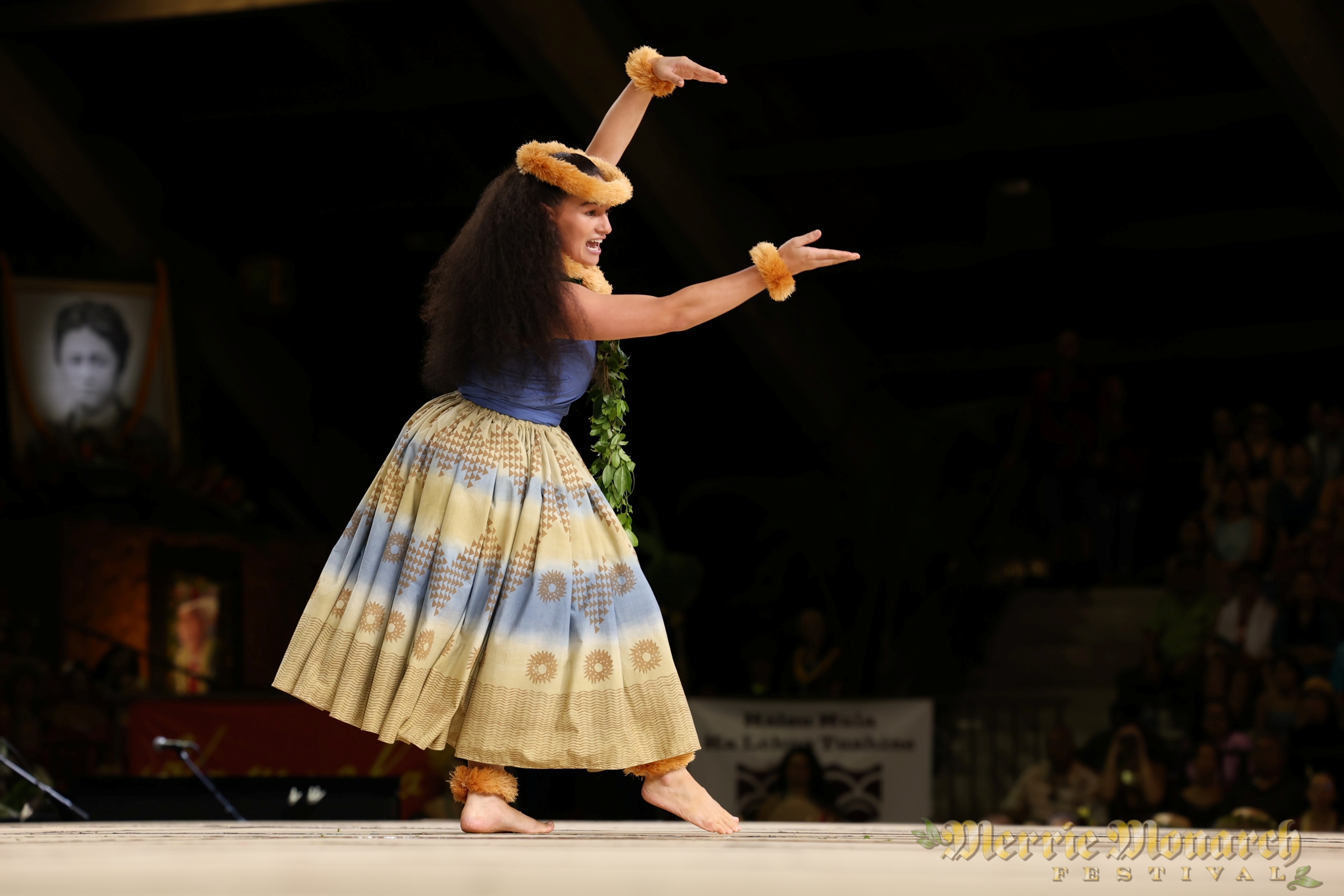
- Samantha Makanani Aguon Newman, Nā Kumu Hula Karl Veto Baker & Michael Lanakila Casupang.
- Haily Kamakahukilani Nawahine Nascimento, Nā Kumu Hula William Kahakuleilehua Haunu‘u “Sonny” Ching & Lōpaka Igarta-De Vera.
- Kēhaulani Kaleikaumakamaeʻiʻomakamae Rubonal, Kumu Hula Keolalaulani Dalire.
- Mālie Kapuaonaonaikamauʻuuaolalokoikealohaokalaniākea Moe, Kumu Hula Kapua Dalire-Moe.
- Lilia Kaleialohaokealohalani Ka’ōnohi’ula Keohokapuakeakua Iokepa-Guerrero, Kumu Hula Niuliʻi Heine.
- Jovian Kauanoeokalaulani Range-Semisi, Nā Kumu Hula Kunewa Mook & Kau‘ionālani Kamana‘o.
- Keoe Momilani Michiko Hoe, Kumu Hula Robert Ke‘ano Ka‘upu IV.
- Lahela Hoʻokela Medina Maio, Nā Kumu Hula Tracie & Keawe Lopes.
- Faith Lynn Kealohapauʻole Paredes, Nā Kumu Hula Haunani & ‘Iliahi Paredes.
- Jelacia Naomi Waiauokalaniākea Peralta, Kumu Breeze Ann Kalehuaonālani Vidinha Pavao.
- Hiʻileilanikauakapukapuokeānuenue Puchalski, Kumu Hula Keli‘iho‘omalu Puchalski.
- Leimana Kaleinamanu Purdy, Kumu Hula Nāpua Silva.
- Līlianani Maya Rae Pi, Kumu Hula Kenneth Dean Alohapumehanaokalā Victor.
Who are this year’s participating hālau hula and their kumu?
- Hālau I Ka Wēkiu, Nā Kumu Hula Karl Veto Baker & Michael Lanakila Casupang.
- Ka Pā Hula O Ka Lei Lehua, Kumu Hula Snowbird Puananiopaoakalani Bento.
- Hālau Nā Mamo O Pu‘uanahulu, Nā Kumu Hula William Kahakuleilehua Haunu‘u “Sonny” Ching & Lōpaka Igarta-De Vera.
- Keolalaulani Hālau ʻŌlapa O Laka, Kumu Hula Keolalaulani Dalire.
- Hālau Ka Liko Pua O Kalaniākea, Kumu Hula Kapua Dalire-Moe.
- Hula Hālau ʻO Kamuela, Nā Kumu Hula Kunewa Mook & Kauʻionālani Kamanaʻo.
- Hālau Hiʻiakaināmakalehua, Kumu Hula Robert Keʻano Kaʻupu IV.
- Ka Lā ʻŌnohi Mai O Haʻehaʻe, Nā Kumu Hula Tracie & Keawe Lopes.
- Hālau Kekuaokalāʻauʻalaʻiliahi, Nā Kumu Hula Haunani & ‘Iliahi Paredes.
- Hālau Ka Lei Mokihana o Leināʻala, Kumu Hula Breeze Ann Kalehuaonālani Vidinha Pavao.
- Hālau Mōhala ʻIlima, Kumu Hula Māpuana de Silva.
- Nā Pualei o Likolehua, Kumu Hula Niuliʻi Heine.
- Academy of Hawaiian Arts, Kumu Hula Mark Kealiʻi Hoʻomalu.
- Hālau ʻO Lilinoe & Nā Pua Me Ke Aloha (Kāne), Nā Kumu Hula Lilinoe & Pele Kaio.
- Ke Kai O Kahiki, Kumu Hula Laʻakea Perry.
- Kawaiʻulaokalā, Kumu Hula Keliʻihoʻomalu Puchalski.
- Hālau Nā Lei Kaumaka O Uka, Kumu Hula Nāpua Silva.
- Ka Pā Hula Hawaiʻi, Kumu Hula John Renken Kahaʻialiʻiokaiwiʻulaokamehameha Topolinski.
- Hālau Kalaʻakeakauikawēkiu, Kumu Hula Kenneth Dean Alohapumehanaokalā Victor.
Who are this year’s judges?
Judges for the 63rd annual Merrie Monarch Festival are Maelia Loebenstein Carter, Vicky Hanakaʻulaniokamāmalu Holt Takamine, Iwalani Kalima, Noenoelani Zuttermeister Lewis, Nani Lim Yap, Etua Lopes and Wallis Punua.
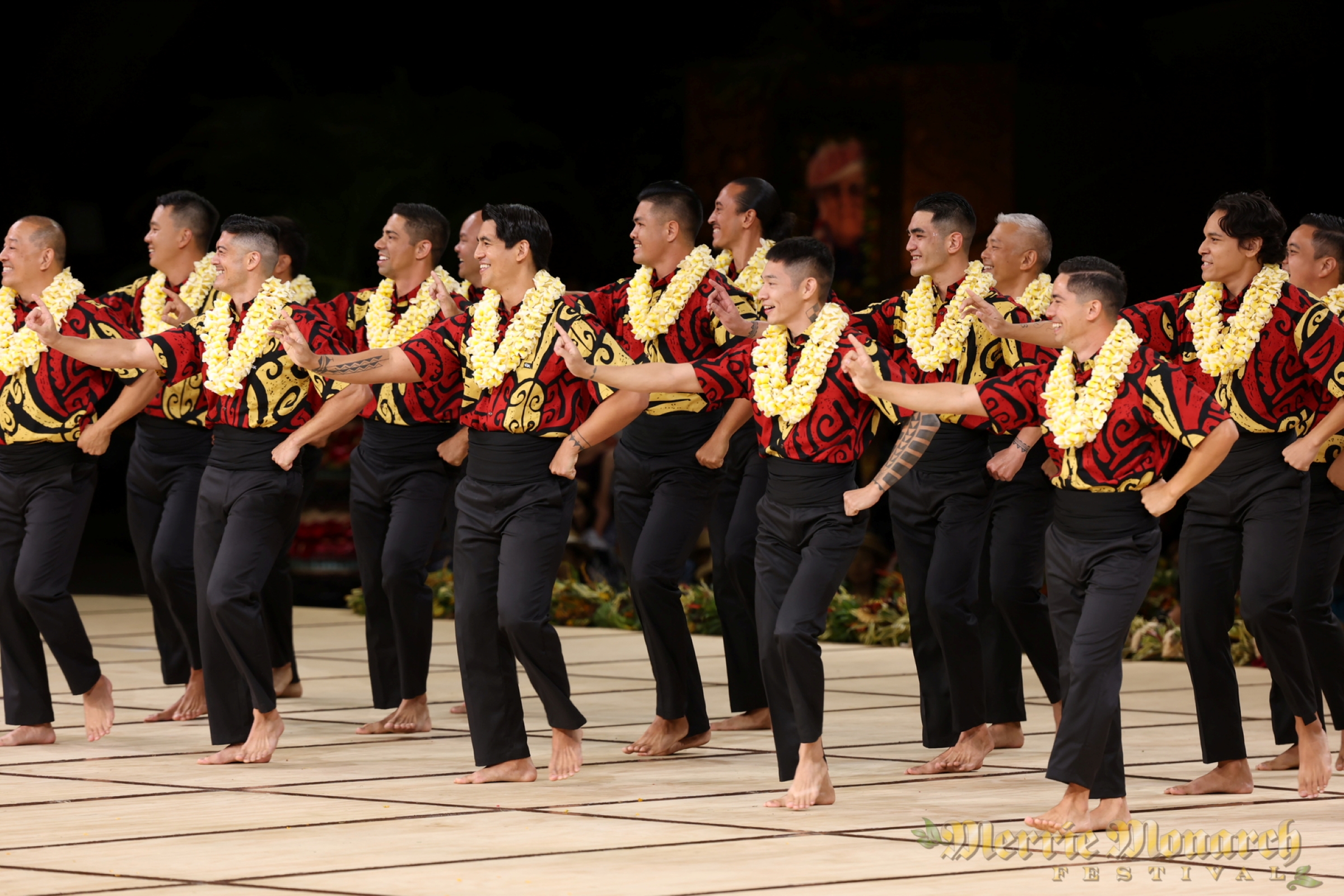
What is hula kahiko?
This is the traditional form of hula. It is accompanied by oli, or chant, and does not use modern instruments such as the ‘ukulele or guitar. Instead, traditional percussion instruments such as rhythm sticks, gourds carved into drums and rattles and bamboo sticks are used. According to The House of Kamakahelei, kahiko was generally performed before 1894.
What is hula ‘auana?
This style of hula is more modern and less formal than hula kahiko. “‘Auana” means to wander or drift, and this style has drifted away from the traditional hula kahiko. It is more interactive with the audience, taking influence from Western culture, and typically accompanied by song and a variety of instruments such as the guitar, steel guitar, bass and ‘ukulele. Hula ‘auana is more commonly used in movies and other Western media than its traditional counterpart.
Where can you get official Merrie Monarch wear?
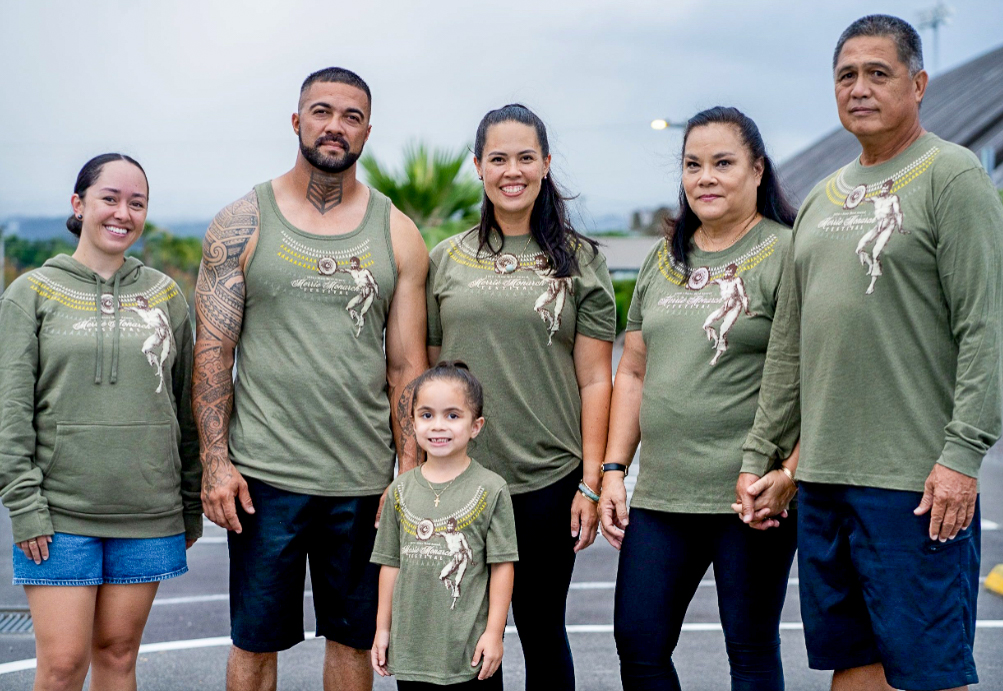
Official Merrie Monarch wear will be available for purchase each day during the Merrie Monarch Hawaiian Invitational Arts and Crafts Fair from April 23-26 at Afook-Chinen Civic Auditorium.
You can also find official merchandise April 20 during the festival’s opening Hoʻolauleʻa and from 8:30 a.m. to 4 p.m. at Afook-Chinen Civic Auditorium.
Other places throughout the week to purchase official festival merchandise include:
Hoʻolauleʻa
- When: 8 a.m. to 4:30 p.m. April 5
- Location: Afook-Chinen Civic Auditorium, 323 Manono St.
Merrie Monarch Invitational Hawaiian Arts and Crafts Fair
- When: 9 a.m. to 5 p.m. April 8-10 and 9 a.m. to 4 p.m. April 11
- Location: Afook-Chinen Civic Auditorium
Merrie Monarch Festival Merchandise Pop-up
- When: 10 a.m. to 6 p.m. April 9-11
- Location: Prince Kūhiō Plaza, 111 Pūʻainakō St.
What are the “instruments of hula”?
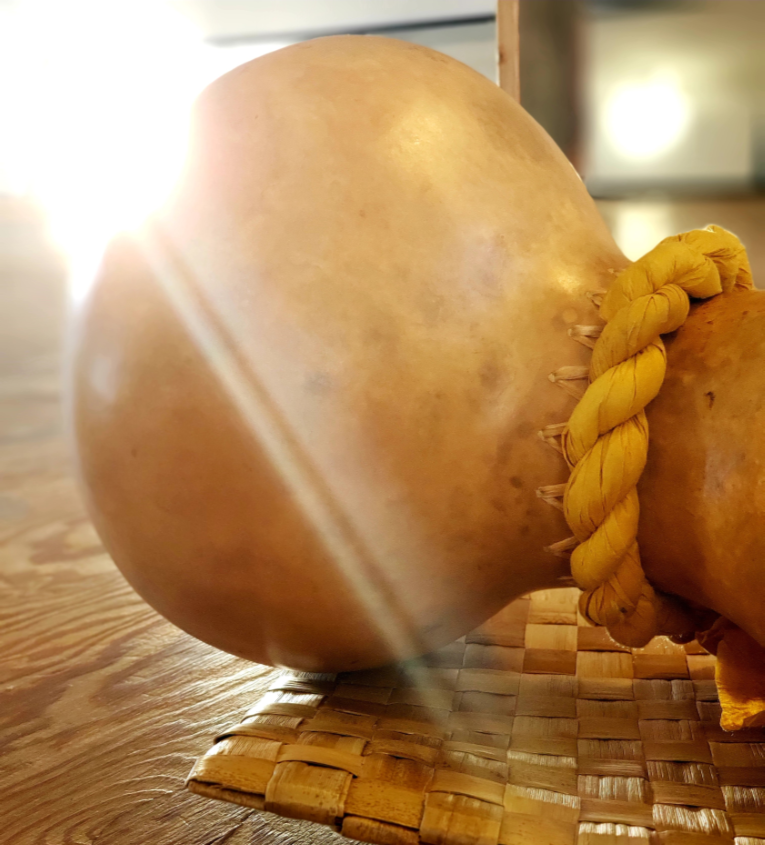
There are several musical instruments commonly seen and used on the Merrie Monarch stage, including:
- Pahu, a traditional tall and narrow Hawaiian drum carved from wood that is used to provide rhythm.
- Ipu, a percussion instrument made from a single gourd or two large gourds of unequal sizes joined together, called an ipu heke, which is hit with a hand or tapped on the ground to create a beat.
- ‘Uli ‘uli, which are gourds filled with pebbles, shells or seeds that rattle and are adorned with feathers.
- ‘Ili ‘ili, which are smooth stones that can be struck together like castanets for a more staccato rhythm.
- Pu‘ili are dried strips of bamboo that make a distinctive rattling sound when hit. They are used in pairs, with dancers tapping them against each other.
Why are the movements in hula so important?
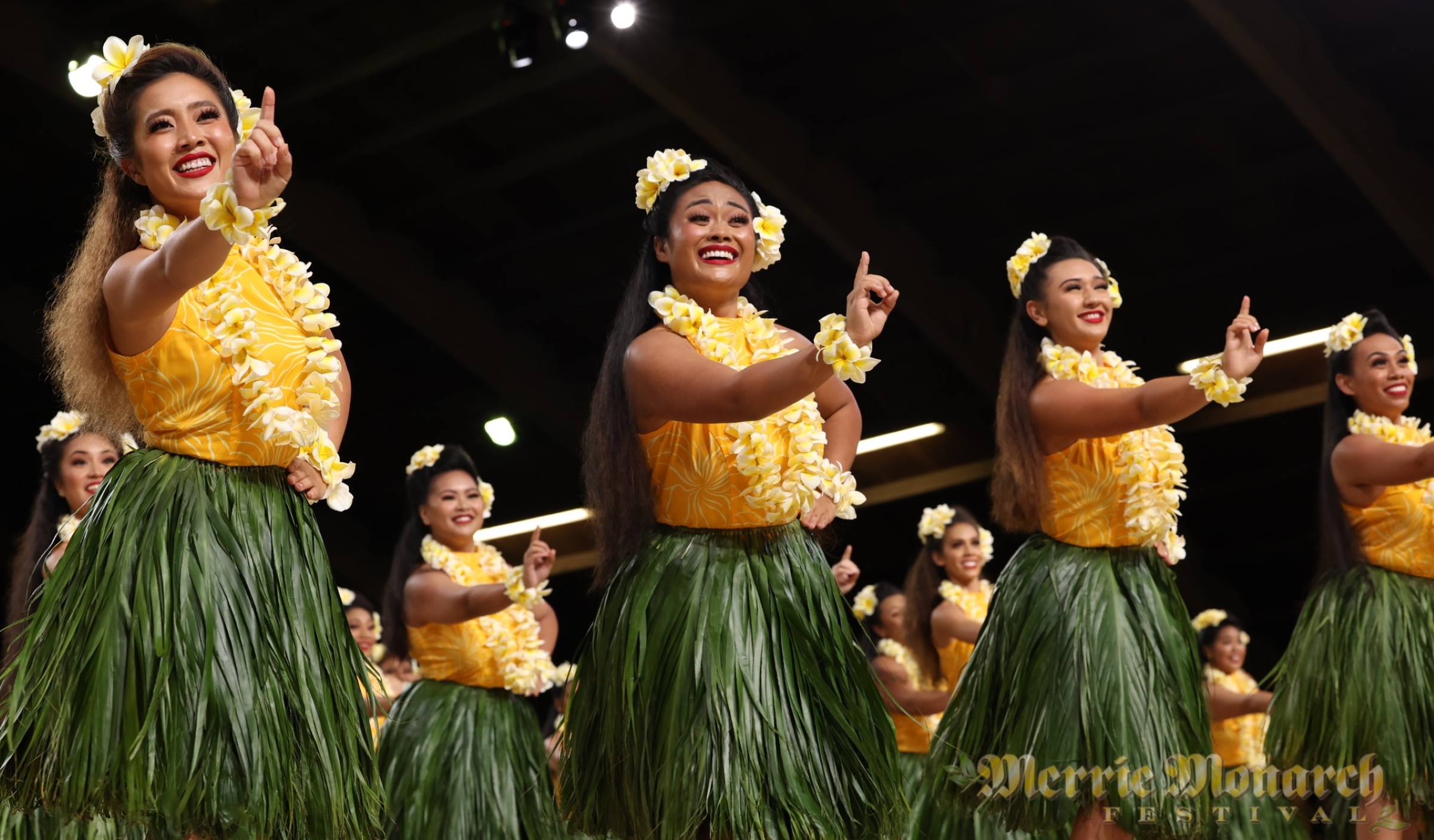
No matter the style, hula shares the stories that connect people, including the dancers, to the foundation of Hawaiian knowledge and culture. It is a vehicle for historical and social commentary and passing down stories and information.
“Every movement, expression and gesture in the hula has a specific meaning, from representing plants, animals and the elements to listening, searching, sailing and so much more,” according to Honolulu tour company Go Tours Hawai‘i, which adds that hand movements are of particular significance.
Hand movements are used to represent the words in a song or chant. They can represent an emotion like yearning or signify nature, such as a tree swaying in the wind or an ocean wave.
What are common hula adornments?
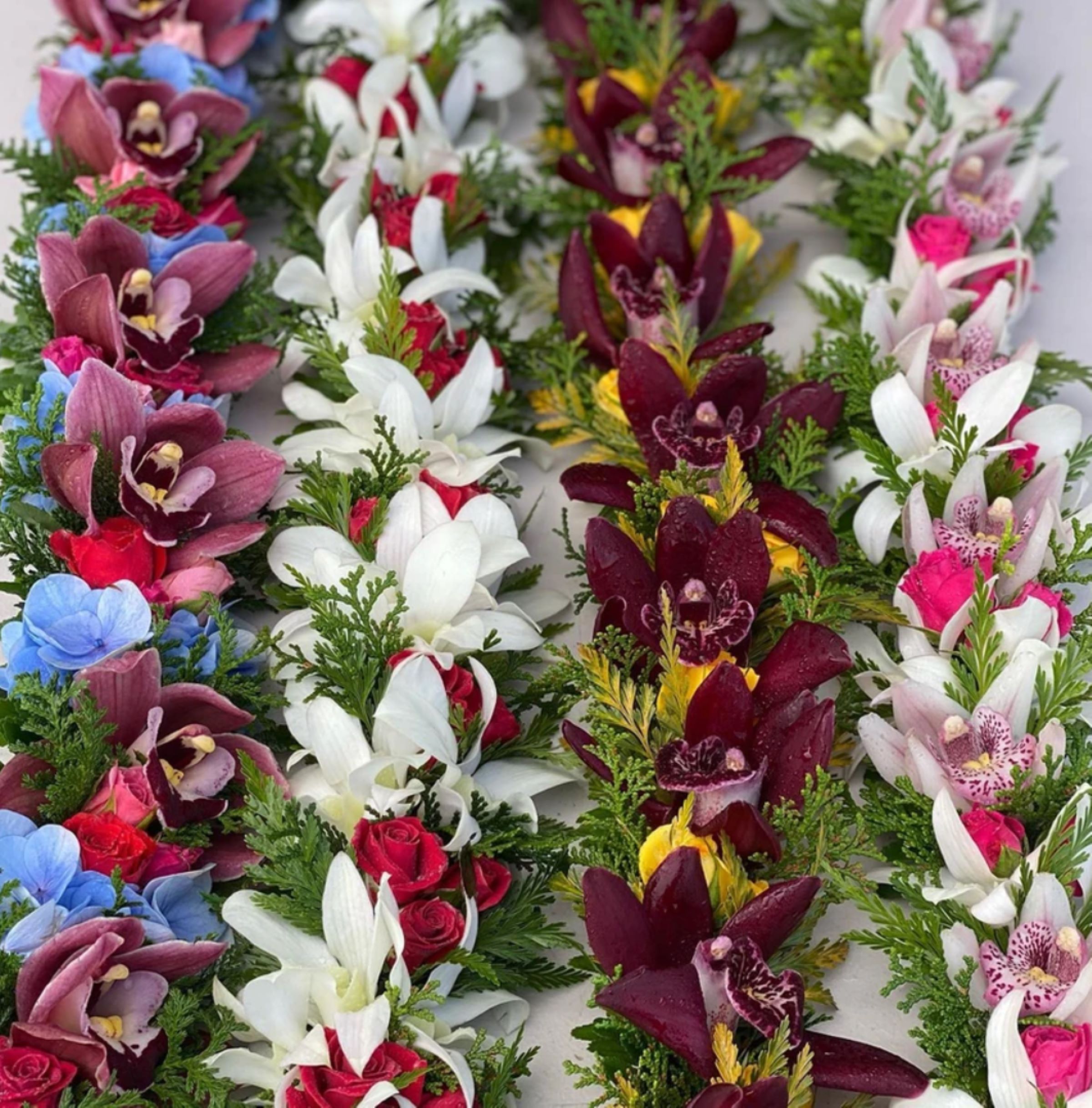
- Pāʻū is a dance skirt worn by both men and women hula dancers. Made of kapa, or bark cloth, and elaborately decorated with stamped or painted patterns in ancient times, nowadays most dancers make them from woven cloth and dye, paint or silkscreen patterns onto them. They can be made with ti leaves; ‘ilihau, the processed bark of the hau tree; lauhala, the dried leaves of the hala tree; and even cellophane.
- Malo is a men’s loincloth. While malo have become popular again, for modern hula, men also wear trousers, sometimes with a ti leaf, lauhala or ‘ilihau skirt over them. They can choose to wear shirts, but it is not obligatory.
- Lei, the familiar garland of flowers, leaves, shells, ivory or feathers, are worn by men and woman around the neck or head and sometimes a hat.
- Kupe‘e are similar to lei but instead decorate wrists or ankles, drawing attention to the delicate movements of hands and feet.
Who was King Kalākaua and why is the Merrie Monarch Festival dedicated to his memory?

King David La‘amea Kalākaua, known as the “Merrie Monarch” for his flamboyant and fun-loving ways, was born Nov. 16, 1836, and died Jan. 20, 1891. The last king of the Kingdom of Hawai’i, he was elected to the post in 1874 and served until his death. Kalākaua’s sister, Lili‘uokalani, ascended to the throne, becoming the first woman to ever occupy it and the last Hawaiian sovereign to govern the islands.
Kalākaua did not support Christian missionary teachings that for decades had suppressed Hawaiian beliefs and traditions. Instead, he sought a renewal of all things Hawaiian, such as arts, medicine and hula. He and his queen, Kapi‘olani, lived by the motto, “Ho‘oūlu Lāhui,” or “Increase the Nation.”
Ancient Hawaiians had no written language. They used traditions such as chant and hula to record genealogy, mythology, history and religion, among others. Kalākaua not only relied on these traditional forms of documentation, he supported their practice and the expression of Hawaiian knowledge, ensuring future generations would inherit a robust Hawaiian heritage.
Kalākaua famously said: “Hula is the language of the heart and therefore the heartbeat of the Hawaiian people.”
The Merrie Monarch Festival maintains the teachings of kūpuna, or elders, and strives to perpetuate the history and culture of Hawaiian people in a manner that respects those teachings. The festival continues Kalākaua’s work, making sure the unique traditions of Hawaiian people flourish.
Who was Edith Kanaka‘ole?
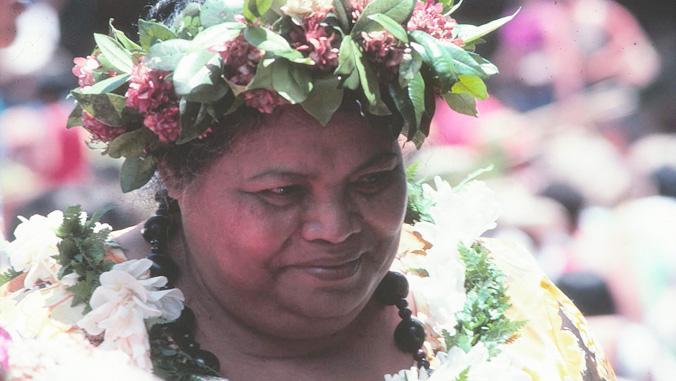
Born Oct. 30, 1913, in Honomū on the windward side of the Big Island, Aunty Edith was a Hawaiian cultural icon, kumu hula, composer and chanter. A key influence in the Hawaiian renaissance of the 1970s, she dedicated her life to educating others about Hawaiian language and culture. She learned hula from her mother, who was instructed by acclaimed dancer Akoni Mika.
Kanakaʻole believed oli formed the basis of Hawaiian values and history. She started composing oli in 1946 and choreographed hula to go with many of her chants. In the 1950s, she toured the mainland United States, western Canada and much of Asia with a hula group named after her daughter Nalani. She also founded her own hālau, Hālau O Kekuhi.
She helped develop the first Hawaiian language program for public school students at Keaukaha School in Hilo, and In the 1970s she created college courses and seminars about subjects including ethnobotany, Polynesian history, genealogy and Hawaiian chant and mythology.
Kanaka‘ole died Oct. 3, 1979, but her teachings, beliefs and practices are maintained by the Edith Kanakaʻole Foundation, a nonprofit established in 1990. The Merrie Monarch Festival’s stage is inside a facility that shares her name, the Edith Kanaka‘ole Multi-Purpose Stadium in Hilo, and she also is featured on a new U.S. quarter that recently went into circulation, the seventh coin in the American Women Quarters program.
What are some Hawaiian words you might hear during the Merrie Monarch Festival?
- Hālau hula: A school for learning hula.
- Haumāna: Student.
- Kāholo: Nimble, swift, quick; to move fast, progress rapidly. It also is a common hula step in modern dances.
- Kāne: Male, man.
- Kapu: Sacred, holy, consecrated, forbidden.
- Kuleana: Responsibility.
- Kumu hula: Hula teachers.
- ʻŌlelo Hawaiʻi: Hawaiian language.
- Wāhine: Woman, lady.
Sponsored Content


Subscribe to our Newsletter
Comments