



New artificial intelligence degree debuts later this year at University of Hawaiʻi at Hilo
University of Hawaiʻi at Hilo is making a number of changes to its business programs in response to ever-increasing workforce needs for people well-versed in the use of artificial intelligence.
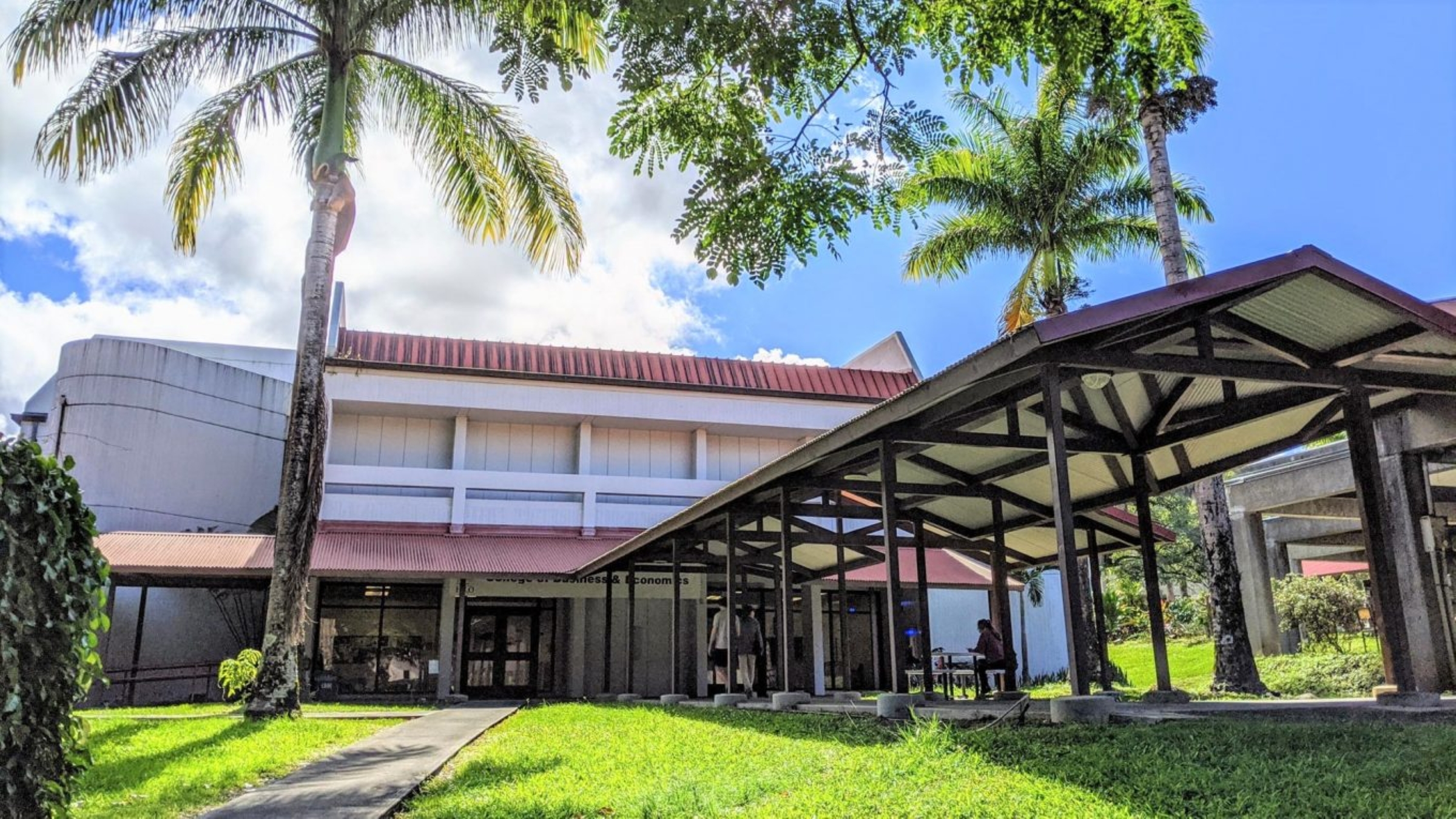
The College of Business and Economics is launching a new artificial intelligence concentration in the bachelor of business administration program beginning in the 2026 fall semester.
It will formally interface with the university’s data science program.
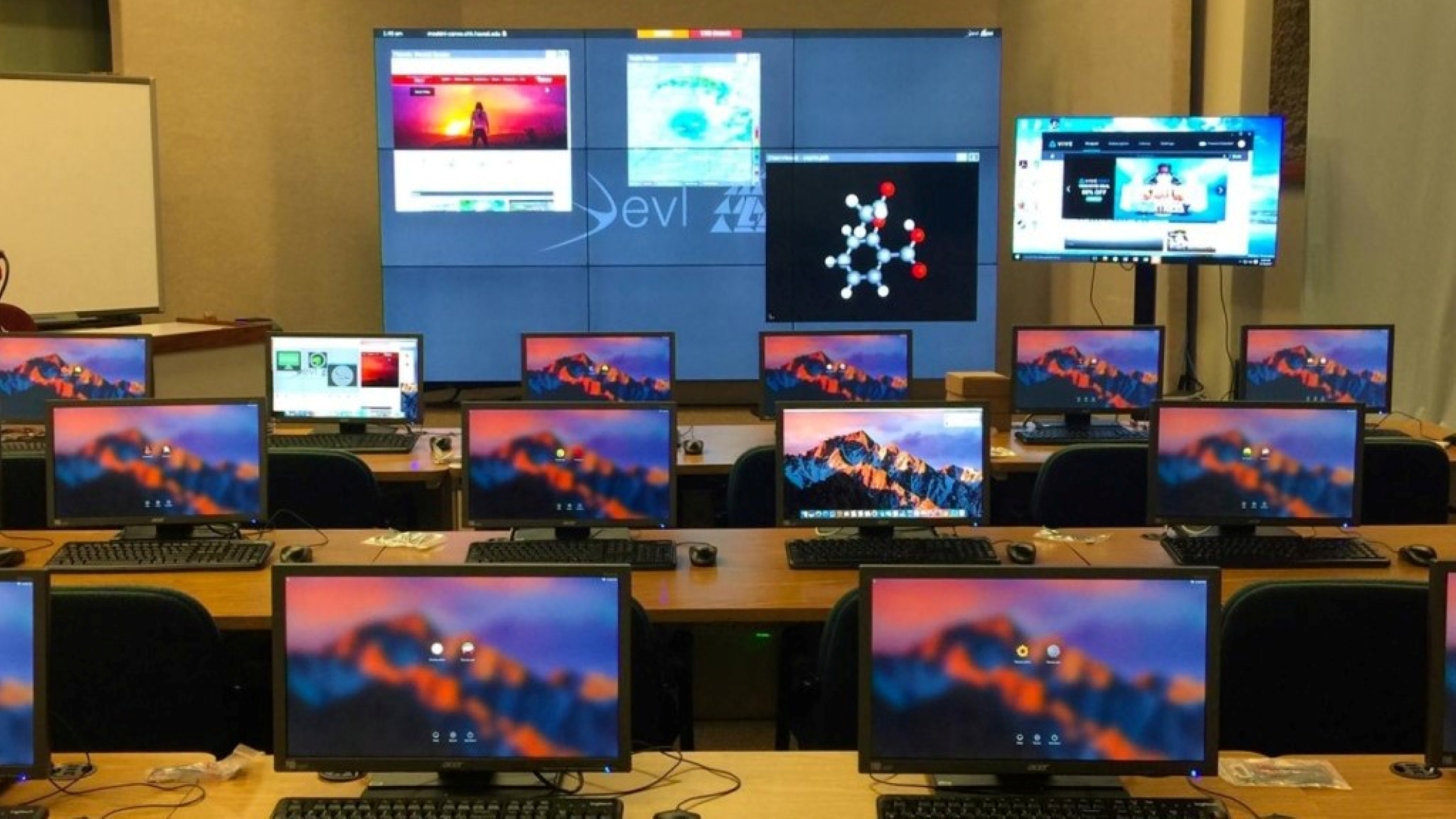
A new artificial intelligence certificate program also will be offered to all majors, plus new courses will begin, focusing on the technical skills needed for the use of artificial intelligence in business, governance and science fields.
This program and curriculum initiative is led by Sukhwa Hong, associate professor of data science and business administration, and Chenbo Shi, assistant professor of quantitative business analysis, who are working closely with faculty in business, data science and computer science to support the new offerings.
“These changes are important because [artificial intelligence] is no longer a niche or emerging technology, it’s already embedded in how work gets done across almost every field,” said Hong in a story for Office of the Chancellor web publication UH Hilo Stories. “Higher education has a responsibility to respond to that reality. We’re not reacting to a trend; we’re adjusting how we prepare students for the world they are already entering.”
Hong added that the biggest benefit for students is confidence and relevance.
“We want students to graduate knowing that [artificial intelligence] will not replace them, but that people who know how to integrate [artificial intelligence] into their work will have a clear advantage,” the associate professor said. “These [new] courses help students learn how to work with [artificial intelligence]: how to ask good questions, evaluate [artificial intelligence]-generated outputs, communicate results and use these tools responsibly in their own disciplines.”
Hong also said the concentration and certificate prepare students for artificial intelligence- and analytics-driven careers by strengthening quantitative reasoning, responsible artificial intelligence use, communication skills and community impact.
The new business analytics and artificial intelligence concentration — housed within the general business program — will create a formal bridge between the university’s business and data science departments through cross-listed courses and shared requirements in R (open-source programming language statistical computing, data analysis and visualization); Python (leading language for business artificial intelligence); analytics; and applied data science.
Current certificate in business analytics will be renamed the certificate in artificial intelligence for business, with updated required courses that align with the new curriculum.
A business analytics introductory course also will be added to broaden access to artificial intelligence and analytics foundations.
“The certificate is intentionally designed to be accessible to students outside of computer science and business, providing a structured pathway for majors across the university — such as social sciences, natural sciences, education and the arts — to develop practical [artificial intelligence] skills they can apply directly in their fields,” Hong said.
A set of newly created and significantly updated artificial intelligence-focused courses will support the new business analytics and artificial intelligence concentration, reflecting rapid changes in the workforce and the growing role of artificial intelligence across disciplines.
Infused into the curriculum is also a strong sense of ethics instilled in every student.
“From a workforce perspective, employers are not looking for [artificial intelligence] specialists in every role, they’re looking for professionals who can use [artificial intelligence] effectively in context,” Hong said. “That means understanding its limits, validating its outputs and applying it to real problems.”
The curriculum is designed to develop exactly that kind of workforce-ready mindset, where artificial intelligence enhances human judgment rather than replaces it.
Reflecting this purpose, the college is launching several courses in fall 2026 semester.
That includes a new general education introductory course on prompt engineering — the science of designing prompts to guide artificial intelligence models — is open to all majors.
This course includes large language models — or LLM, which is artificial intelligence’s capacity to process massive amounts of data — and multimodal artificial intelligence tools.
A key feature of the course is a community dataset project that emphasizes public engagement, communication and stakeholder feedback, helping students connect artificial intelligence skills to real-world and community-relevant problems.
“Because the course does not assume a computer science or business background, it is particularly well suited for students from non-computing and non-business majors who want to learn how to apply [artificial intelligence] tools within their own disciplines,” Hong said.
“Overall, these changes reflect the College of Business and Economics’ response to workforce demand for [artificial intelligence] and analytics skills and [University of Hawaiʻi at Hilo’s] broader commitment to interdisciplinary education and responsible [artificial intelligence] development,” Hong said. “They also create clear and flexible entry points for students from many majors to engage meaningfully with [artificial intelligence], whether through general education, certificates or degree concentrations.”
Sponsored Content


Subscribe to our Newsletter
Comments