 May 3, 2025 - August 23, 2025



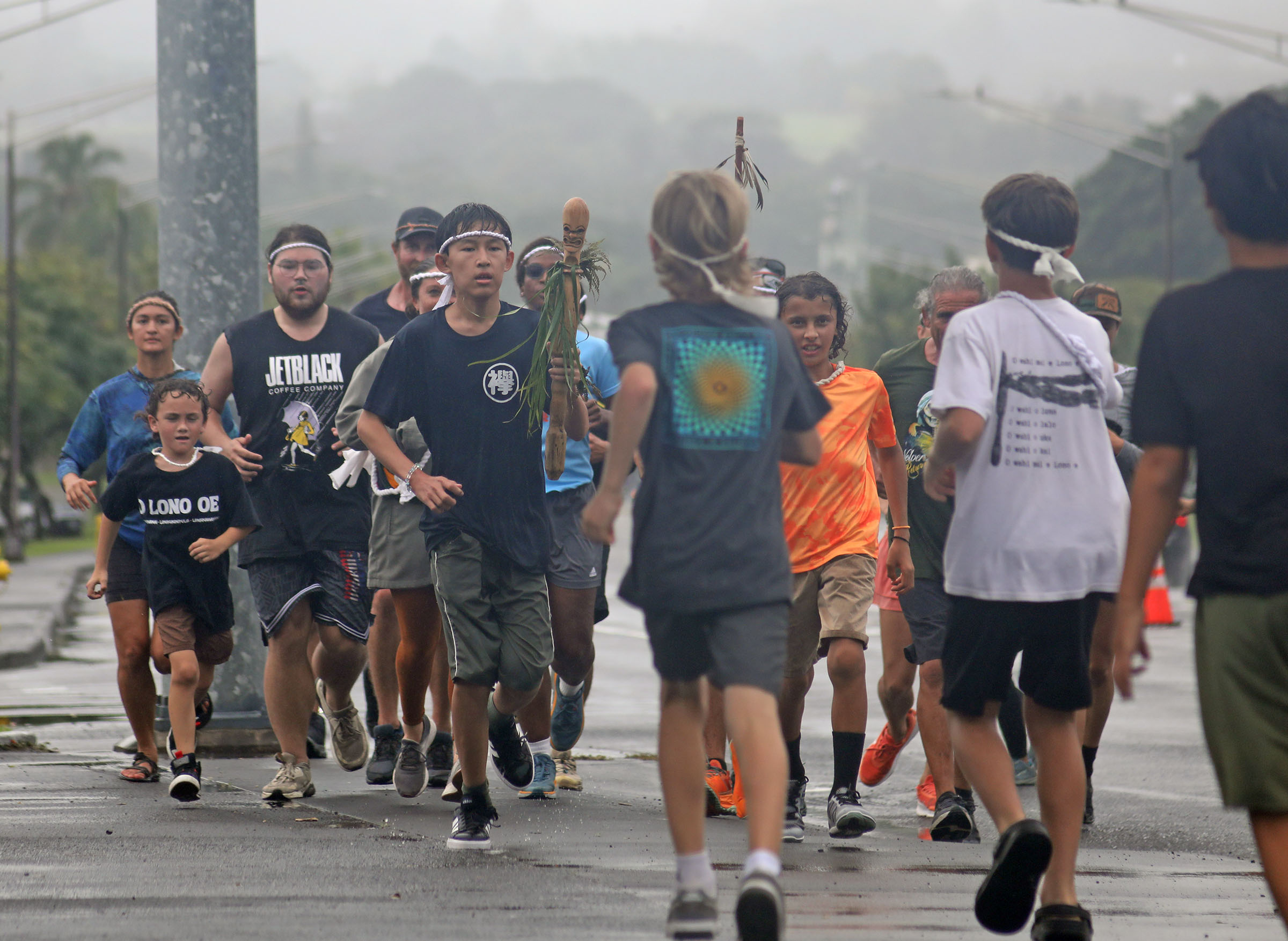
The powerful sound of a pū (conch shell) fills the air, and misty rain coats the roads, grass and trees in Hilo on Thursday afternoon when drenched runners take their final paces to the Kamehameha statue in Hilo.
The runners started the first leg of the ʻAha Pule ʻĀina Holo in Honokāʻa to welcome the beginning of Makahiki, the four-month season of harvest, peace and celebration in Hawaiian culture.
ʻAha Pule ʻĀina Holo is an annual six-day community ceremonial relay around the circumference of Hawaiʻi Island. The approximately 294-mile relay reflects a tradition of the past when aliʻi (chiefs) and kahuna (priests) once journeyed in a clockwise procession, bearing the sacred Lonomakua (physical image of the god Lono) through each district to gather tribute, purify the land, and evaluate the well-being of both the land and its people.
In this run, the staff that depicts the god Lono is relayed between participants. The number varies each day On Thursday, there were about 20 runners.
Prior to the run, a gathering of Hawaiian practitioners convened on Maunakea, performing ceremonies at Hale o Kū Kiaʻi Mauna (House of the Maunakea Guardians) and at the mountain’s summit on Tuesday.
This ceremonial preparation culminated in the blessing of the staff of Lono at Lake Waiau.
The journey to the island’s piko (center) concludes with prayers at Puʻu Kohe, a cinder cone situated in the island’s center, overlooking the Pōhakuloa Training Area.
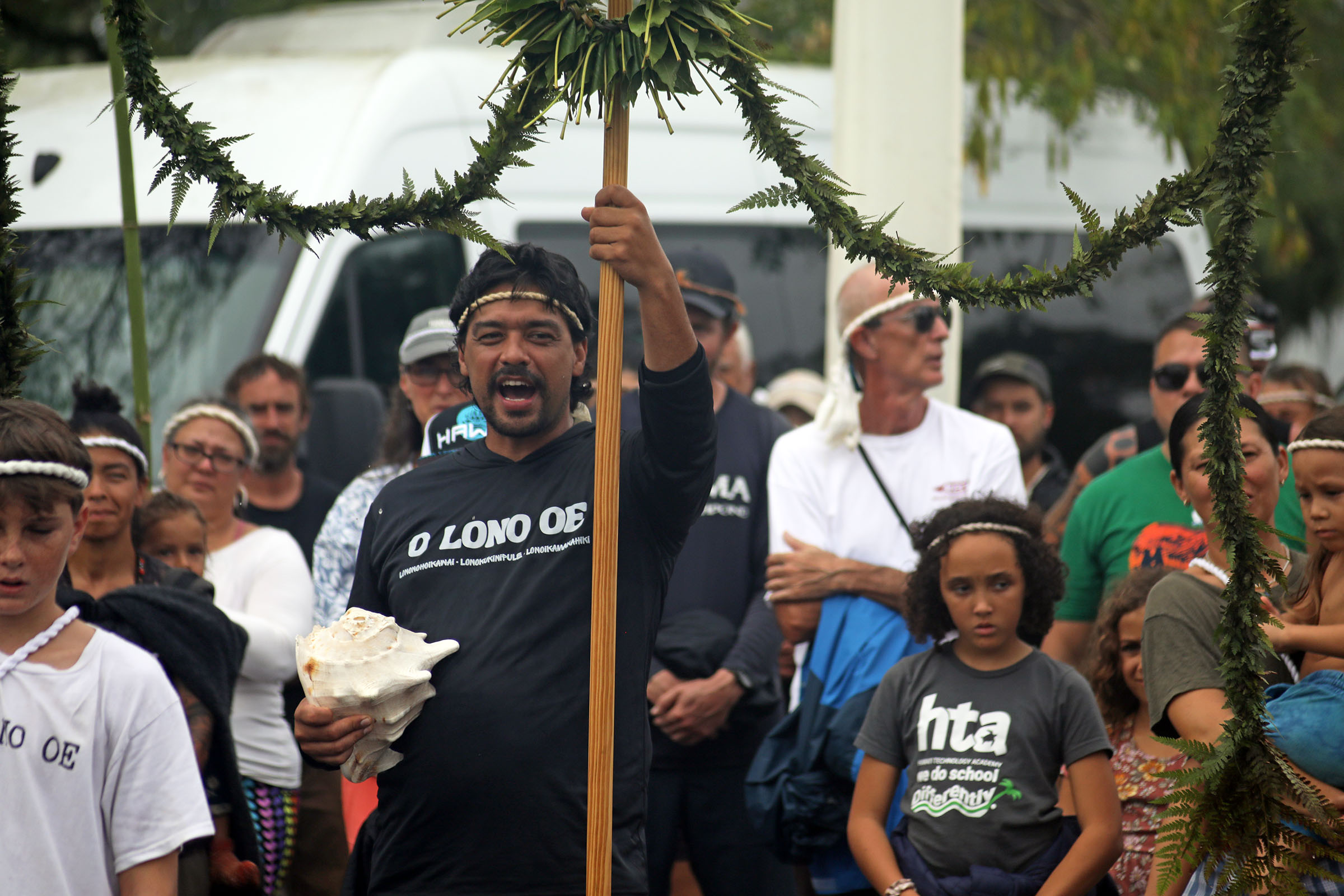
The run was founded by cultural practitioner Lanakila Mangauil.
“The idea of using running as a form of ceremony was shared with me just out of high school during a cultural exchange with the Pit River Nation near Mount Shasta in California,” he said. “I returned a number of times to maintain that cultural exchange between Kanaka Maoli (Native Hawaiian) and the Pit River Nation, and in 2013 they shared with me the story of the run and it really stuck with me. At that time for me, it was a reminder that culturally, we are not static.”
Pit River Tribe is a federally recognized tribe of eleven bands of indigenous peoples of California.
The original tradition, the Ancestral Run, was initiated around 1992 by Radley Davis and members of the Pit River community to restore community well-being, resilience and cultural pride in the face of health and social challenges.
“I asked them that year if I could share this medicine of prayer running and was granted permission,” Mangauil said. “I brought it home and worked with my elders who guided me in this process. The tradition is an open door for people who maybe can’t join a hālau (hula school), or who don’t have means for college education to gain access to cultural spaces, or maybe the culture is not embedded in their family.”
Mangauil added: “This is also for people who call Hawaiʻi home but are not Kanaka Maoli, or those who want to find connection. It is an open invitation to step into protocol and ceremony.”
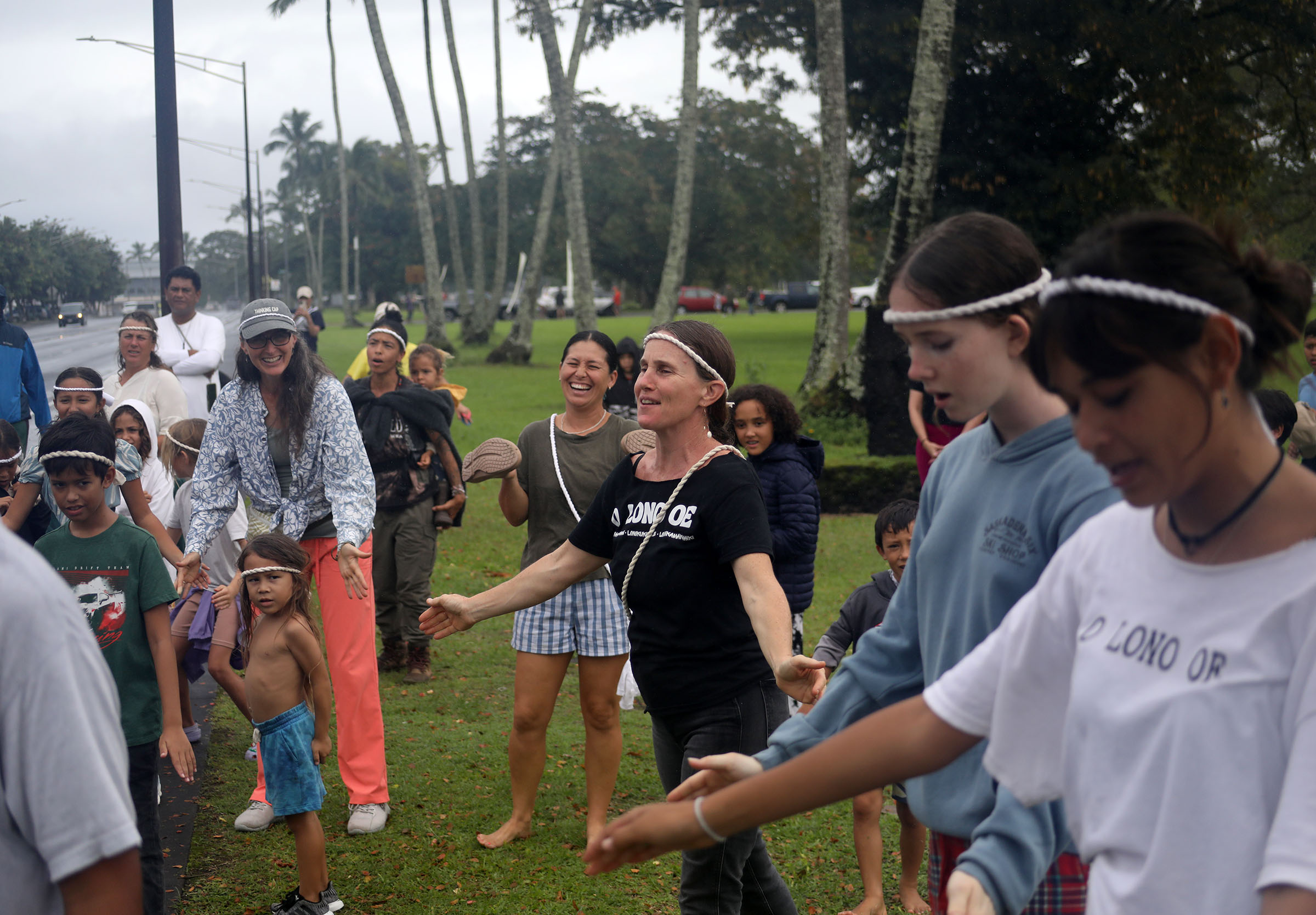
The bond between Hawaiʻi and the Pit River Nation goes beyond the run, drawing from stories shared over generations. According to Mangauil, Pit River elders recounted that Hawaiians once traveled by canoe to their lands to visit Mt. Shasta, teaching a hula that is still preserved within the community.
This exchange of cultural practices has evolved into today’s ceremonial runs, which emphasize mutual respect and the preservation of sacred traditions.
“Culture is not stationary, and the run is a chance to call on our ancestors to address things we are handling now in the 21st century,” Mangauil said. “ʻAha Pule ʻĀina means prayer for the land and holo means moving, so this has become a traveling prayer for the ʻāina, which does not exclude us as we are part of the ʻāina.”
On Wednesday afternoon, participants and practitioners gathered at Hāmākua Harvest for a welcome ceremony and to set intentions for the year.
Runners then took off early Thursday morning in Honokāʻa, running through Laupāhoehoe and ending at the Kamehameha statue in Hilo. Runners in Hilo were handed the staff of Lono and continued the journey up Volcano Highway through Keaʻau, Olaʻa, and ended at Kīlauea at Kanikolea bluff. The day concludes with an ʻAha (feast) and ʻai pono (rest) at Volcano Charter School.
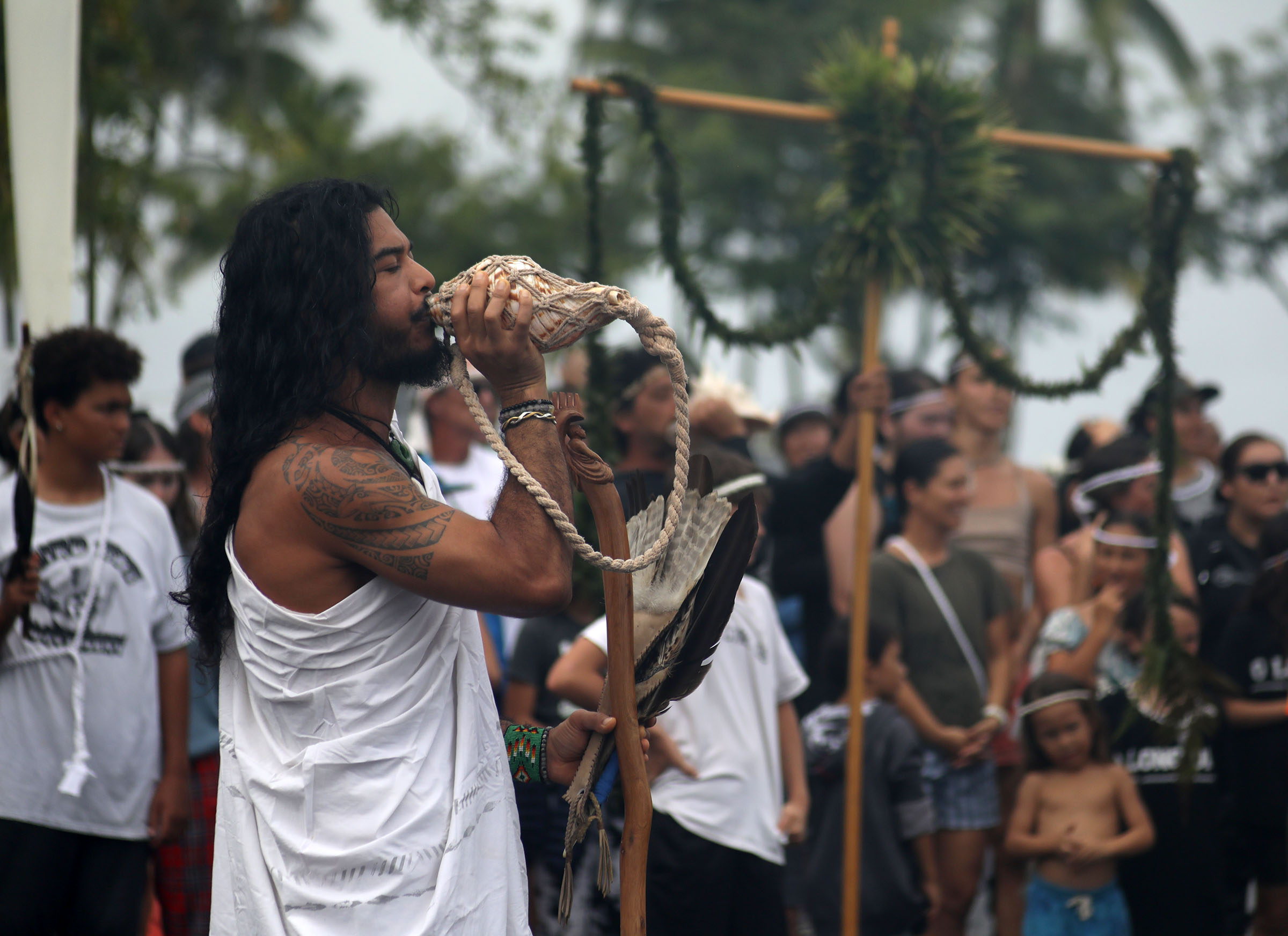
A dedicated core group of long-distance runners accompanies the staff each day and each district is represented by a coordinator who organizes the runners, facilitating the relay handoff of the staff of Lono throughout their respective areas. Additionally, the customs of each district dictate how runners and guests are greeted and cared for, encompassing food, lodging and ceremonial protocols.
On Friday, runners take the staff of Lono from Kīlauea to Pāhala to Waiʻōhinu Park where Kaʻū families host lunch. The run continues to Manukā with ʻAha and ʻai pono in Miloliʻi.
On Saturday, the staff of Lono is sent on waʻa (canoe) through Miloliʻi and Hōnaunau and returns to Kealakekua Bay where paddlers swim the staff of Lono ashore to Hikiau Heiau. The run continues through Keauhou, Kailua, ending at Old Airport for lunch. The second half of the day runs the staff of Lono through Kona, Waikōloa and Hāpuna, concluding at Puʻukoholā Heiau with ʻAha and ʻai pono at Lonoʻuāliʻi.
After an ʻaha alaula (traditional sunrise ceremony) at Puʻukoholā Heiau, runners take the staff of Lono through Māhukona, Hāwī, Kapaʻau, and are welcomed at the King Kamehameha statue. They continue over Kohala Mountain Road through Puanui and Waika, and stop at Mānaʻua rain rock. The morning concludes with lunch by Ka Ua Pali Loa at ʻAha Pūnana Leo o Waimea.
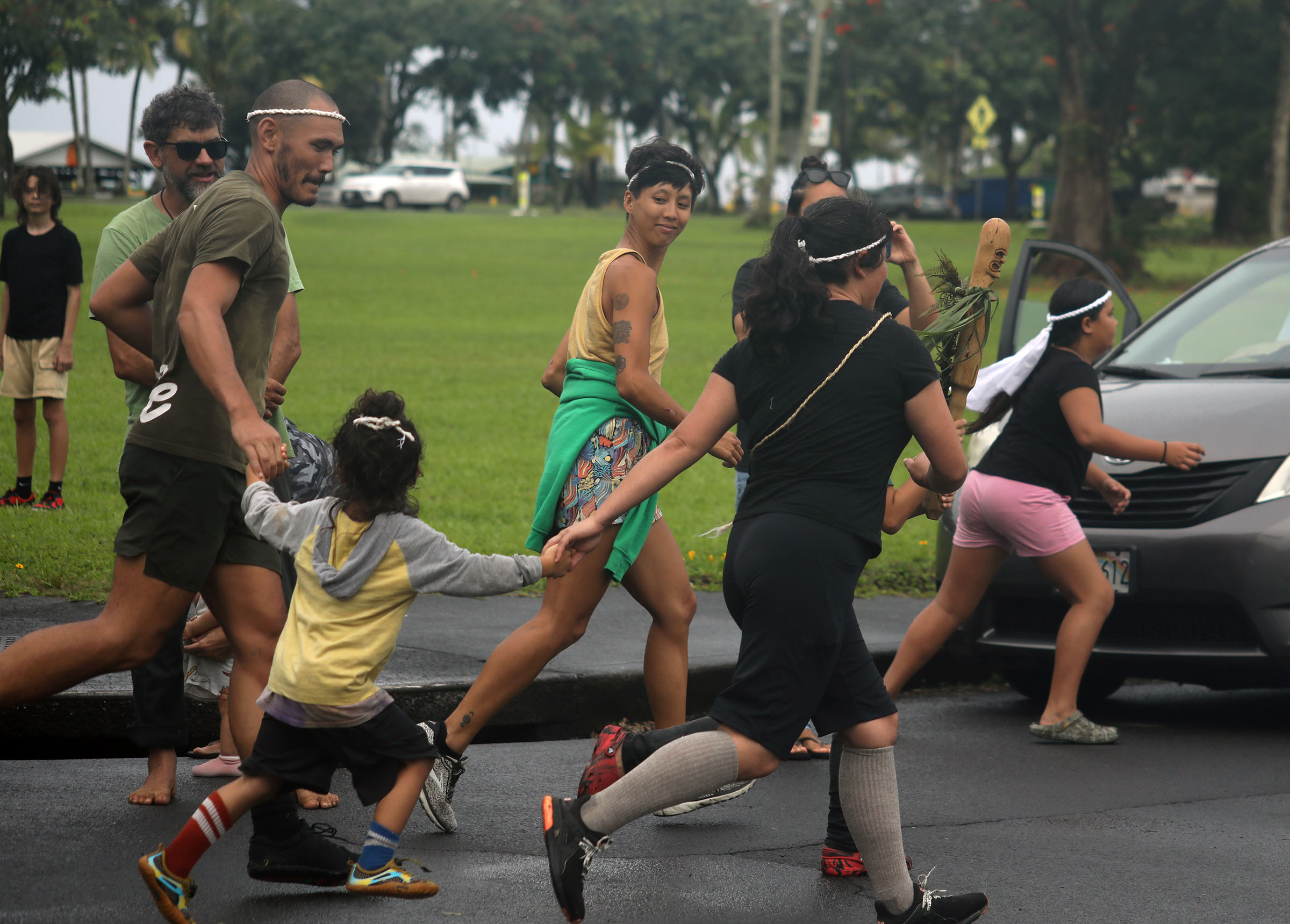
The second part of the day has long-distance runners taking the staff of Lono from Mud Lane through Māhiki and emerge at Waipiʻo lookout, then through Kukuihaele and Kapulena, finishing in Honokāʻa Park. A ceremonial feast at Honokāʻa People’s Theater concludes ʻAha Pule ʻĀina Holo.
This is the 10th year of the run around the island and the tradition has grown over time, even inspiring some of Mangauil’s students to start the tradition around Mount Fuji.
“I have gone to Japan. We’ve had members of the Pit River Nation come to ours. An ʻohana from Maui and Tahiti have returned this year. It’s a reminder that culture is not stagnant,” Mangauil said. “We are living people today pulling on continuity of our ancestral practices and traditions, then seeing where we are and moving forward.”
Those interested in learning more about the tradition, or joining or watching the runners, visit the HŌʻĀ website. The nonprofit facilitates the run along with other programs and classes based in Hawaiian culture and history.
2025 Race Schedule
| Date | Club / Race | Site | Ev. | Sponsor |
|---|---|---|---|---|
| May 03 | Hoemana – Kai Kukini | Spencer Park | LD | Hoemana |
| May 10 | Kawaihae | Kawaihae | LD | Kawaihae |
| May 17 | Kai‘Ehitu / Papa Kimetete | Kailua-Kona | LD | Kai‘Ehitu |
| May 24 | Keauhou | Kailua-Kona | LD | Keauhou |
| May 31 | Hui Wa‘a O Waiākea / Ira & Barbara Kekaualua | Hilo Bay | LD | Hui Wa‘a |
| Jun 07 | Kai ‘Ōpua / King Kamehameha Day | Kailua-Kona | LD | Kai ‘Ōpua |
| Jun 14 | Kailana | Hilo Bay | Reg. | Kailana |
| Jun 21 | Keaukaha | Hilo Bay | Reg. | Keaukaha |
| Jun 28 | Puna | Hilo Bay | Reg. | Puna |
| Jul 05 | Kamehameha Hilo / John Kekua Jr | Hilo Bay | Reg. | Kamehameha |
| Jul 12 | Paddlers of Laka / Nā Wa‘a Hanakahi | Hilo Bay | Reg. | Laka / Nā Wa‘a |
| Jul 19 | Aunty Maile / Moku O Hawai‘i Championship | Hilo Bay | Reg. | TBA |
| Aug 02 | Hawaiian Canoe Racing Assn. States | Hanakao‘o Beach Pk, Lahaina | Reg. | Maui |
| Aug 09 | Miloli‘i | Miloli‘i | LD | Miloli‘i |
| Aug 16 | Keōua / Calvin Kelekolio | Honaunau | LD | Keōua |
| Aug 23 | Waikoloa / Great Waikoloa Race | Anaeho‘omalu Bay | LD | Waikoloa |