


ANALYSIS: Raising the Minimum Wage – Truth and Consequences
***Updated on 02/16/2013 to reflect average agricultural worker wages in Hawaii.
Hawaii lawmakers care a lot about the 1%.
Or so they’d like you to believe.
Chances are that if you’re reading this, you’re not a member of that slim minority (which, to be precise, was 1.2% in 2011.)
But the folks we’re talking about here aren’t likely to be members of your local country club (or Yacht Club, if you live in Hilo. As an aside, where did all those yachts go?)
The 1.2% in question represents our state’s portion of minimum wage workers. A slim margin for sure, but a politically potent one, with more than a few would-be saviors, President Obama included.
Our commander-in-chief made hiking the federal minimum wage one of his key goals this year in his State of the Union address, aiming to bump the hourly rate from $7.25 to $9. Some Hawaii lawmakers are attempting to one-up their native-born POTUS, fighting to raise Hawaii’s minimum wage from $7.25 to $9.25 over the next two years.
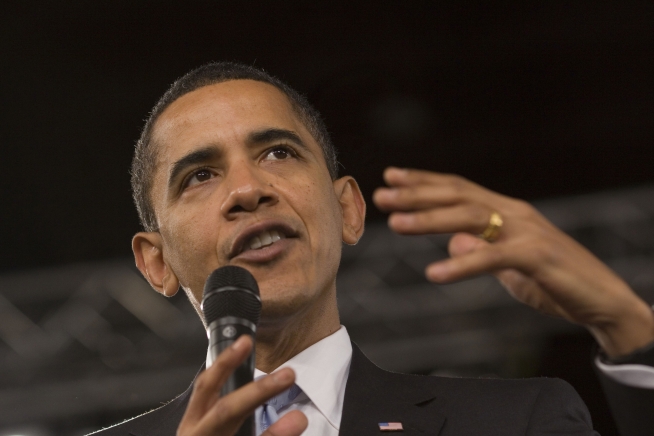
President Obama is also calling for a minimum wage hike. White House photo.
Hawaii’s Senate Judiciary Committee approved that effort on Feb. 13.
Several business leaders have testified against the measure, including an executive from Foodland Supermarket Ltd., who insisted the proposed change would force the company to cut staff. Assuming that is the case, would the experience be widespread?
Classical economics, which was originally hatched by some Scottish guy back in the 1700s (for more on him, ask a Republican) does in fact predict that forcing businesses to pay a minimum wage will result in fewer jobs.
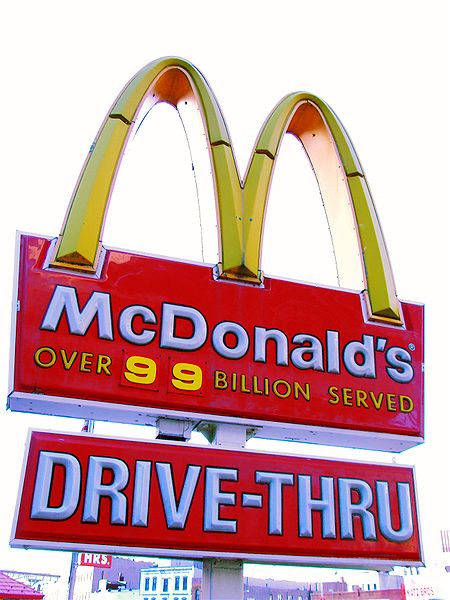
If recent research is any indication, fast food workers should do just fine under new minimum wage proposals.
An often-used example of this theory involves the fast-food industry. Take for instance, a 16-year-old burger flipper. Say that due to higher wage costs, his employer gives him a pink slip. Classical theory states that with bad skin and a limited skill-set, he likely wouldn’t find a new gig.
Research in the 1990s went a long way toward refuting that old assumption. A landmark study performed in New Jersey showed no significant drop in jobs at fast food outlets after a 19% hike in the minimum wage there. Later studies were able to broaden those findings, showing the ‘Jersey experience wasn’t unique. Hawaii’s proposed boost would clock in at 21.6%.
Sixteen-year-olds, rejoice.
But even if local burrito-rollers manage to keep their jobs, there are other industry groups crying afoul over the proposed wage-hike. One of those is the agricultural industry, which according to an executive from Dole Food Co, relies heavily on unskilled labor.
Hawaii’s “ag” industry is a fragile thing indeed, shrinking every year since 1990. The sector now employs around 1.5% of our population, and is even more susceptible to rising costs than restaurants and retailers.
According to the University of Hawaii Economic Research Organization, ag workers earned $25,700 on average in 2010, a $10,000 drop from two decades earlier. That before-tax figure includes the earnings of farm owners (sole proprietors and partners).
But does the ag industry here employ hordes of minimum-wage workers? According to the US Department of Agriculture, field and livestock workers in Hawaii actually averaged over $12.50 per hour in 2012.
It’s no secret that American farmers compete daily with products from around the world that rely on very low-wage labor. Hawaii is no exception, with supermarket shelves being flooded with fruits and vegetables grown everywhere from China to Mexico.

Pineapple growers are facing immense low-wage competition. Image courtesy UC Davis.
It’s conceivable that raising the minimum wage could result in layoffs of a few field worker positions, as the Dole executive warned.
But the low-wage competition facing Hawaii agriculture isn’t likely to be successfully confronted by maintaining the $7.25 hourly wage rate. The minimum wage for agricultural workers in the Philipinnes, for example is just over $4.50 per day, with many workers actually earning less than that.
Those ultra-cheap wages were a major reason for the departure of Del Monte foods from Hawaii in 2008, resulting in layoffs of over 500 pineapple workers that once earned over $10 an hour.
It’s possible that if there were no minimum wage to begin with, a whole host of industries would spring up, able to compete internationally without leaving US shores. But that imaginary scenario is difficult to measure, and takes the current debate off-the-rails.
Given that over 98% of Hawaii’s working population already enjoys pay higher than the minimum requirement, this new proposal isn’t likely to cause mass lay-offs.
Just happier burger-flippers.
Sponsored Content


Subscribe to our Newsletter
Comments